
Methane Reduction
Key Takeaways
- Methane is roughly 80 times more potent than CO₂ over 20 years but breaks down in about a decade, making methane reduction one of the fastest ways to slow near-term warming while you tackle long-term decarbonisation.
- Most corporate methane sits in your value chain—agriculture, waste, and fossil fuels—but only a fraction of technical solutions translate into high-integrity carbon credits you can actually buy with confidence.
- Landfill gas, rice, coal mine methane, and industrial gas projects have all faced serious integrity questions around additionality, baselines, and over-crediting, so rigorous due diligence on every project is non-negotiable.
- Under CSRD and SBTi, methane credits belong in your beyond value chain mitigation bucket, not your near-term reduction targets—they complement aggressive in-house cuts, they don't replace them.
Methane reduction is emerging as one of the sharpest tools in the climate toolkit, yet it remains one of the most misunderstood. Methane, a greenhouse gas produced when organic material breaks down without oxygen or leaks from fossil fuel systems, traps roughly 80 times more heat than CO₂ over two decades, even though it disappears from the atmosphere in about ten years. That short life and outsized punch make cutting methane the fastest way to bend the temperature curve this decade. For sustainability leaders in large DACH companies navigating CSRD disclosure and SBTi commitments, the question isn't whether methane matters—it's how to use high-integrity methane reduction carbon credits as a precise instrument within a science-aligned strategy, without falling into the greenwashing traps that plague much of the market. This guide walks you through what methane is, where it comes from, why reducing it is urgent, which credit types actually deliver real impact, and how to procure them with the rigour your board and auditors will demand.
What is methane and why it matters for climate
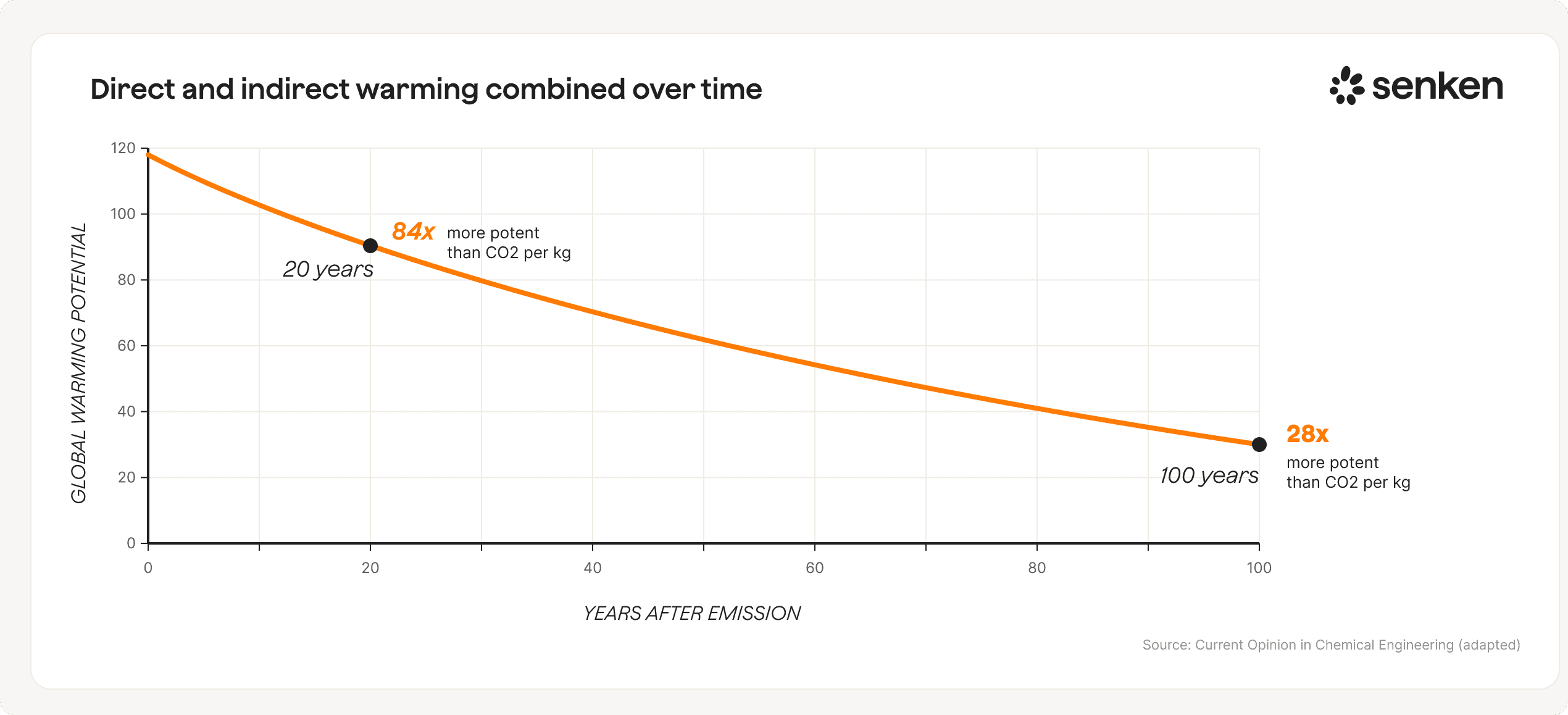
Methane is a greenhouse gas produced when organic material decomposes without oxygen or when natural gas leaks from fossil fuel infrastructure. While it receives less public attention than carbon dioxide, methane is roughly 81 times more potent than CO2 over 20 years and about 28 times more potent over 100 years. This extraordinary warming power, combined with an atmospheric lifetime of around a decade, makes methane reduction one of the most efficient levers available for near-term climate impact.
For corporate climate strategy, this difference matters. Cutting one tonne of methane today delivers far faster temperature benefits than eliminating an equivalent tonne of CO2. Where your long-term decarbonisation investments in industrial processes, fleet electrification, or supply chain transformation may take years to scale, methane reduction projects can deliver measurable cooling effects within your planning horizon. This makes methane mitigation a high-leverage complement to your CO2 reductions and carbon removals, not a replacement for them.
Leading agencies including the IEA and UNEP recognise methane reduction as essential to meeting 1.5°C pathways , and corporate procurement of high-integrity methane reduction credits is increasingly seen as a pragmatic tool to accelerate impact in sectors where you have influence but not direct operational control.
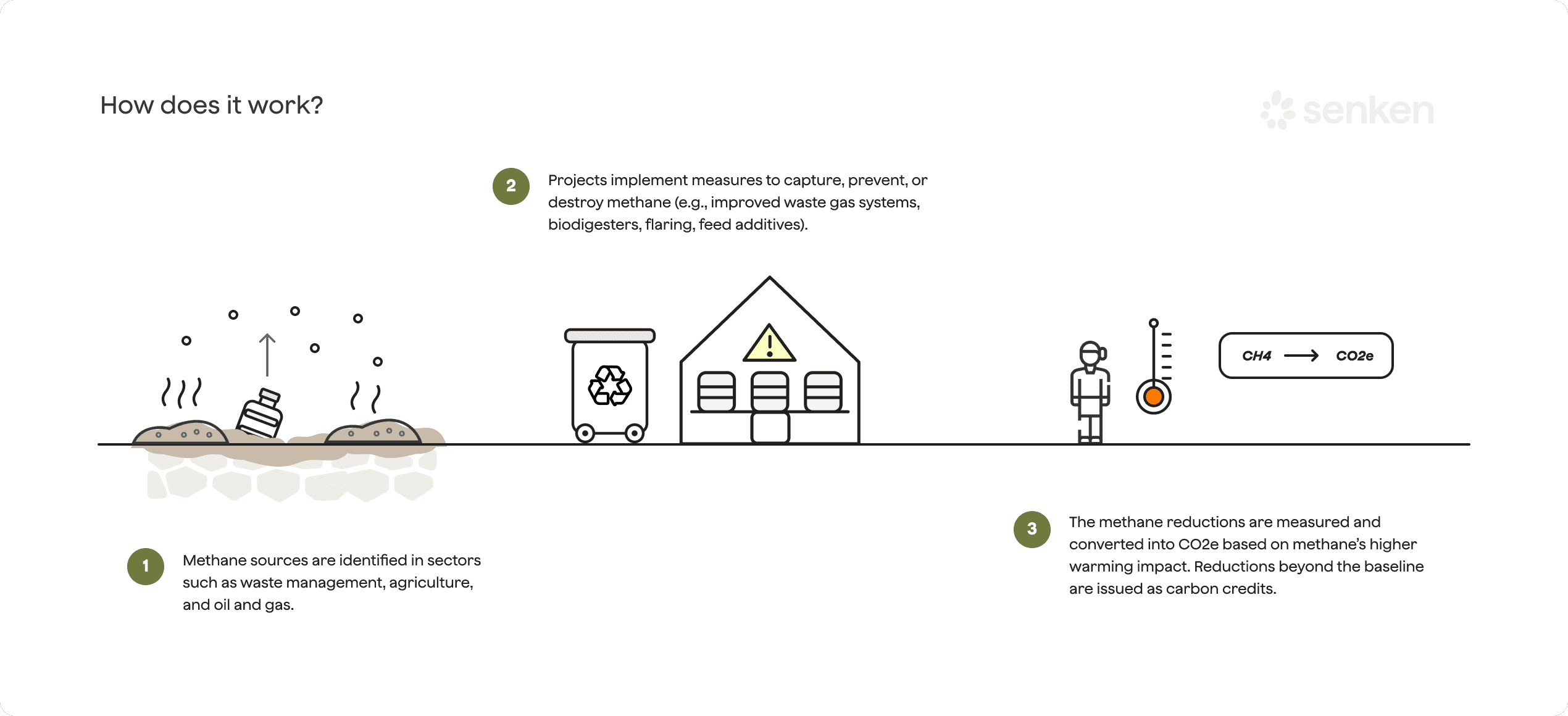
Understanding where methane comes from helps you map these emissions onto your own value chain and identify where methane reduction credits can complement supplier engagement and direct abatement.
Agriculture and livestock
Agriculture accounts for a substantial share of global methane emissions, primarily through three mechanisms. Enteric fermentation occurs when ruminant animals like cattle, sheep, and goats digest feed, producing methane as a natural by-product. Manure management generates methane when animal waste decomposes anaerobically in lagoons, pits, or storage tanks. Finally, flooded rice cultivation creates ideal conditions for methane-producing bacteria in waterlogged paddy fields.
For DACH companies in food, retail, hospitality, or consumer goods, agricultural methane sits squarely in Scope 3. While you cannot dictate practices at every farm in your supply chain, you can encourage suppliers to adopt lower-methane production methods and use high-integrity methane reduction credits to support projects in these sectors as part of your beyond value chain mitigation.
Landfills and organic waste
When organic waste breaks down in the absence of oxygen, whether in municipal landfills, open dumps, or wastewater treatment plants, it produces methane. Urban waste systems are major methane sources, especially where landfill gas collection infrastructure is absent or poorly maintained. Recent satellite studies indicate that landfill methane emissions are often under-reported, with actual collection efficiencies lower than regulatory estimates suggest .
Retail, FMCG, and logistics companies with significant waste footprints or municipal partnerships should pay close attention here. Even if your direct operations send minimal waste to landfill, waste in your product end-of-life or packaging value chain creates Scope 3 methane exposure and opportunities for targeted credit procurement.
Oil, gas, and coal operations
Fossil fuel systems leak, vent, and flare methane across production, processing, transmission, and distribution. Fugitive emissions are unintentional releases from equipment leaks, faulty seals, or aging infrastructure. Venting is the deliberate release of methane during maintenance or because capture is uneconomical. Flaring burns off excess gas, but incomplete combustion still releases methane. In coal mining, methane trapped in seams escapes during extraction or from abandoned mines.
Energy-intensive sectors and companies sourcing gas, fuels, or chemicals face material Scope 3 methane exposure from upstream suppliers. While some oil and gas firms are starting to generate LDAR credits or commit to zero routine flaring, much of this mitigation remains either voluntary or driven by emerging regulation rather than carbon finance, making careful due diligence essential when evaluating fossil-fuel-related methane credits.
Ways to reduce methane emissions by sector
Translating methane science into action requires knowing which levers exist, which are investable as carbon credits, and where they fit in your broader value chain strategy.
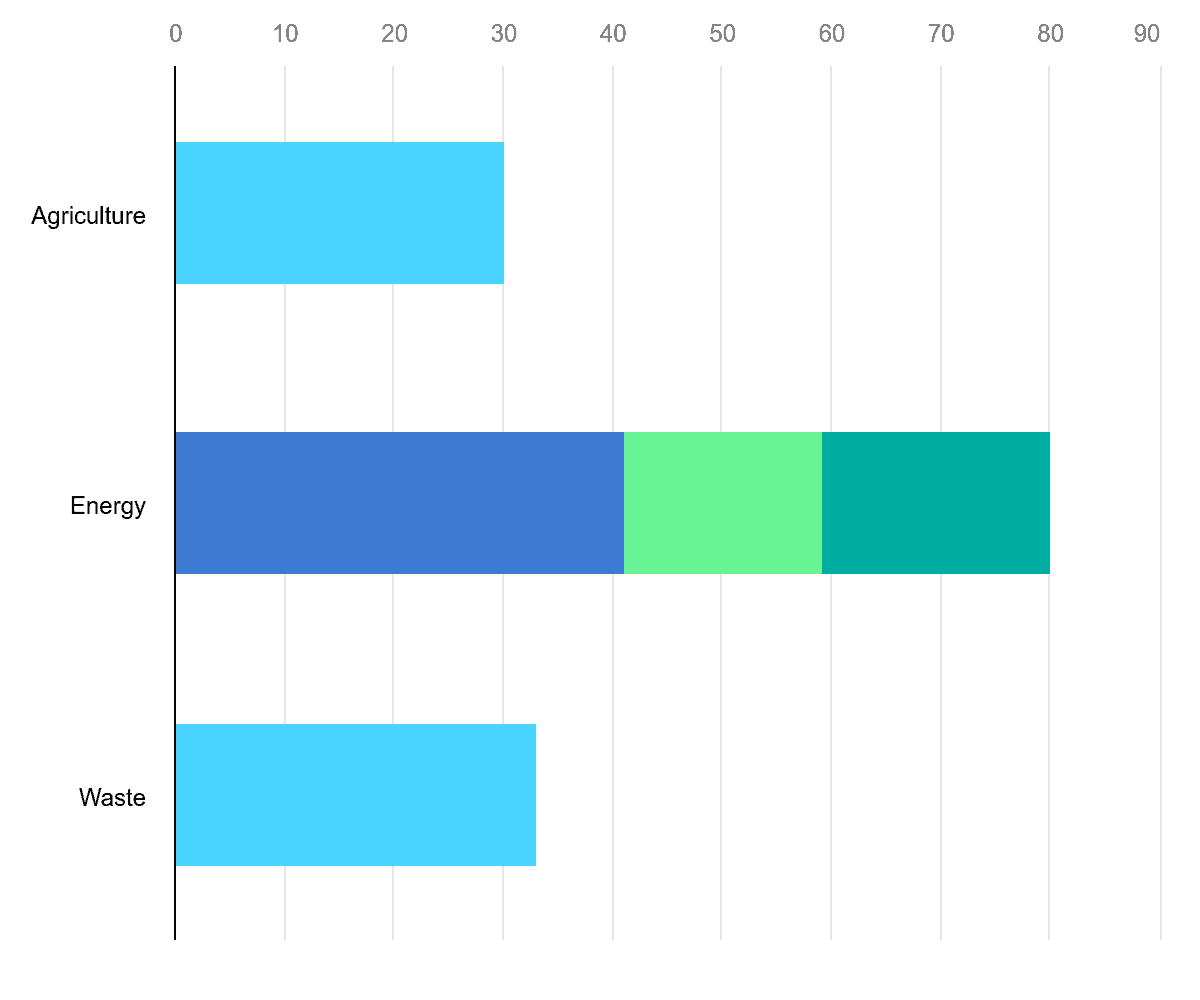
Agricultural methane mitigation solutions
Anaerobic digesters capture methane from livestock manure and convert it into biogas for energy or heat, eliminating open-air decomposition. Many digester projects issue carbon credits and deliver strong local air quality and water benefits. Feed additives that inhibit enteric fermentation in ruminants are emerging as a scalable intervention, though robust credit methodologies are still maturing. In rice production, alternate wetting and drying reduces the duration of field flooding, cutting methane emissions without harming yields, and is now supported by updated methodologies.
For most large DACH corporates, these levers will sit with your agricultural suppliers rather than in your direct operations. Procurement and supplier engagement strategies can encourage adoption, and you can selectively use credits from well-designed projects to accelerate high-impact interventions where your influence is limited.
Landfill gas capture and waste management
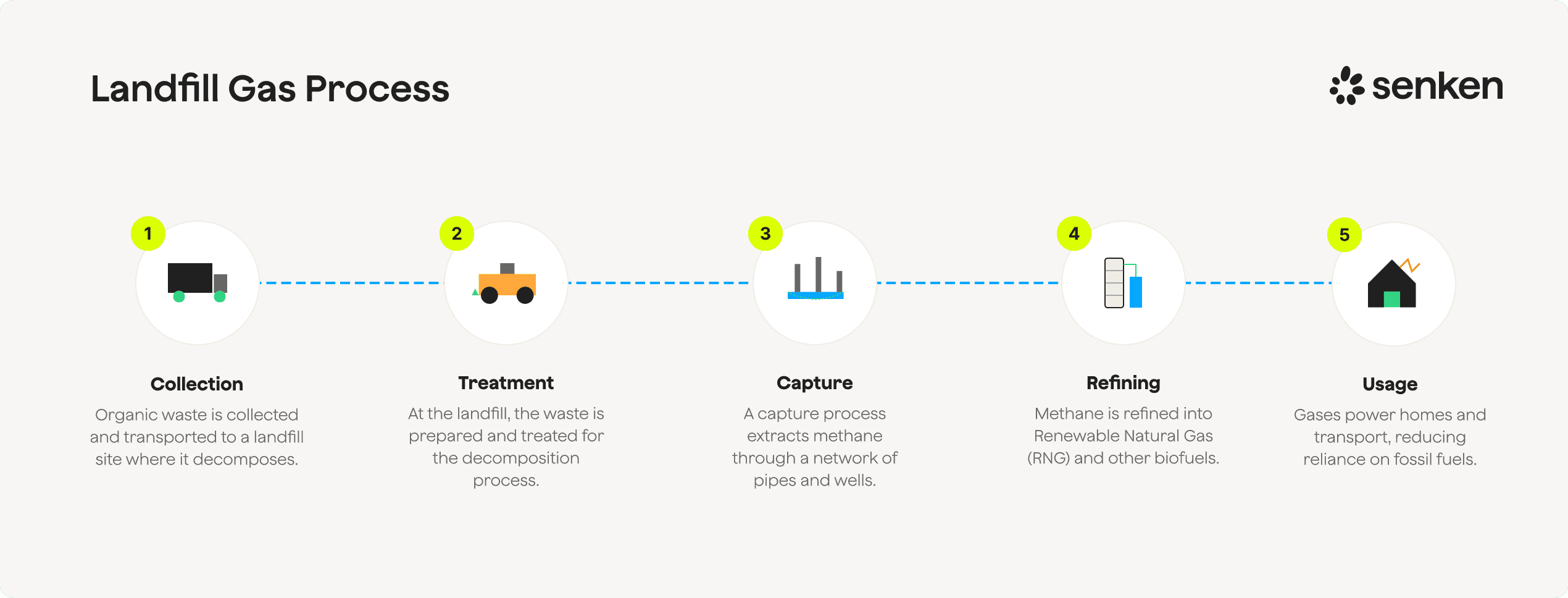
Installing or upgrading landfill gas collection and destruction systems captures methane before it escapes and either flares it or uses it for electricity or heat. Landfill gas projects were among the first to receive Core Carbon Principles approval, signalling growing demand for higher-quality supply, though additionality and baseline assumptions remain areas of scrutiny. Diverting organic waste to composting or anaerobic digestion prevents methane generation at source. Wastewater biogas systems capture methane from treatment plants and offer similar co-benefits.
Retailers, hospitality groups, and logistics firms can combine direct waste reduction programmes with strategic procurement of landfill gas or biogas credits to address value chain emissions beyond what supplier contracts alone can reach.
Eliminating fugitive emissions from fossil fuels
Leak detection and repair programmes use infrared cameras, drones, or satellites to find and fix methane leaks across production and transmission infrastructure. Some LDAR projects are now generating carbon credits under approved methodologies. Upgrading compressors and pneumatic devices reduces routine venting, and industry commitments to zero routine flaring eliminate deliberate methane releases during oil production. These interventions are technically mature, with existing technology capable of addressing the majority of oil and gas methane , but regulatory and commercial drivers vary widely by jurisdiction.
Energy-intensive companies or those with significant Scope 3 exposure to natural gas should note that not every fossil-fuel methane reduction is additional or eligible as a high-integrity credit. Some are regulatory obligations or operationally driven by the value of captured gas, making careful methodology review and third-party ratings essential.
Types of methane reduction carbon credits
Methane reduction activities become carbon credits when projects measure and verify avoided or destroyed methane, convert the impact into CO2-equivalent tonnes, and issue credits under recognised standards like Verra, Gold Standard, ACR, CAR, or GCC.
Landfill gas destruction projects
These projects install or upgrade systems to collect methane from municipal solid waste landfills, then destroy it in flares or combustion engines, often generating electricity. Landfill gas credits have seen rising volumes and modest price premiums following Core Carbon Principles approval , with well-designed projects offering strong permanence and measurable destruction.
However, integrity varies. Independent analysis found roughly 49 per cent over-crediting in some U.S. landfill protocols due to questionable additionality assumptions, underscoring the need to check whether the project faces regulatory requirements to collect gas, whether it would be financially viable without carbon revenue, and whether baseline and efficiency factors are conservative. When properly vetted, landfill gas credits offer significant near-term methane destruction and local air quality improvements.
Farm-based anaerobic digesters capture methane from livestock manure or crop residues and convert it into biogas, displacing fossil fuels and eliminating fugitive emissions. Wastewater treatment plants with biogas capture offer similar benefits. These projects typically score well on additionality when carbon finance enables otherwise uneconomic infrastructure, and they deliver strong co-benefits for local water and air quality.
Buyers should confirm that the digester is actively monitored, that captured biogas is genuinely used or destroyed rather than vented, and that the project does not simply shift manure to another uncontrolled site, which would create leakage.
Cookstove replacement projects
Improved cookstoves reduce methane and black carbon emissions from traditional biomass burning in households. While historically common in the voluntary market, recent research has shown large-scale over-crediting, with actual methane and emissions reductions often a fraction of claimed levels . Many high-integrity buyers, including platforms applying strict filters, now avoid generic cookstove credits or apply very conservative discounts.
If you are considering cookstove projects, insist on recent, independent verification using direct emissions monitoring rather than default factors, and prioritise methodologies and developers with strong ratings and transparent MRV.
Coal mine methane capture projects
These projects capture methane from active or abandoned coal mines, either through pre-drainage boreholes or ventilation air systems, and destroy or use the gas. Coal mine methane can be a large, concentrated source with significant climate impact when properly captured. However, several older methodologies were inactivated or revised in recent years due to integrity concerns , and buyers need to focus on up-to-date methods, high third-party ratings, and clear evidence that capture would not occur under business-as-usual.
Comparison of methane reduction credit types:
| Project Type | Emission Source | Primary Mechanism | Typical Co-Benefits | Integrity Considerations |
|---|---|---|---|---|
| Landfill gas | Municipal waste | Gas collection + destruction/energy | Air quality, local energy | Check additionality vs. regulation; verify collection efficiency |
| Biogas/manure | Livestock, wastewater | Anaerobic digestion + fuel displacement | Water quality, rural income | Confirm biogas use; assess leakage risk |
| Cookstoves | Household biomass | Improved combustion efficiency | Health, time savings | High over-crediting risk; require robust MRV |
| Coal mine methane | Mining operations | Methane capture + destruction/use | Mine safety, energy | Outdated methods common; verify additionality and current methodology |
Only a fraction of projects in each category meet stringent quality thresholds, making rigorous screening non-negotiable.
How to evaluate methane reduction credit quality
Greenwashing risk in methane credits is real, but you can drastically reduce it with a clear due diligence framework.
Additionality and accurate baselines
Additionality asks: would this methane reduction have happened without carbon finance? This is particularly tricky for landfill gas projects in jurisdictions with collection mandates, or where selling electricity from captured gas already makes the project viable. Updated methodologies and additionality tools released by major registries are designed to address these gaps , but legacy credits remain in circulation.
Ask whether the project was required by regulation at the time it started, whether common practice in the region already includes similar interventions, and whether financial analysis shows genuine need for carbon revenue. For baselines, check that emission factors for oxidation, collection efficiency, and methane generation are based on site-specific or conservative data rather than overly optimistic defaults. Recent rice methodology overhauls and landfill baseline critiques show how material these assumptions can be.
Robust monitoring and verification
The difference between high and low-quality methane credits often comes down to MRV. Projects relying on default factors and infrequent site visits carry higher risk of over-crediting than those using continuous measurement, digital MRV tools, or satellite verification. Emerging satellite and digital MRV systems are raising transparency in landfill and oil and gas sectors , and sophisticated buyers increasingly demand this level of scrutiny.
Verify that monitoring reports are published regularly, that an accredited third party conducts verification, and that the project is listed on a recognised registry such as Verra, Gold Standard, ACR, or CAR. Look for external ratings from agencies like BeZero, Sylvera, or Calyx, but do not rely on labels alone. Combine multiple integrity signals to triangulate quality.
Permanence and leakage considerations
Methane destruction has a strong permanence profile: once methane is oxidised in a flare or engine, it is converted to CO2 and water, and cannot 'reverse' in the way a forest fire might release stored carbon. However, leakage can still occur if, for example, waste is diverted from a controlled landfill to an unmonitored dump, or if manure from one digester-equipped farm simply displaces emissions to another location.
Good projects account for leakage in their monitoring plans and baselines. Check that the project documentation includes leakage assessments and that the methodology requires deductions for any identified risks.
Community co-benefits and safeguards
Methane projects can deliver significant social and environmental benefits beyond carbon, such as cleaner air for communities near landfills, improved livelihoods for farmers adopting biogas systems, and reduced health risks from traditional cookstoves. However, they can also cause harm if, for instance, landfill projects displace informal waste-pickers without just compensation or if rice interventions penalise smallholders.
Under CSRD and emerging Green Claims rules, your co-benefit and safeguards claims must be evidence-based. Look for projects with robust SD VISta certification, documented SDG contributions, and transparent community engagement. Senken's Sustainability Integrity Index evaluates projects across social, environmental, and governance dimensions, alongside carbon impact , reflecting the reality that integrity is not just about tonnes but about how those tonnes are delivered.
Practical quality checklist for methane reduction credits:
- Additionality: Project would not proceed without carbon revenue; no regulatory mandate; not common practice.
- Baseline: Conservative methane generation and collection assumptions; site-specific data preferred.
- MRV: Continuous or frequent measurement; independent verification; recognised registry.
- Permanence: Methane destruction documented; minimal reversal risk.
- Leakage: Assessment and mitigation plan in place; no emissions shifting.
- Safeguards: Evidence of community and environmental co-benefits; no documented harms.
- External validation: CCP label, CORSIA eligibility, or high rating from independent agencies.
With 84 per cent of carbon credits estimated to be high-risk , applying a rigorous, multi-layered integrity screen is the only way to ensure your procurement delivers real impact and withstands scrutiny.
How methane credits fit your climate strategy
Under SBTi, companies cannot use methane or any other credits to meet near-term Scope 1, 2, or 3 targets. Credits belong in the beyond value chain mitigation bucket. This is not a limitation; it is clarity. It means you reduce emissions as fast as science and operational reality allow, and you use methane credits strategically to deliver additional impact in areas where you have influence but not direct control.
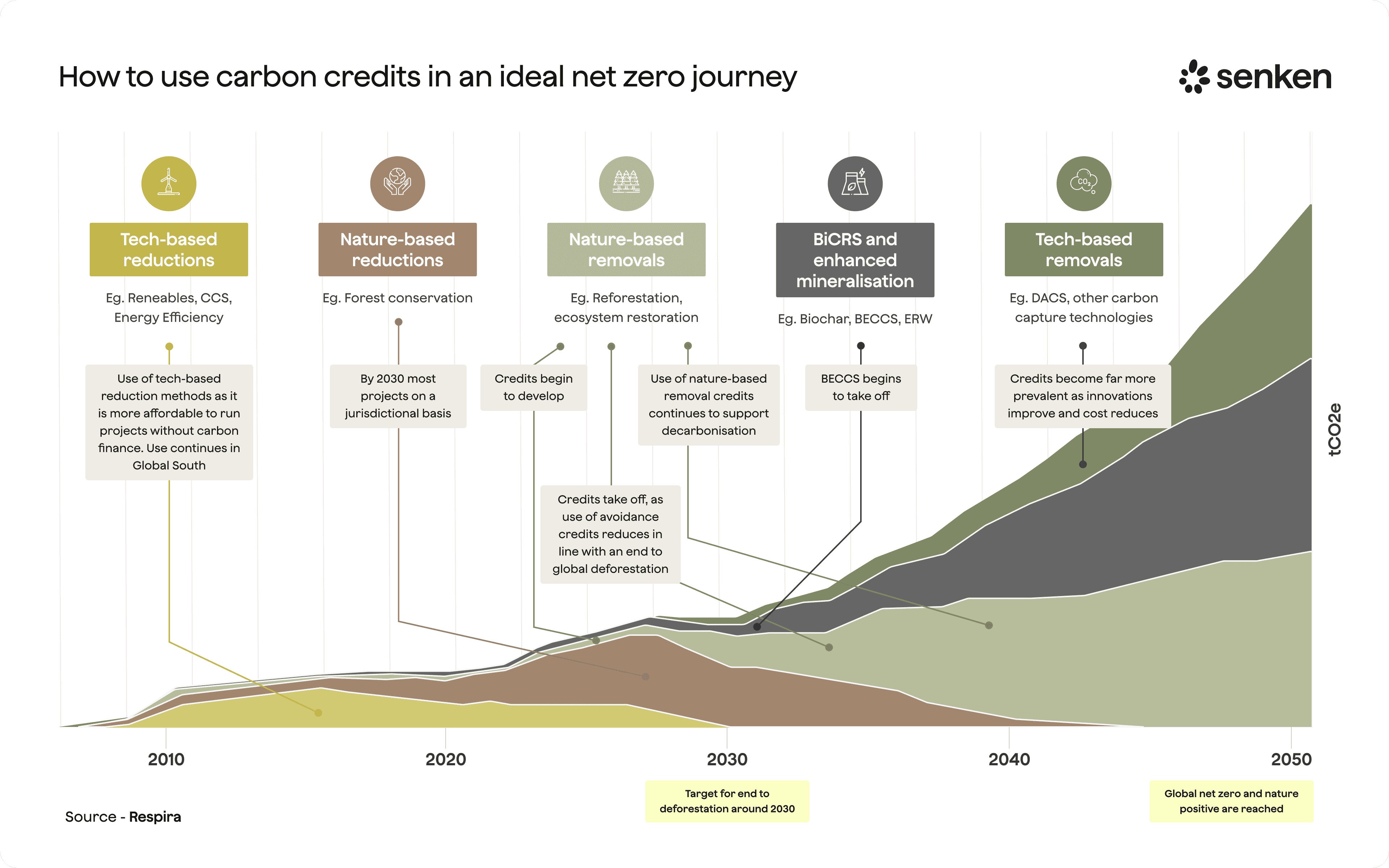
For example, a food retailer might be cutting Scope 3 emissions by reformulating products and engaging suppliers on regenerative agriculture, while simultaneously procuring biogas credits from dairy farms to accelerate methane capture beyond what those suppliers would do on their own. Or an industrial firm might fund LDAR credits from oil and gas regions that supply its feedstock, complementing direct supplier negotiations with measurable, verified near-term methane destruction.
The Oxford Offsetting Principles offer a practical evolution path: prioritise deep decarbonisation, use short-lived crediting from emission reductions like methane destruction now, and progressively shift your portfolio toward durable removals as your residual emissions fall and removal supply scales. This aligns with SBTi Net Zero 2.0 expectations that removal shares should gradually rise , making methane credits a transitional tool rather than an end-state solution.
Example portfolio archetypes for large DACH corporates:
- 'Impact Now' mix (2025–2030): Higher share of high-integrity methane and ODS destruction credits, plus nature-based projects with strong co-benefits. Focus on near-term warming reduction and measurable value chain engagement.
- 'Net Zero Ready' mix (2030–2040): Balanced portfolio with sustained methane procurement for ongoing beyond value chain mitigation, increasing allocation to biochar, enhanced weathering, and early-stage DAC to meet rising removal expectations under SBTi.
- 'Residual Coverage' mix (2040–2050): Dominated by permanent removals, with selective methane credits only for demonstrable additionality in hard-to-abate value chains where direct mitigation has plateaued.
When communicating methane credits internally to boards, finance, and works councils, and externally in CSRD reports or marketing, be precise: these credits fund verified methane destruction or avoidance beyond your value chain; they do not offset or neutralise your reported emissions, and they sit alongside, not instead of, aggressive in-house decarbonisation.
How to procure high-integrity methane reduction credits
Translate the quality framework into a concrete workflow that works for lean sustainability teams.
Step 1: Define the brief. Specify your BVCM volume, priority sectors (e.g., waste, agriculture, or oil and gas to match value chain exposure), geographies, and integrity requirements. Set minimum thresholds such as CCP or CORSIA eligibility, external rating of B or higher, and co-benefits priorities. Align with your legal and communications teams on what claims you intend to make and ensure your guardrails reflect the latest Green Claims Directive and CSRD guidance.
Step 2: Screen the market. Shortlist by project type, prioritising categories with stronger integrity track records: well-vetted landfill gas projects, ODS and refrigerant destruction, select biogas and manure management projects, and LDAR projects with robust additionality evidence. CCP-labelled landfill gas and ODS credits are seeing differentiated demand and pricing , signalling where the market is moving. Immediately exclude obsolete methodologies, projects with poor ratings, and categories that leading bodies have flagged as high-risk.
Step 3: Deep due diligence on a manageable set. For your shortlist, insist on full project documentation: PDD, monitoring reports, verification statements, external ratings, evidence of additionality, and regulatory context. Use platforms like Senken that screen projects across 600-plus data points and accept under 5 per cent of supply to cut through complexity without building an in-house technical team. This level of filtering ensures that only genuinely additional, well-monitored, and transparently governed projects reach your pipeline.
Step 4: Structure the purchase. Diversify across three to five thoroughly vetted projects and stagger vintages to manage methodology and policy risk. Current price ranges for high-quality methane credits vary: CCP-labelled landfill gas often trades in the low to mid single-digit USD per tonne, with premiums over generic supply . Prices are evolving as integrity signals harden, so lock in volumes early if you have multi-year BVCM commitments, but retain flexibility to adjust your portfolio as new methodologies and ratings emerge.
Step 5: Documentation and reporting. Maintain audit-ready files for every credit purchase: project name, ID, vintage, methodology, registry, volume, retirement certificate, integrity rationale, and co-benefits evidence. Set an internal review cycle, ideally annually, to refresh your credit policy as ICVCM assessments, SBTi guidance, and CSRD expectations evolve. This discipline protects you from greenwashing accusations and ensures that your procurement keeps pace with a fast-moving market.
Working with high-integrity partners like Senken that pre-screen projects, apply ICVCM and CSRD-aligned frameworks, and provide transparent documentation reduces the burden on your team and de-risks your strategy. The alternative, manual evaluation of hundreds of data points per project across dozens of methodologies, is simply not feasible for most corporate sustainability functions.