
Net Zero
What is Net Zero?
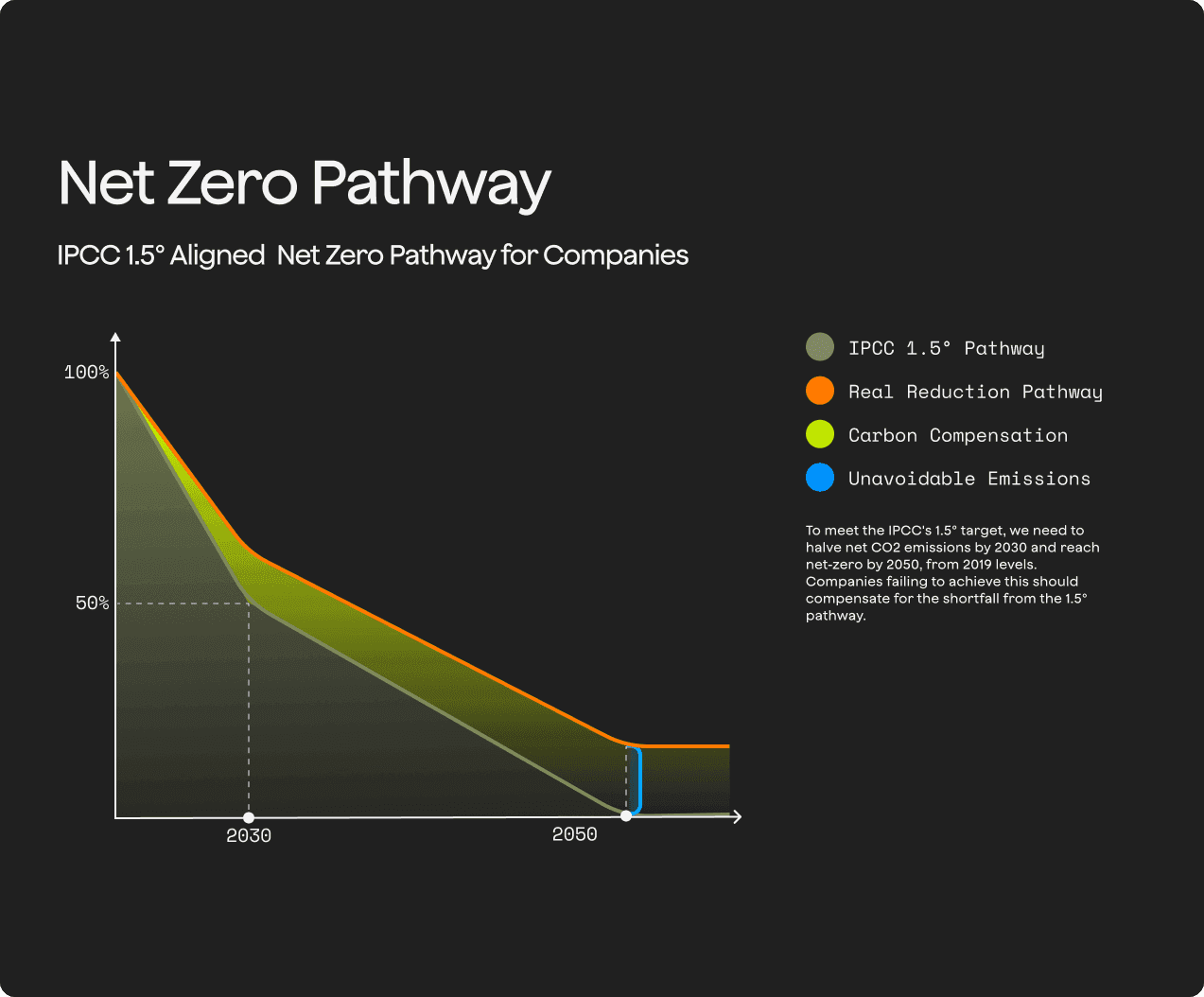
A company is considered to have reached Net Zero when the amount of carbon dioxide (CO2) or greenhouse gases (GHGs) it emits is neutralised by an equivalent amount that is being removed. This balance can be achieved by combining efforts to reduce or avoid direct emissions, and neutralising the remaining emissions by investing in carbon removal projects. Carbon neutrality generally focuses on CO2 emissions specifically, but it can also encompass other GHGs.
Standards Describing Net Zero & Carbon Neutrality
Key standards guiding carbon neutrality include:
- The Greenhouse Gas Protocol: A global framework for measuring and managing GHG emissions.
- PAS 2060: British Standards Institution's specifications for carbon neutrality.
- ISO 14064: International standard for quantifying and reporting GHG emissions and removals.
No global regulation currently enforces carbon neutrality.
The Spectrum of Climate Commitments
- Climate Neutrality: The initial step involving offsetting current emissions for all GHGs.
- Net Zero: A significant reduction in emissions across the entire value chain, with remaining emissions neutralised through carbon removals.
- Climate Positive: Beyond Net Zero, aiming to remove more greenhouse gases than emitted.
A company achieves Net Zero when its greenhouse gas (GHG) emissions are balanced by an equivalent amount removed. Unlike carbon neutrality, which focuses on offsetting CO2 emissions specifically, Net Zero emphasises reducing all greenhouse gases and is a more ambitious and comprehensive approach.
Large Companies with Targets
Several large companies have set carbon neutrality targets, signalling their commitment to sustainability. For instance:
- Google: Has been carbon neutral since 2007 and aims to be carbon-free by 2030.
- Apple: Plans to be carbon neutral by 2030, and has recently announced its first carbon neutral product.
- Microsoft: Plans to be carbon negative by 2030, meaning it will remove more carbon than it emits.
These companies, among others, are leading the way in corporate sustainability, demonstrating that ambitious climate goals are both feasible and beneficial for business.