Chapter
12
of
14

Direct Air Capture

Published:
Last updated:
December 21, 2025
Jump to section

Key Takeaways

  • Direct Air Capture with geological storage (DACCS) delivers permanent carbon removal with 1,000+ year storage horizons, making it the highest-permanence tool in an Oxford-aligned portfolio—but it should anchor, not replace, your broader removals strategy.
  • The DAC market has contracted 2.47 million tonnes but delivered only ~1,186 tonnes so far, with current offtake prices averaging $646/t (range $360–$1,818/t)—early procurement through multi-year agreements secures supply and locks in pricing before demand outstrips capacity.
  • Quality due diligence must verify five non-negotiables: additionality, geological storage permanence, renewable energy sources, robust MRV with third-party verification, and certification under Puro Standard, Verra VM0049, or the EU's Carbon Removal Certification Framework.
  • For most 1,000+ employee DACH companies, allocating 5–10% of portfolio volume to DACCS (often 20–40% of budget) demonstrates commitment to high-permanence removal while maintaining cost discipline and diversification across removal types.

If your board, auditors, or investors have started asking about Direct Air Capture in the past six months, you're not alone. CSRD's tightening scrutiny on offset quality, SBTi's draft Net-Zero Standard 2.0 signalling mandatory removals by mid-century, and the EU's new Carbon Removal Certification Framework explicitly recognising DACCS as permanent removal have pushed DAC from "emerging technology" to "strategic procurement question" for sustainability leaders across DACH.

High-profile offtakes—Microsoft's 500,000-tonne deal with 1PointFive, Airbus committing 400,000 tonnes, Amazon securing 250,000 tonnes—aren't just PR moves. They're first-mover positioning in a market where 2.47 million tonnes have been contracted but only ~1,186 tonnes delivered so far. This article won't sell you DAC as a silver bullet. Instead, it will show you how to understand what DACCS actually is, decide where it belongs in your net-zero roadmap, evaluate project quality with the same rigour you'd apply to any capital investment, and justify the spend internally with defensible arguments and CSRD-ready documentation.

Why Direct Air Capture Is on DACH Board Agendas Now

If you're fielding questions about Direct Air Capture from your CFO, auditors, or investors, you're not alone. DAC has moved from climate-tech blogs into boardrooms across Europe, and the shift has been rapid.

Regulatory Pressure: CSRD, SBTi, and the EU Carbon Removal Certification Framework

Three regulatory forces are converging. First, the Corporate Sustainability Reporting Directive (CSRD) demands hard proof for climate claims, turning carbon credits from a communications tool into a compliance artefact. Second, the Science Based Targets initiative (SBTi) is expected to introduce interim removal targets between 2026 and 2030, with removals likely starting at 0.5–2.8% of total emissions and scaling to 10% by 2050. Third, the EU Carbon Removal Certification Framework (CRCF) entered into force on 26 December 2024, explicitly recognising DACCS as a permanent carbon removal activity.

For sustainability leaders, this means DAC is no longer optional background reading. It's a lever you'll need to explain, evaluate, and potentially procure as part of a defensible net-zero pathway.

Combined EU CDR Strategy Policy Infographic

Why DAC Is Different from Generic "Carbon Capture" in Your Strategy

Most colleagues conflate Direct Air Capture with the carbon capture systems bolted onto industrial smokestacks. The confusion is understandable but costly. Point-source carbon capture prevents new emissions (avoidance), while DACCS—Direct Air Capture plus geological storage—removes legacy CO₂ already in the atmosphere (removal). The IPCC recognises DACCS as distinct from point-source CCS, noting that DAC's potential is limited mainly by low-carbon energy needs and cost rather than physical constraints.

This distinction matters for your claims, your risk profile, and your budget. CSRD auditors and SBTi validators will ask which tonnes are removals and which are avoidance. Getting this wrong creates reputational and compliance exposure.

What This Guide Will and Will Not Do

This article will not sell you DAC as a miracle solution. Instead, it will show you how to understand what DAC and DACCS really are, decide if and where they belong in your net-zero roadmap, evaluate project and credit quality with a repeatable checklist, and justify the spend internally with language you can take straight into finance and board presentations.

We assume you're already driving aggressive in-house decarbonization. DAC is for the residual emissions that remain after you've done that hard work—and for building the long-term removal capacity the world will need at scale.

What Is Direct Air Capture Carbon Removal?

Clear Definitions: DAC, DACCS, and Point-Source CCS

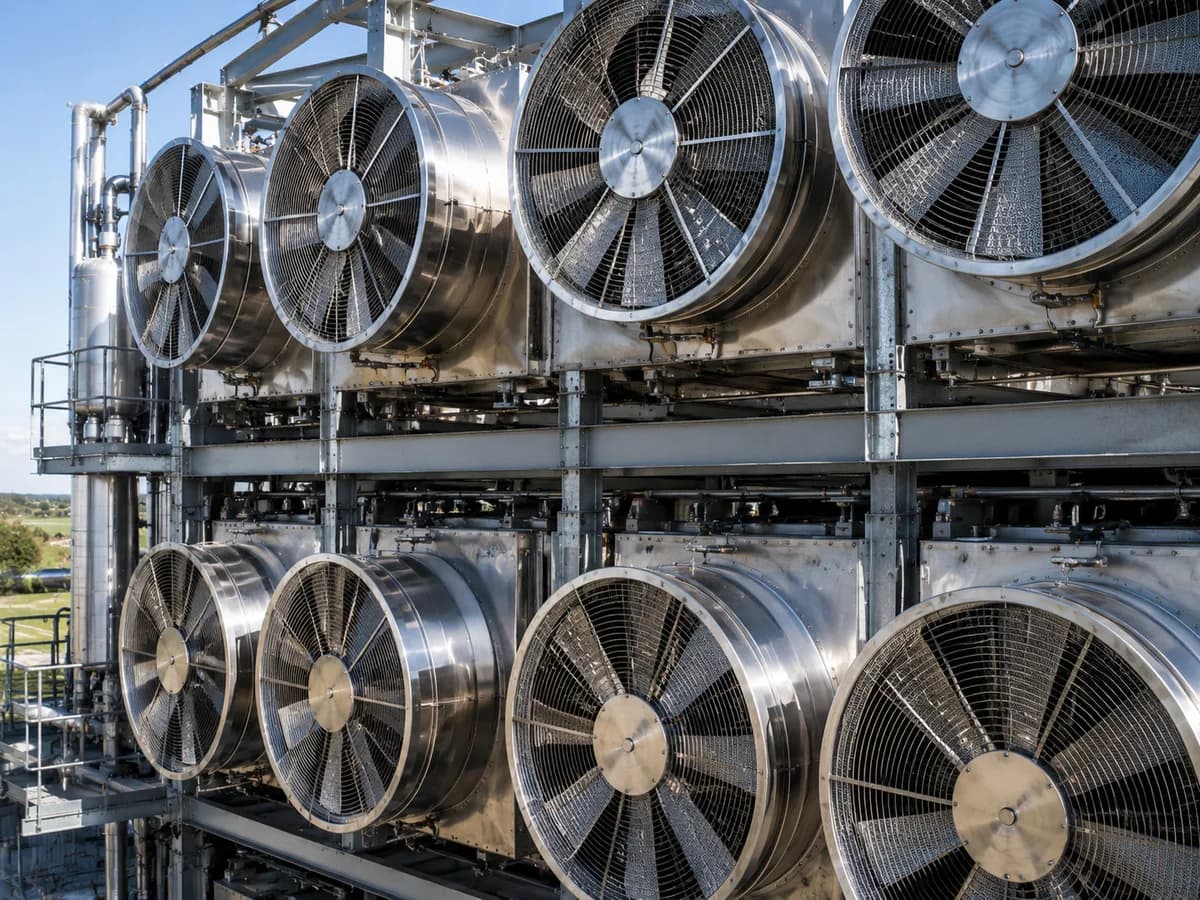
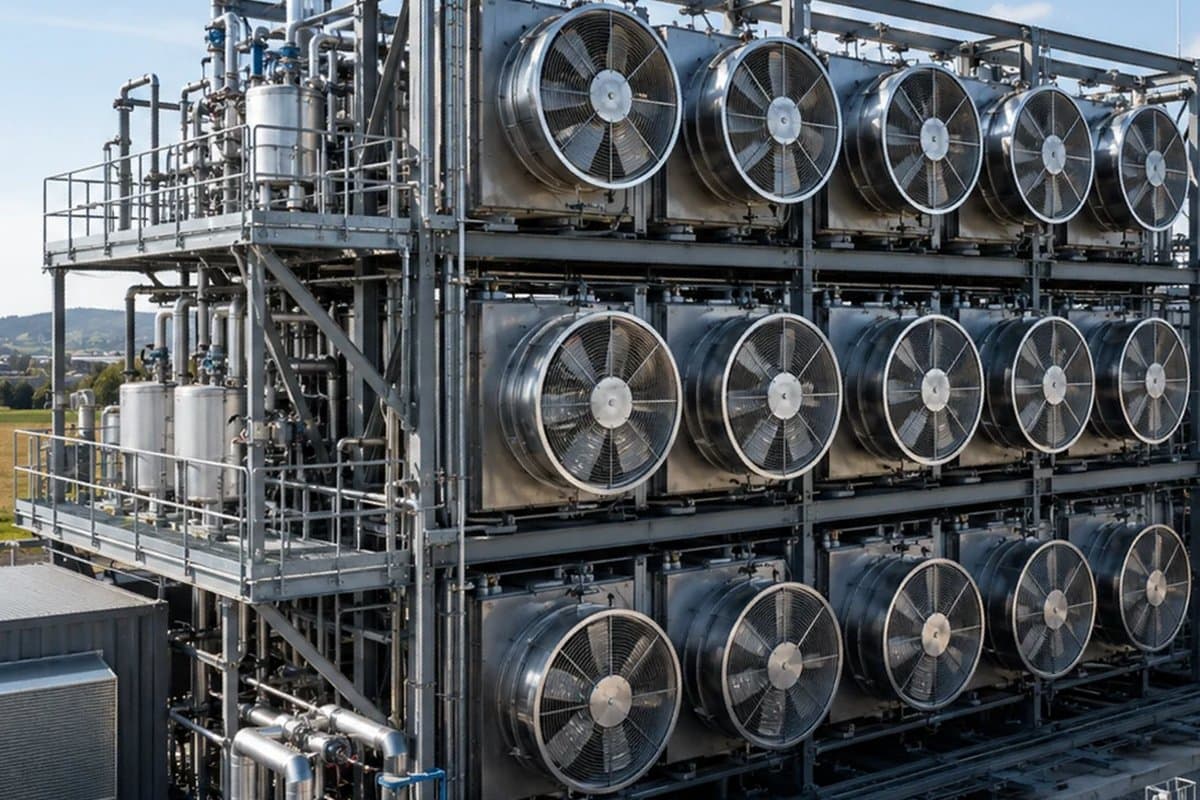
Direct Air Capture (DAC) refers to engineering systems that separate CO₂ directly from ambient air for subsequent use or storage. Think of it as a large-scale air filter optimised for one molecule: carbon dioxide at roughly 420 parts per million.

DACCS—Direct Air Carbon Capture and Storage—is DAC paired with durable geological storage, and this is the IPCC's formal term. Only DACCS delivers the permanent removal needed for high-integrity net-zero claims. DAC feeding synthetic fuels or other utilisation routes can be climate-useful, but it typically counts as temporary storage or emissions avoidance, not permanent removal.

Point-source CCS, by contrast, captures CO₂ from concentrated flue gases at cement plants, steel mills, or power stations—usually 4–30% CO₂ versus ambient air's ~0.04%. It's an emissions-avoidance tool, preventing new emissions from entering the atmosphere in the first place.

Where DACCS Fits in a Net-Zero Roadmap

IPCC scenarios assume rapid decarbonization plus large-scale removals, not either/or . In your roadmap, DACCS appears after you've cut Scope 1 and 2 through electrification, efficiency, and fuel switching, and after you've addressed the bulk of Scope 3 through supplier engagement and product redesign.

DACCS is for the genuinely hard-to-abate remainder: the last 5–10% of emissions that would take decades or prohibitive cost to eliminate at source. It's also the tool for addressing legacy emissions and building your long-term removal capacity in line with SBTi's evolving requirements.

Company net zero roadmap showing steep gross emission reductions followed by use of direct air capture DACCS for hard-to-abate residual and legacy emissions

Which Climate Claims DACCS Supports (and Which It Does Not)

DACCS credits support permanent removal or neutralisation claims when paired with residual emissions. They are recognised under the Oxford Offsetting Principles as high-durability removal and are compatible with both the EU CRCF's permanent removal category and emerging SBTi guidance.

DAC without storage, or DAC CO₂ fed into e-fuels, does not qualify as permanent removal. It can support circular carbon or low-carbon product narratives, but your auditor will categorise it separately. Be precise in your disclosures; ambiguity here invites scrutiny.

How Direct Air Capture Technology Works

Core Process Steps in Direct Air Capture Technology

The basic sequence is universal across DAC designs:

  1. Air contact: Fans draw large volumes of ambient air over a contactor surface.
  2. Capture: A sorbent material (solid) or solvent (liquid) selectively binds CO₂.
  3. Regeneration: Heat, vacuum, or electrochemical stimulus releases the CO₂ as a concentrated stream.
  4. Compression and transport: The pure CO₂ is compressed for pipeline or truck transport.
  5. Storage or use: The gas is injected into geological formations for permanent storage or used as feedstock.

Literature surveys place DACCS energy requirements around 6.7–22.7 GJ per tonne of CO₂, with solid-sorbent systems typically at the lower end . The energy source is decisive: a life-cycle assessment by RWTH Aachen for Climeworks indicates greater than 90% net removal efficiency when powered by low-carbon energy .

Key DAC Technologies: Solid Sorbents, Liquid Solvents, and Emerging Approaches

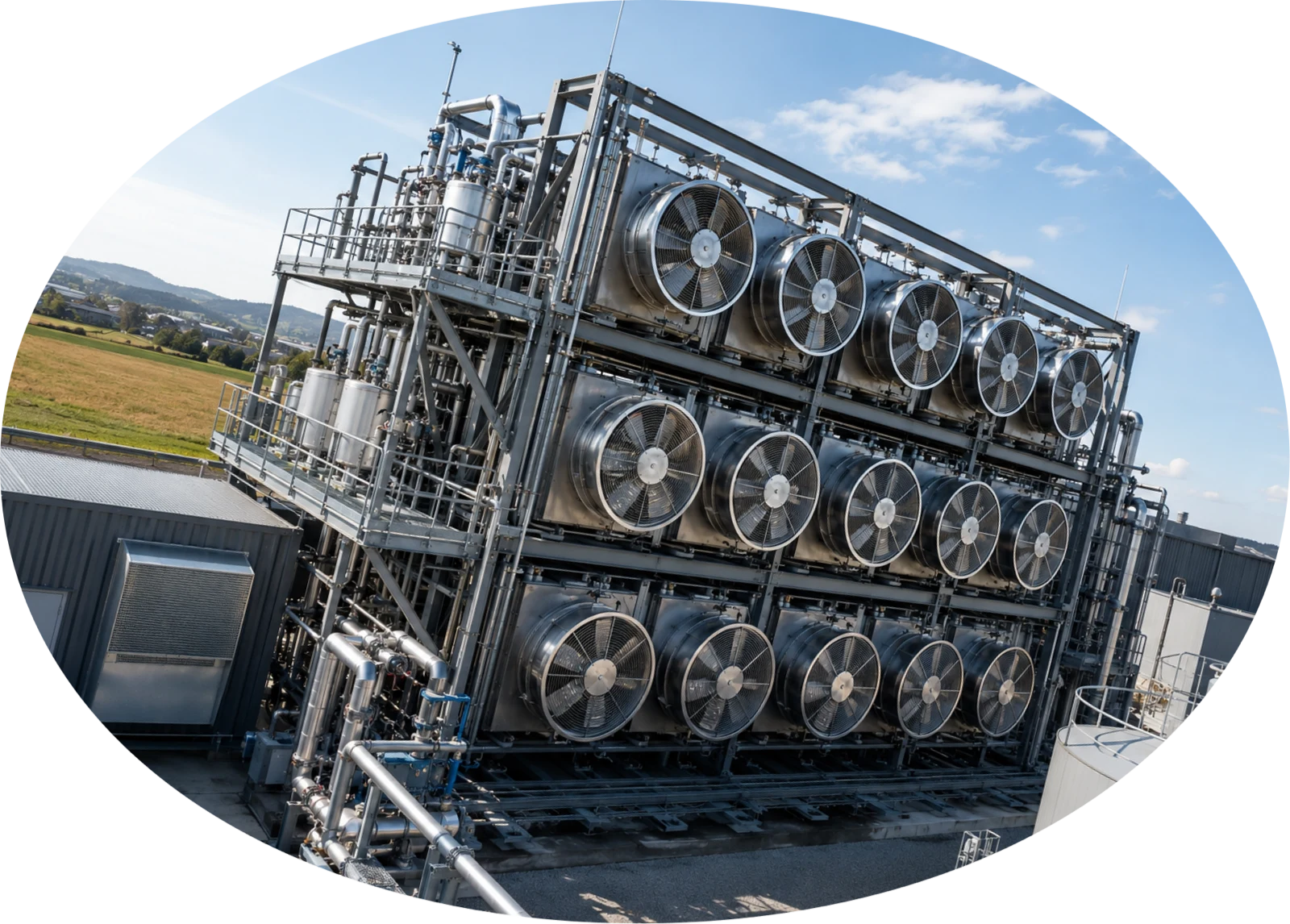
Solid-sorbent DAC uses modular contactors with amine-functionalized filters. Climeworks' systems in Iceland use low-temperature geothermal heat to regenerate the sorbent , achieving high net removal with minimal fossil input. Solid systems tend to be modular and lower-temperature, making them well-suited to renewable heat sources.

Liquid-solvent DAC runs a hydroxide solution through large towers, then uses high-temperature calcination to release CO₂. Carbon Engineering's design, now deployed by 1PointFive at the STRATOS plant in Texas, targets 500,000 tonnes per year with Class VI geological storage permits . Solvent systems are typically fewer, larger units, and the calcination step demands substantial heat.

Emerging approaches include Heirloom's mineral-looping DAC using limestone in Tracy, California , electrochemical DAC (Mission Zero, UK), and moisture-swing concepts (Avnos, Carbyon). These are fast-moving but earlier-stage; expect them to reach scale over the next five years.

Why the Energy Source Determines Net Removal and Risk

A DAC plant powered by coal-fired electricity can emit more CO₂ than it removes. Climeworks achieves greater than 90% net removal by using geothermal power ; any fossil-based energy would collapse that figure. When evaluating projects, ask for the energy mix and the life-cycle assessment. If the supplier can't provide both, walk away.

Direct Air Capture vs Point-Source Carbon Capture

Ambient Air vs Flue Gas: Concentration and Siting

Point-source capture works with flue gases at 4–30% CO₂; Direct Air Capture pulls from ambient air at roughly 0.04% (420 ppm). That 100-fold concentration difference drives everything: energy intensity, equipment size, and ultimately cost.

The trade-off is site flexibility. Point-source capture must sit at the emitter—a cement kiln, a steel mill. DAC can be placed wherever low-carbon energy and geological storage coincide, which is why Iceland's geothermal parks and Texas's depleted oil fields host the first commercial plants.

Removal vs Avoidance in Your Carbon Accounts

Point-source CCS prevents a ton of CO₂ from leaving the stack. It's avoidance—valuable, but it doesn't address historical emissions or the atmospheric stock of CO₂. DACCS takes a ton out of the air. It's removal, which is what you need for neutralizing residual emissions under SBTi and for long-term climate stabilization.

IPCC scenarios require both rapid decarbonization and large-scale removals. Your roadmap should show CCS linked to industrial decarbonization in Scope 1 and 2, and DACCS reserved for residual neutralisation and long-term removal obligations.

Explaining the Cost Gap Internally

The concentration gap also explains the cost gap. Capturing CO₂ at 10% concentration is cheaper than at 0.04%. That's physics, not inefficiency. When finance asks why DAC costs $600–$1,000+ per tonne versus $50–$100 for industrial CCS, the answer is thermodynamics and maturity: we're paying for the permanence, the flexibility, and the early-stage learning curve.

Frame it this way: point-source CCS is for the emissions we're still creating; DACCS is for the emissions we've already created and for the hard-to-abate tail we can't eliminate any other way.

Major Direct Air Capture Plants and DAC Projects You Should Know

Climeworks in Iceland and Relevance for European Buyers

Climeworks operates Orca (4,000 tonnes per year) and Mammoth (up to 36,000 tonnes per year) at the Hellisheiði geothermal park in Iceland. Both use solid-sorbent DAC paired with Carbfix mineral storage in basalt, and Orca was the first DAC project certified under the Puro Standard, verified by DNV .

For European corporates, Climeworks represents the most mature, certified, geographically proximate DACCS supply. Senken's portfolio includes Climeworks' Mammoth plant, which is powered by 100% renewable geothermal energy and locks CO₂ away for more than 10,000 years through natural mineralisation. Expect limited near-term volumes and premium pricing, but also the cleanest documentation and MRV you'll find in the market today.

US Mega-Projects and DAC Hubs: STRATOS, Project Cypress, South Texas

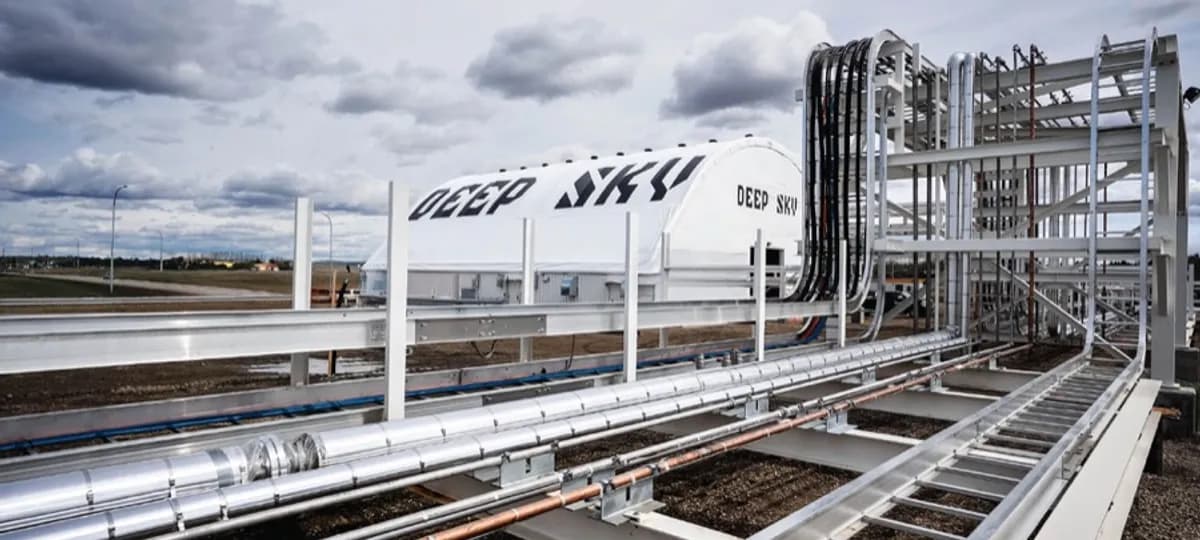
1PointFive's STRATOS plant in Ector County, Texas, is designed for up to 500,000 tonnes per year and received EPA Class VI injection permits in April 2025 . It uses Carbon Engineering's liquid-solvent technology and has large multi-year offtakes with Microsoft, Amazon, Airbus, and AT&T. Commercial operations are targeted for 2025.

The US Department of Energy's Project Cypress DAC Hub in Louisiana received its initial $50 million tranche in March 2024, with partners Battelle, Climeworks, and Heirloom aiming for approximately 1 million tonnes per year by 2030 . The South Texas DAC Hub at King Ranch received $50 million in September 2024, also targeting 0.5–1 million tonnes per year.

For DACH buyers, US projects offer future volume but come with delivery lag and policy risk. Reporting in March 2025 indicated potential DOE cuts to large DAC hubs' federal support, with only initial tranches disbursed and future appropriations under review. Diversify rather than betting everything on a single US hub.

Emerging DAC Providers and Global South Projects

Heirloom's Tracy plant in California is the first US commercial DAC facility, using mineral looping to deliver up to 1,000 tonnes per year, with CO₂ mineralised in concrete via CarbonCure. Global Thermostat operates a kiloton-scale unit in Commerce City, Colorado, using low-temperature solid sorbents.

Octavia Carbon in Kenya is developing DAC paired with in-country mineral storage, leveraging geothermal power in the Rift Valley. It's an early signal that DAC won't remain a wealthy-country technology. For buyers, Global South projects offer co-benefit narratives and future diversification, but expect smaller volumes and longer timelines in the near term.

How Much Does Direct Air Capture Cost Today?

Current Direct Air Capture Cost Ranges and What Drives Them

Frontier, the advance market commitment led by Stripe,

Direct Air Capture Cost Reduction Pathways Chart

Alphabet, Meta, Shopify, and McKinsey, reports a current DAC offtake price range of $360–$1,818 per tonne of CO₂, with an average offtake price of $646 per tonne. These are contract prices for future delivery, not spot prices for tonnes on hand today.

Cost drivers include technology type (solid sorbent is typically lower energy, liquid solvent is higher throughput), plant scale (first-of-a-kind versus nth plant), energy prices and availability, financing conditions, and location-specific factors like permitting and storage access.

Climeworks' publicly stated cost reduction path targets approximately $400–$600 per tonne by around 2030, with longer-term capture costs (excluding storage) of $250–$350 per tonne . The US Department of Energy's Carbon Negative Shot aims for less than $100 per tonne of net removed CO₂ by approximately 2032 . These are ambitions, not current quotes.

Policy Support Shaping Price Signals (45Q, DOE Carbon Negative Shot)

The US Section 45Q tax credit provides $180 per tonne for DAC with secure geological storage and $130 per tonne for utilisation or enhanced oil recovery, if prevailing wage and apprenticeship criteria are met. Base rates drop to $36 and $26 if labour rules aren't met, and credits run for 12 years.

For European buyers, 45Q matters because it floors the US market price and influences global benchmarks. A US project receiving $180/t in tax credits can offer credits to corporates at $400–$600/t and still be profitable. Without 45Q, those same projects would need $600–$800/t or more. European policy has no equivalent subsidy yet, which is one reason Climeworks' Icelandic projects command premium pricing.

What a DACH Corporate Should Realistically Budget

Plan for high three-digit to low four-digit euros per tonne over the next few years. If your internal model assumes $100/t DAC in 2026, reset expectations now. By 2030, demand for removals is expected to exceed supply by at least 1 gigaton, with prices potentially jumping to approximately $146 per tonne for high-quality durable removals . DAC, as the highest-permanence and scarcest removal type, will likely sit at or above that market-clearing price.

Allocate a higher share of your removals budget to DAC than you would by volume. If DAC represents 5% of your tonnes, it may represent 20–30% of your spend. Frame this internally as paying for permanence, for compliance optionality under evolving SBTi rules, and for securing scarce future supply before prices rise further.

Challenges with Scaling Direct Air Capture Technology

Energy, Land, and Water Constraints

DACCS energy needs range from roughly 6.7 to 22.7 GJ per tonne of CO₂, with solid-sorbent systems at the lower end. At a multi-megaton scale, that translates to gigawatts of low-carbon power. DAC must co-locate with renewables, nuclear, or geothermal; otherwise, net removal collapses and reputational risk spikes.

Land and water use are modest compared to afforestation or bioenergy, but they're not zero. Siting and permitting for large plants will be bottlenecks, especially where geological storage requires new pipeline infrastructure or Class VI well permits. Expect project timelines of five to seven years from announcement to first tonne delivered.

Supply Risk: Contracted vs Delivered Tonnes

Across 2022 to mid-2025, 2.47 million tonnes of DAC were contracted, but only approximately 1,186 tonnes had been delivered, with Climeworks accounting for roughly 81% of delivered DAC tonnes . That's a three-orders-of-magnitude gap between promise and performance.

For procurement, this means three things. First, diversify suppliers rather than concentrating risk. Second, negotiate strong make-good clauses in offtake agreements (more on this in the procurement section). Third, work with intermediaries like Senken who continuously track delivery performance and hold suppliers accountable, rather than managing one-to-one developer relationships yourself.

The Moral Hazard and Reputational Debate

Critics argue that DAC gives emitters a license to keep polluting. The concern is real, but the framing is wrong. IPCC scenarios assume rapid decarbonization plus large-scale removals, not either/or. The Oxford-led State of CDR 2024 assessment finds the world will need 7–9 gigatonnes of CO₂ per year of sustainable removals by mid-century, while all novel removals today total well below 1 million tonnes per year .

Prepare language for internal comms and external stakeholders: "We are investing in DAC and cutting our gross emissions by [X]% by [year]. DAC addresses the residual emissions we cannot eliminate and helps build the removal infrastructure society will need at scale." Lead with reductions, follow with removals, and show both in your reporting.

How to Evaluate Direct Air Capture Carbon Credits

Non-Negotiable Quality Criteria: Additionality, Permanence, and MRV

Additionality: In a sector where capture costs exceed $400/t, carbon revenue is almost always essential to project viability. The key question is whether the project would have happened anyway due to other revenue streams (e.g., CO₂ for food-grade use). For DACCS with geological storage, carbon credits are typically the primary revenue, making additionality straightforward. For DAC feeding utilisation, dig deeper.

Permanence: Geological storage in basalt or saline aquifers locks CO₂ away for more than 10,000 years. Mineralisation in concrete offers 1,000+ years. Utilisation in synthetic fuels typically offers zero permanence—the carbon is released when the fuel burns. Only storage delivers the permanence needed for SBTi and Oxford-aligned strategies.

Measurement, Reporting, and Verification (MRV): Look for continuous or batch metering of captured and injected CO₂, third-party verification by recognised bodies (DNV, TÜV, etc.), issuance on credible registries, and alignment with established methodologies. Climeworks' Orca achieved certification under the Puro Standard with DNV verification, and Verra released VM0049 and accompanying DAC, transport, and storage modules in 2024. These are your quality anchors.

Energy Mix, Storage Route, and Project Design Red Flags

Red flags include:

  • Fossil-based power without carbon capture on the power source itself. This undermines net removal and invites criticism.
  • Weak evidence on storage integrity: no Class VI permits (US), no independent monitoring, or vague language about "partnerships" for storage without named operators.
  • Opaque transport and storage partners: if the DAC developer can't name the storage operator and show permits, assume the CO₂ is going somewhere less permanent.
  • Utilisation pitched as removal: DAC CO₂ for greenhouses, beverages, or fuels is fine as a business model, but it's not permanent removal. Don't pay removal prices for utilisation credits.

Certification, Registries, and CSRD-Ready Documentation

The EU Carbon Removal Certification Framework (CRCF) entered into force on 26 December 2024 and explicitly recognises DACCS as a permanent carbon removal activity. Expect delegated acts to specify MRV requirements, but the broad category is settled.

For near-term purchases, prioritise projects certified under Puro Standard (for DACCS) or Verra VM0049. Both provide third-party verification, registry issuance, and transparent methodologies. For CSRD reporting, you'll need methodology references, verification reports, registry IDs, project baselines, and serial numbers for retired credits. Senken's Sustainability Integrity Index evaluates over 600 data points across carbon impact, co-benefits, reporting, and compliance, ensuring that only the top approximately 5% of market credits enter customer portfolios. This level of diligence is what CSRD auditors will expect; if your supplier can't provide it, find one who can.

Fitting Direct Air Capture into Your Carbon Portfolio

Oxford-Aligned Portfolio Design for Large DACH Companies

The Oxford Offsetting Principles call for a portfolio anchored in high-durability removals, with a gradual shift from avoidance and short-lived removals toward long-lived and geological storage over time. DACCS sits at the top of the durability ladder, alongside enhanced weathering and geological biochar storage.

A pragmatic Oxford-aligned portfolio for a large DACH company in 2025–2030 might look like:

  • 5–10% DACCS (high permanence, high cost, high credibility)
  • 10–20% other durable removals (biochar, enhanced weathering)
  • 30–40% nature-based removals (high-quality ARR, peatland, mangrove restoration with strong MRV)
  • 30–40% best-in-class avoidance (renewable energy, cookstoves with health co-benefits, selected REDD+ with community governance)

By volume, DAC is a small slice. By budget, it may be 20–40% of your removals spend. By strategic value—regulatory optionality, stakeholder credibility, future supply security—it's foundational.

How Much DAC to Buy: Volumes, Budgets, and Timing

Start modestly. For a company with 50,000 tonnes of residual emissions, buying 2,500–5,000 tonnes of DACCS per year (5–10% of residuals) is a defensible starting allocation. At $600/t, that's €1.5–3 million per year—material but not unmanageable.

High-quality carbon removal prices are projected to increase from approximately $50 per tonne today to $146 per tonne by 2030, and DAC, as the scarcest removal type, will likely exceed that average. Early procurement locks in today's prices and secures volume before supply tightens further. Buying 10,000 tonnes of durable removals today at $50 per tonne costs $500,000; waiting until 2030 at $146 per tonne costs $1.46 million, a 65% saving from early purchase. The same logic applies to DAC, though at higher absolute prices.

Combine small spot purchases (to build internal familiarity and gather documentation for pilots) with multi-year offtake agreements for 2026–2030 delivery. Offtakes lock in price and volume, align with your SBTi interim targets, and signal commitment to suppliers, which can unlock better terms.

Linking DAC Procurement to SBTi Targets and Internal Approvals

SBTi is expected to introduce interim removal targets between 2026 and 2030, likely starting at 0.5–2.8% of total emissions and increasing gradually to 10% of all scopes by 2050 . By 2035, approximately 7% of residual emissions must be addressed by novel removals (1,000+ year permanence), rising to 32% by 2050 .

Map your DAC procurement to these milestones. If your total emissions are 100,000 tCO₂e and you commit to SBTi Net Zero, you'll need roughly 500–2,800 tCO₂ of removals in the first interim period (2026–2030), scaling to 10,000 tCO₂ by 2050. A portion of that—starting at 7% and rising to 32%—should be novel, high-permanence removals like DACCS.

Show finance a scenario model: "If we wait, prices double and supply tightens. If we start now with [X] tonnes per year via multi-year offtakes, we lock in cost certainty and meet SBTi requirements without last-minute scrambles." That's a risk-management argument, not a sustainability wish list.

Practical Steps to Procure Direct Air Capture Credits Safely

Deciding Between Spot Purchases and Offtake Agreements

Spot purchases (buying credits already issued and sitting in a registry) work for small volumes, pilot projects, and immediate communication needs. They're simple, fast, and let you test documentation quality. The downside: very limited volumes available today, and you pay current market prices with no future cost certainty.

Multi-year offtake agreements commit you to buy a specified volume per year over three to ten years, typically at a fixed or escalating price. Contracted DAC volumes across 2022 to mid-2025 reached 2.47 million tonnes, with large buyers like Microsoft (approximately 833,000 tonnes) and Airbus (400,000 tonnes) securing supply via offtakes . Offtakes give you price certainty, secure scarce future supply, and align with long-term net-zero targets. The downside: capital commitment, delivery risk, and the need for strong contract terms.

For most large companies, the right answer is both: spot purchases for 2025–2026 to build familiarity, and a modest offtake (e.g., 1,000–5,000 t/year for 2027–2031) to lock in supply and budget.

Key Commercial and Risk Terms to Negotiate

Work with procurement and legal to cover:

  • Delivery windows and ramp-up schedules: When exactly will tonnes be issued? What happens if the plant is delayed?
  • Make-good mechanisms: If the project under-delivers, does the supplier source replacement tonnes, refund, or roll volume into future years?
  • Price-escalation clauses: Fixed price, CPI-linked, or benchmarked to a removal index?
  • MRV and reporting obligations: Who provides verification reports, registry serial numbers, and CSRD evidence packs?
  • Buffer or insurance arrangements: Does the supplier hold a buffer pool for reversals or delivery shortfalls?
  • Termination rights: Can you exit if quality or compliance issues emerge? What are the notice periods and penalties?

The gap between contracted (2.47 million tonnes) and delivered (approximately 1,186 tonnes) DAC credits underlines why strong delivery and make-good clauses are essential . Don't accept vague promises; insist on named projects, permits, and third-party verification before signing.

How Senken Supports End-to-End DAC Procurement

Senken scans the DAC market, applies the Sustainability Integrity Index filter across 600+ data points, and builds diversified portfolios that include DACCS alongside other high-quality removals. Instead of managing one-to-one relationships with every DAC developer, you get a curated shortlist, contract negotiation support, and CSRD-ready evidence packs with full traceability.

For DAC specifically, Senken tracks delivery performance, verifies energy sources and storage routes, and ensures that every tonne meets the permanence, MRV, and certification standards that auditors and SBTi validators will demand. The goal is to remove the procurement and diligence burden from your team so you can focus on strategy, stakeholder engagement, and internal alignment.

Rather than betting everything on a single DAC project, Senken helps you build a small basket across geographies (Europe and North America) and technologies (solid sorbent and liquid solvent), integrated with biochar and enhanced weathering in one portfolio. That diversification reduces delivery risk and strengthens your narrative: "We are investing in a portfolio of high-permanence removals, with DAC as the anchor."


Ready to integrate Direct Air Capture into your portfolio? Senken's team can walk you through a portfolio scoping session, show you how DACCS fits within an Oxford-aligned strategy, and provide the documentation you need for CSRD and SBTi alignment. Reach out at contact@senken.io to start the conversation.

Frequently Asked Questions

How long does CO2 from direct air capture stay stored underground?

When injected into deep geological formations like saline aquifers or mineralized in basalt rock (as with Climeworks' Carbfix partnership in Iceland), CO2 from DACCS can remain stored for thousands to millions of years. This makes DACCS one of the most permanent carbon removal methods available—far exceeding the 100-year permanence threshold that SBTi and the EU's Carbon Removal Certification Framework recognize for high-quality removals.

Can companies with limited budgets access DAC credits?

Yes, through strategic allocation rather than volume. Even allocating 5–10% of your portfolio to high-permanence removal like DAC demonstrates commitment to quality while maintaining cost discipline. Multi-year offtake agreements often provide more favorable pricing than spot purchases (current average offtake prices are ~$646/t, with ranges from $360–$1,818/t), and platforms like Senken can help you access pooled procurement that spreads the cost across multiple buyers.

What certifications should I look for in DAC credits?

Prioritize credits verified under the Puro Standard (which certified Climeworks' Orca as the first DAC project) or Verra's VM0049 methodology, both of which provide third-party verification and transparent MRV. Third-party verification by organizations like DNV or TÜV adds credibility. The EU's Carbon Removal Certification Framework now provides regulatory recognition for DACCS as permanent removal, so ensure your supplier can demonstrate alignment with CRCF requirements for CSRD reporting.

What's the difference between DAC and DACCS?

DAC (direct air capture) refers to the capture step alone—extracting CO2 from ambient air. DACCS (direct air carbon capture and storage) includes permanent geological storage, which is what delivers durable carbon removal. For climate claims under SBTi or CSRD, only DACCS qualifies as permanent removal. DAC without storage may feed CO2 into products like synthetic fuels or beverages, which eventually release the carbon back to the atmosphere and should not be counted as permanent removal in your portfolio.

How do I justify DAC's higher cost to my CFO or board?

Frame DAC as risk management, not just carbon offsetting. Emphasize three points: (1) Regulatory optionality—CSRD and SBTi are tightening permanence requirements, and DAC is the only removal method with 1,000+ year storage that's commercially available today; (2) Price certainty—early procurement through multi-year offtakes locks in today's prices before demand outstrips supply (high-quality removal prices are projected to increase from ~$50/t today to $146/t by 2030); (3) Reputational protection—DAC's precise measurement and third-party verification reduce greenwashing risk in a market where 84% of carbon credits lack real impact.

Should I wait for DAC costs to come down before purchasing?

Waiting carries two risks: price escalation and supply scarcity. The gap between contracted (2.47 million tonnes) and delivered (~1,186 tonnes) DAC credits means early movers who secure offtakes now will have guaranteed supply when competitors are scrambling. Additionally, buying 10,000 tonnes of durable removals today at $50/t costs $500,000; waiting until 2030 at projected $146/t costs $1.46 million—a 65% premium for delay. Start with a modest allocation (5–10% of portfolio volume) through multi-year agreements to lock in pricing while building internal familiarity with DAC procurement and documentation requirements.

How does DAC fit into an SBTi-aligned net-zero strategy?

SBTi is expected to introduce interim removal targets between 2026 and 2030, likely starting at 0.5–2.8% of total emissions and scaling to 10% by 2050. By 2035, approximately 7% of residual emissions must be addressed by novel removals (1,000+ year permanence), rising to 32% by 2050. DACCS is one of the few commercially available removal methods that meets this permanence threshold today. Position DAC as the anchor of your removal portfolio, complemented by other durable methods (biochar, enhanced weathering) and high-quality nature-based solutions, rather than as your sole removal strategy.