
Sylvera
Key Takeaways
- Sylvera is a carbon data and rating platform – not a broker – that gives you an independent view on project quality, additionality, permanence and co-benefits.
- To get value from Sylvera, you need clear internal guardrails (minimum ratings, eligible project types, geographies) that Procurement and Finance can actually follow.
- Sylvera ratings can strongly support CSRD/ESRS E1 and EU Green Claims compliance – but they are evidence, not proof; you still need a full documentation trail from rating to retirement.
- A ratings platform alone will not solve procurement execution, contracting, registry reconciliation or CSRD-ready audit files; most large DACH companies will pair Sylvera-type data with a procurement partner such as Senken.
- The most robust approach is a simple, repeatable process: define policy, use Sylvera (and/or Senken SII) for screening and due diligence, execute purchases via a controlled workflow, and maintain an audit-ready evidence pack each year.
If you're a sustainability lead, you've probably heard the name Sylvera come up in conversations with consultants, investors, or internal stakeholders. Maybe it was pitched as the solution to your carbon credit quality problem, or mentioned in the same breath as CSRD compliance and greenwashing risk. But what exactly is Sylvera, and more importantly, how do you actually use it in your day-to-day procurement and reporting work?
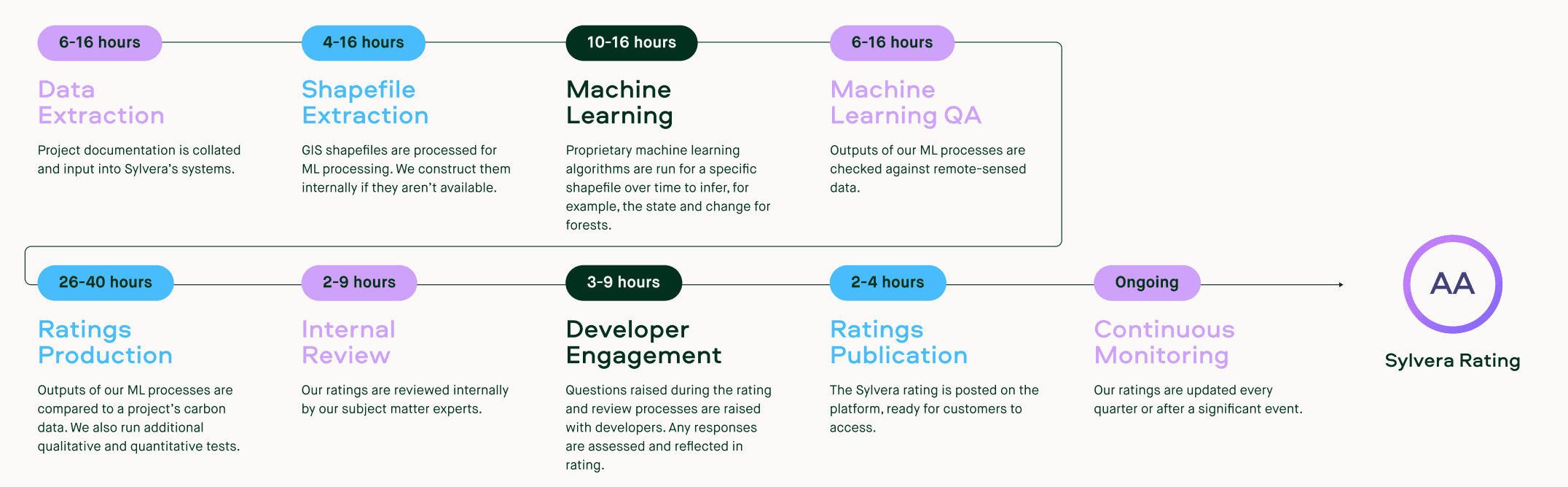
Sylvera is an independent carbon intelligence platform that rates carbon credit projects on a AAA–D scale, using machine learning, satellite data, and LiDAR to assess quality across four pillars: carbon impact, additionality, permanence, and co-benefits. It's not a broker or marketplace – it's a data layer that helps you evaluate projects before you buy. For heads of sustainability facing intense scrutiny under CSRD, ESRS E1, and the EU Green Claims Directive, Sylvera has become a go-to tool for building defensible procurement policies and avoiding the reputational and legal risks of low-quality credits.
This guide won't sell you Sylvera. Instead, it will show you, step by step, how to turn its ratings into a practical buying policy, a procurement workflow your Finance and Legal teams can follow, and a CSRD-ready documentation trail that stands up to audit. Because in 2025, having access to good data is table stakes – knowing how to operationalise it is what separates credible climate action from expensive greenwashing risk.
Why Carbon Credit Quality (and Sylvera) Are on Your Agenda Now
If you're running sustainability for a large DACH company, you already know the basic challenge: carbon credits are supposed to help you reach net zero, but choosing the right ones has become a minefield. Registry labels like Verra or Gold Standard tell you a project is registered, not whether it delivers real, lasting climate impact. That gap between "certified" and "credible" is where your greenwashing risk lives.
Quality in carbon credits comes down to four fundamentals: additionality (would this have happened anyway?), permanence (will the carbon stay locked away?), robust baselines (is the counterfactual credible?), and co-benefits (does it support biodiversity, water, communities?). For years, buyers relied on registry self-reporting and consultant spot-checks. That's no longer defensible.
DACH companies face unique pressure. CSRD and ESRS E1 now require you to disclose every credit you purchase and retire, explain its role in your net-zero plan, and show you're using recognised quality standards. The EU Green Claims Directive will ban claims based purely on offsetting without prior emission cuts, and Germany's Federal Court has ruled that "climate neutral" claims must be explained in the immediate context or they mislead consumers. Enforcement is real: Deutsche Umwelthilfe has sued Faber-Castell, Beiersdorf, and others over low-quality credits.
The financial stakes are equally clear. Research shows that 68% of DAX40 companies bought credits that failed to deliver impact, wasting budget and creating reputational liability. When a methodology gets disqualified (as happened with one-third of renewable energy and cookstove credits in 2024) or a project loses certification, you're left re-buying or facing audit questions.
This is why independent, science-based quality assessment platforms like Sylvera have moved from "nice to have" to board-level agenda. Investors, consultants, and procurement teams are all asking: how do we separate high-integrity projects from the noise? Sylvera is one answer, a carbon intelligence platform using machine learning and remote sensing to rate projects and track market data. But knowing it exists is different from knowing how to use it in your workflow. This guide closes that gap, showing you step by step how to turn Sylvera ratings into a practical buying policy, a cross-functional procurement process, and CSRD-ready documentation that stands up to auditors and NGOs alike.
What Is Sylvera and How Its Rating System Works in Plain Language
Platform overview: what Sylvera does (and doesn't do)
Sylvera is an independent carbon data and rating platform, not a broker or credit seller. Founded in 2020 and backed by Index Ventures, Insight Partners, Balderton Capital, Salesforce Ventures, and Bain & Company, it provides ratings, market intelligence, and pre-issuance assessments to help buyers, investors, insurers, and developers evaluate carbon credit quality. The platform serves major corporates (Salesforce, Shell, Equinor), financial institutions (S&P Global), and governments, but it doesn't execute purchases or handle settlement. Think of it as Moody's for carbon credits: independent analysis, not transactions.
Sylvera's core products include Ratings (AAA–D scores for issued credits), Pre-Issuance Assessments (early-stage project integrity, delivery, and value forecasts), Market Data (pricing, issuance, and retirement trends across 19 registries), Connect to Supply (introductions to 200+ developers, with KYC/AML via Xpansiv), and Country Profiles (policy risk and Article 6 readiness for 43 jurisdictions). Its business model is subscription-based, with no fees charged to project developers for ratings, which reduces conflicts of interest common in broker-led quality assessments.
For a DACH sustainability lead, this means Sylvera can help you benchmark broker offers, screen projects your team is considering, and track market pricing, but it won't replace your procurement partner, finance system, or legal documentation workflow. It's a decision-support layer, not an end-to-end solution.
Inside Sylvera ratings: AAA–D scale, four pillars and methodology profiles
Sylvera rates projects on a letter scale from AAA (highest integrity) to D (severe quality concerns), grounded in four pillars: Carbon Score (accuracy of quantified reductions or removals), Additionality (whether benefits are beyond business-as-usual), Permanence (durability of carbon storage), and Co-benefits (social and environmental ancillary impacts like biodiversity or community welfare).
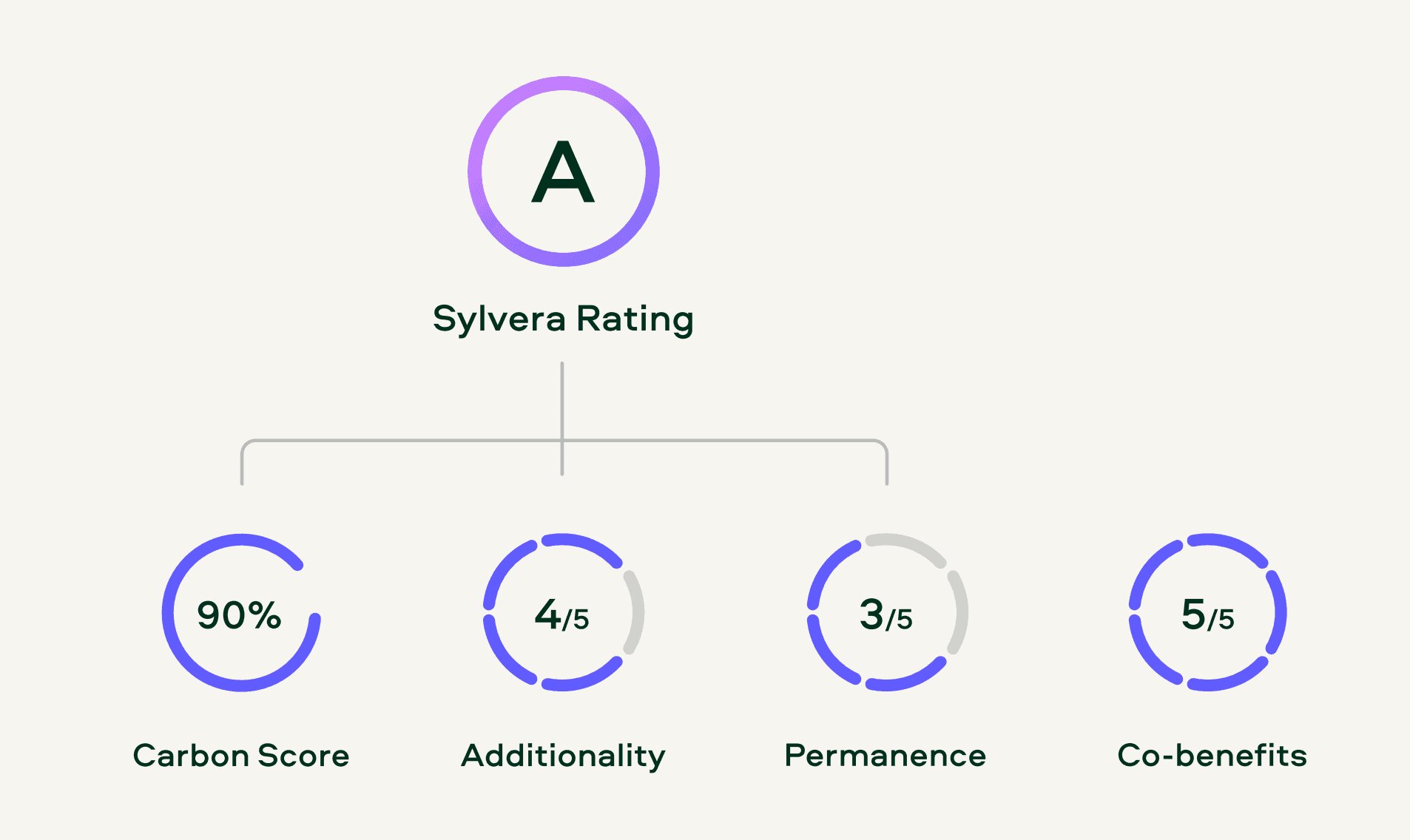
Each pillar is assessed through project-type-specific frameworks. For example, afforestation, reforestation, and revegetation (ARR) projects are evaluated differently from improved cookstoves or renewable energy. Sylvera builds these frameworks through peer-reviewed research, often totalling thousands of hours per methodology, and locks the scoring logic within each version to prevent rating volatility from subjective changes.
Beyond individual project ratings, Sylvera publishes Methodology Profiles that assess risk to credit integrity across carbon accounting, additionality, permanence, safeguards, and market acceptance. These profiles are updated quarterly and include flags for eligibility under standards like CORSIA, the Core Carbon Principles (CCP), and Singapore's carbon tax regime. Country Profiles add another layer, evaluating delivery risk, reputational exposure, and Article 6 authorisation readiness in 43 jurisdictions.
For you, this means a Sylvera rating isn't a single number. It's a package: a headline score, pillar breakdowns, methodology risk indicators, and country-level policy context. A project might score BBB overall but carry heightened permanence risk due to weak legal tenure or lack of buffer-pool adequacy. Reading the full report matters more than the letter grade.
The tech stack: ML, satellite data and LiDAR – why it matters and where uncertainty remains
Sylvera's competitive differentiation is its use of machine learning and Earth observation data (optical, radar, and LiDAR) at 10–30 metre resolution to independently verify project claims. The platform runs a global LiDAR Ground Truthing Campaign, scanning forests across biomes to build a three-dimensional reference dataset of above-ground biomass covering tens of millions of trees. These data train proprietary ML models to estimate canopy height, canopy cover, and biomass changes over time, which feed into Carbon Score and Additionality assessments.
Why does this matter for a corporate buyer? Because it means Sylvera isn't relying solely on developer-supplied monitoring reports. It's using satellite imagery and trained algorithms to cross-check whether a reforestation project actually added trees, whether a REDD+ project's baseline deforestation threat was credible, and whether a project area matches the claimed boundaries. This reduces the risk of over-crediting and inflated baselines, two of the biggest drivers of low-quality credits in the market.
That said, remote sensing has known limits. Academic reviews show that LiDAR and satellite-based biomass models can suffer from signal saturation in high-biomass tropical forests and may overestimate carbon in non-forest areas. Vertical accuracy often falls short of official survey standards, and in dense canopy, uncertainty remains high. Sylvera acknowledges these constraints and builds confidence intervals into its outputs, but it's critical to understand: ratings are high-quality estimates, not absolute truth. When a project lacks shapefiles or sits in a data-sparse region, Sylvera's coverage can be incomplete. As of late 2023, roughly 30% of ARR projects lacked the data needed for full assessment, and Sylvera has rated around 600 projects versus thousands in the voluntary carbon market.
For your procurement process, this means Sylvera ratings are a strong, science-backed input, but not a substitute for full due diligence. You'll still need to review project design documents, verifier statements, and community safeguards, and cross-reference other rating agencies and frameworks.
Step-by-Step: How to Use Sylvera Ratings in Your Carbon Credit Procurement
Translate your climate strategy into Sylvera-based quality thresholds
Before you open Sylvera's catalog, sit down with your team and Finance and Legal to define what "high quality" means for your organisation. This step is often skipped, and it's why many companies end up with inconsistent portfolios or stalled approvals.
Start with your net-zero commitments. If you follow the Oxford Principles or SBTi, you'll need removals with storage durability over 100 years (preferably 200+) to offset residual emissions post-2050. That translates into a Sylvera permanence threshold: projects must score high on permanence, or you accept that credits are bridging solutions, not long-term neutralisers. For companies making "climate neutral" or "net zero" claims in Germany, regulators and courts now expect you to show decarbonisation first, with credits playing a supplementary role, this should inform both your volume strategy and your quality bar.
Next, set a minimum rating. Many buyers in the market use BBB as a floor, excluding projects rated below that threshold due to moderate-to-high concerns around additionality or permanence. Some go further, accepting only A or above. Document this threshold in an internal carbon credit policy, and make sure Procurement and Finance understand it's non-negotiable.
Add project-type and geography filters aligned with your risk appetite and stakeholder expectations. For instance, do you exclude avoided deforestation (REDD+) due to baseline controversy, or do you include it if rated AA+? Do you prioritise European or regional projects for stakeholder perception, even if they're more expensive? Do you require ICVCM Core Carbon Principles (CCP) eligibility, which disqualifies most renewable energy credits?
Finally, define co-benefit requirements. If your board or annual report emphasises biodiversity or community livelihoods, specify that projects must score well on Sylvera's Co-benefits pillar or contribute to specific Sustainable Development Goals. Put all this in writing as procurement guardrails, a simple one-page matrix works, so your team can shortlist projects consistently and Finance can approve budgets with confidence.
Screen and shortlist projects using Sylvera's catalog and filters
With thresholds set, you can now use Sylvera's Catalog to screen the market. The catalog covers over 20,000 projects across global registries, updated daily, and lets you filter by project type, geography, vintage, registry, and rating. This is your first line of defence against low-quality supply.
Run a search that matches your internal policy: for example, "removals only, BBB or higher, Europe and North America, vintages 2023–2025, CCP-eligible methodologies." Sylvera will return a shortlist, often much smaller than the thousands of projects brokers might pitch. This is a feature, not a bug, if only 5% of projects meet rigorous criteria, your shortlist should be small.
Cross-check the results against Methodology Profiles. Even if a project scores BBB, its underlying methodology might carry systemic risks that Sylvera flags, such as weak additionality tests or disputed baseline approaches. If your organisation has zero tolerance for controversial methodologies (e.g., certain cookstove or plastic-credit schemes), exclude those at this stage.
Use Country Profiles to layer in political and policy risk. A well-rated project in a jurisdiction with weak rule of law, disputed land tenure frameworks, or unclear Article 6 authorisation may pose reputational or compliance risks your board won't accept. Sylvera's Article 6 readiness indicators are particularly useful for DACH buyers, as future EU and international rules may favour or require internationally transferred mitigation outcomes (ITMOs) that meet Paris Agreement standards.
At this stage, you should have a manageable shortlist of 10–20 projects. Document why each passed your filters, this audit trail is gold when Finance asks, "Why did we exclude 95% of the market?" and when external auditors review your portfolio under CSRD.
Run deep-dive due diligence beyond the headline score
A Sylvera rating is a starting point, not an endpoint. For each shortlisted project, download and review the full Sylvera report. Look beyond the letter grade to the pillar-level scores and commentary. A BBB overall might hide a weak additionality score (e.g., "moderate concerns that project would have occurred anyway") or a permanence score flagging insufficient buffer-pool contributions. Understand where uncertainty sits and whether you're comfortable with it.
Cross-reference other rating agencies. If a project is rated BBB by Sylvera but C by BeZero or unrated by Calyx, that divergence is a red flag worth investigating. It could mean the project is on the margin of credibility, or that one agency has better local data. Where possible, triangulate with a third source, such as Senken's Sustainability Integrity Index (SII), which evaluates projects across 600+ data points in five categories (Basic Project Analysis, Carbon Impact, Beyond Carbon, Reporting Process, Compliance & Reputation) and accepts only the top 5% of the market. If a project scores well on Sylvera but fails Senken's SII screen, dig deeper before committing budget.
Request and review primary documents: project design document (PDD), validation and verification reports, monitoring data, and evidence of community consent or land tenure. Even Sylvera's ML models depend on the accuracy of developer-reported boundaries and baselines. If shapefiles are missing or outdated, or if verifier reports are thin, that's a deal-breaker.
Check for reputational or legal red flags not fully captured in ratings. Search news archives and NGO databases for controversies (e.g., Indigenous land disputes, corruption allegations, past credit revocations). Sylvera's Compliance & Reputation module covers some of this, but manual checks catch emerging issues.
Document every decision in a structured due-diligence memo. Why did you select this project? What risks did you accept, and which did you mitigate? How does it align with your net-zero roadmap and CSRD disclosure requirements? This memo becomes part of your audit file and internal approval pack.
Embed Sylvera outputs into RFPs, approvals and supplier management
Quality screening doesn't stop at project selection. To operationalise Sylvera in a large organisation, you need to hard-wire it into procurement and governance workflows.
In RFPs and supplier conversations, make Sylvera ratings (or equivalent independent ratings) a mandatory requirement. Ask brokers and platforms: "What is the Sylvera rating for each project in this offer? Provide the full report, not just the headline score." If a supplier can't or won't provide independent ratings, that's a signal to walk away. Many brokers will resist, claiming their internal due diligence is sufficient; your response should be, "Our auditors and CSRD assurance providers require third-party verification."
In internal approvals, build Sylvera scores and pillar breakdowns into your investment memo or business-case template. When you go to Finance or the board for budget sign-off, present a simple table: project name, rating, carbon score, additionality, permanence, co-benefits, price per tonne, total cost, and link to CSRD disclosure. This transparency builds trust and speeds approvals because decision-makers can see you're applying a consistent, science-backed standard.
In supplier contracts, reference the Sylvera rating at the time of purchase and include clauses for rating downgrades or project de-certification. For example: "If the project rating falls below BBB or the project loses registry certification within 24 months of delivery, Seller will replace credits or refund." Not all sellers will agree, but asking the question separates quality partners from opportunistic brokers.
Finally, set up an annual portfolio review cycle. Sylvera updates ratings as new data and monitoring reports arrive. A project rated BBB in 2024 might be downgraded to B in 2025 if a wildfire triggers a reversal or if an investigation uncovers baseline inflation. Review your live portfolio each year, flag any downgrades, and decide whether to retire those credits faster, sell them, or adjust future purchasing. This ongoing stewardship is what CSRD and EU Green Claims enforcement will expect.
Linking Sylvera to CSRD, ESRS E1 and EU Green Claims Requirements
How Sylvera data supports your CSRD and ESRS E1 disclosures
Under CSRD, large companies in the EU must report according to European Sustainability Reporting Standards (ESRS), and ESRS E1 on climate change includes specific disclosure requirements for carbon credits. ESRS E1-6 mandates that you report the number of carbon credits purchased and retired, split by own operations and value chain. ESRS E1-7 requires disclosure of carbon credits you've financed (e.g., advance purchase agreements or project equity). ESRS E1-8 states that if you make net-zero or carbon-neutrality claims, you must explain the role of credits, their quality and integrity, and confirm they don't create double counting by excluding value-chain credits from Scope 2 and Scope 3 inventories.
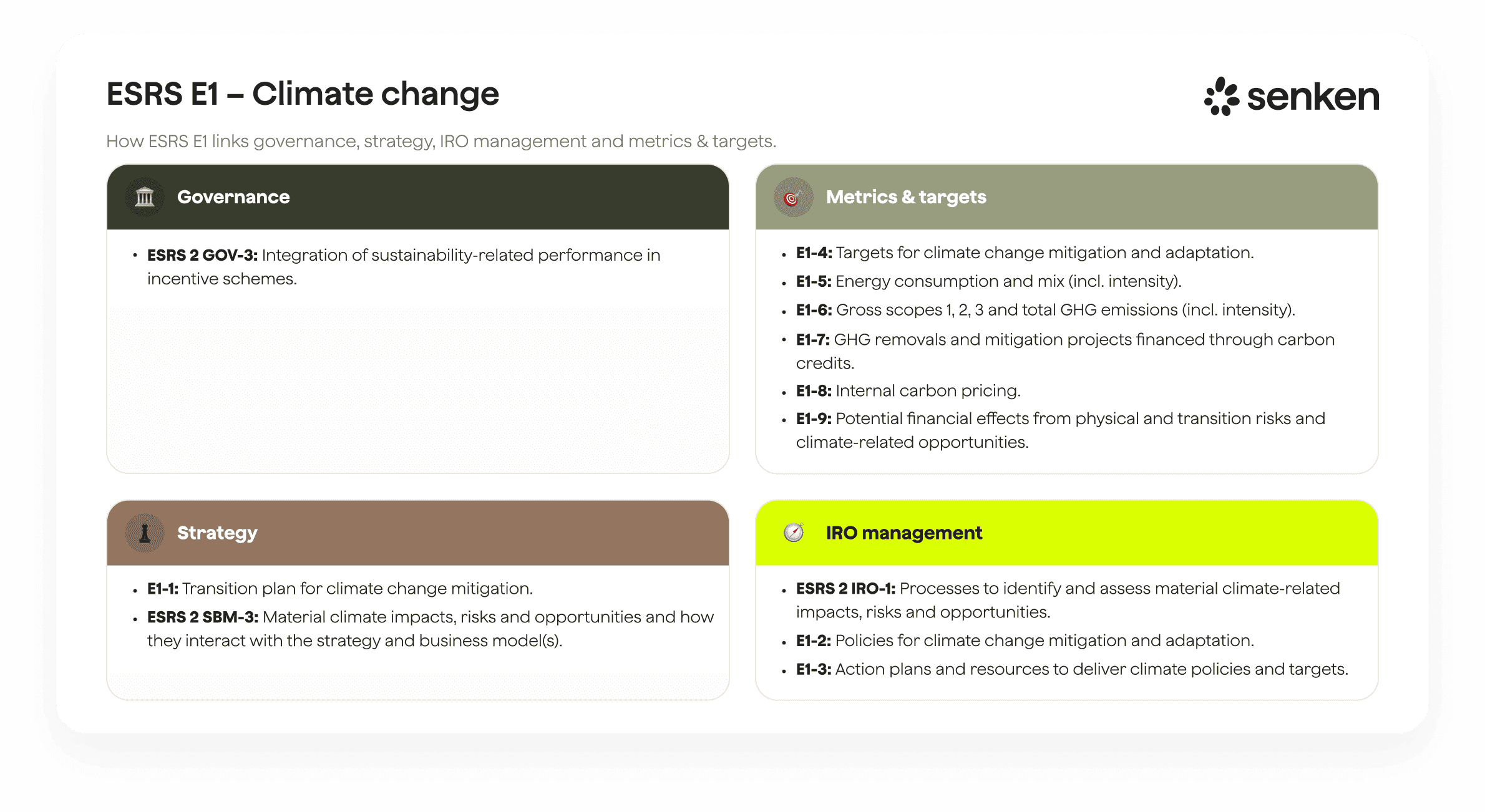
Sylvera's ratings and project data directly support these requirements in three ways. First, Sylvera provides the recognised quality benchmark ESRS asks for. When your assurance provider reviews your sustainability report, showing that every credit you retired was rated BBB or higher by an independent, science-based platform demonstrates you applied a consistent, credible standard. Second, Sylvera's Methodology and Country Profiles help you document that you assessed systemic risks, from additionality disputes to Article 6 authorisation, meeting the "integrity" standard in E1-8. Third, Sylvera's Market Data and vintage tracking let you accurately report volumes, prices, and retirement timing, ensuring your numbers reconcile with registry records and financial postings.
However, Sylvera alone doesn't tick every CSRD box. You still need to produce a narrative explaining your decarbonisation pathway, show that credits are supplementary to emission reductions, and provide an audit trail from purchase order to invoice to registry retirement certificate. Many DACH companies find that combining Sylvera's ratings with a procurement platform like Senken, which delivers CSRD-ready evidence packs (scorecards, contracts, serial numbers, retirement screenshots, invoices), creates a complete, audit-proof file.
What Sylvera ratings cannot do alone: evidence chain and claim wording
It's crucial to understand the limits. A high Sylvera rating is evidence of project quality, not proof of regulatory compliance or claim legitimacy. Three gaps matter most for DACH buyers.
Gap one: decarbonisation-first obligation. The EU Green Claims Directive (currently in draft but likely to pass in 2025) will require companies to demonstrate significant emission reductions before making "climate neutral" or "net zero" claims supported by credits. A portfolio of AAA-rated credits won't save you if your Scope 1–3 emissions are flat or rising. Sylvera doesn't track your corporate emissions or reduction trajectory, you need a carbon accounting platform and a science-based target for that.
Gap two: claim substantiation and wording. Germany's Federal Court ruled in June 2024 that "climate neutral" is ambiguous and must be clarified in immediate advertising context. Simply stating "carbon neutral via Sylvera-rated credits" isn't sufficient; you must explain whether the claim covers product lifecycle emissions, corporate emissions, or value chain, and whether neutrality is via reduction or compensation. Sylvera's data supports the quality claim but doesn't draft compliant marketing language or substantiation files. You'll need Legal and Communications to build that layer, informed by Sylvera outputs but going well beyond them.
Gap three: full evidence chain. Auditors and regulators want to see a documentary trail from strategy to purchase to retirement to financial booking. This includes: board-approved climate policy, procurement approval memos (with Sylvera ratings cited), supplier contracts, invoices, registry transaction records (serial numbers, retirement certificates), and accounting entries. Sylvera provides project-level quality intelligence, but it doesn't generate contracts, reconcile invoices against registry data, or integrate with your ERP. Platforms like Senken bridge that gap by managing end-to-end procurement and delivering pre-packaged audit files with every transaction.
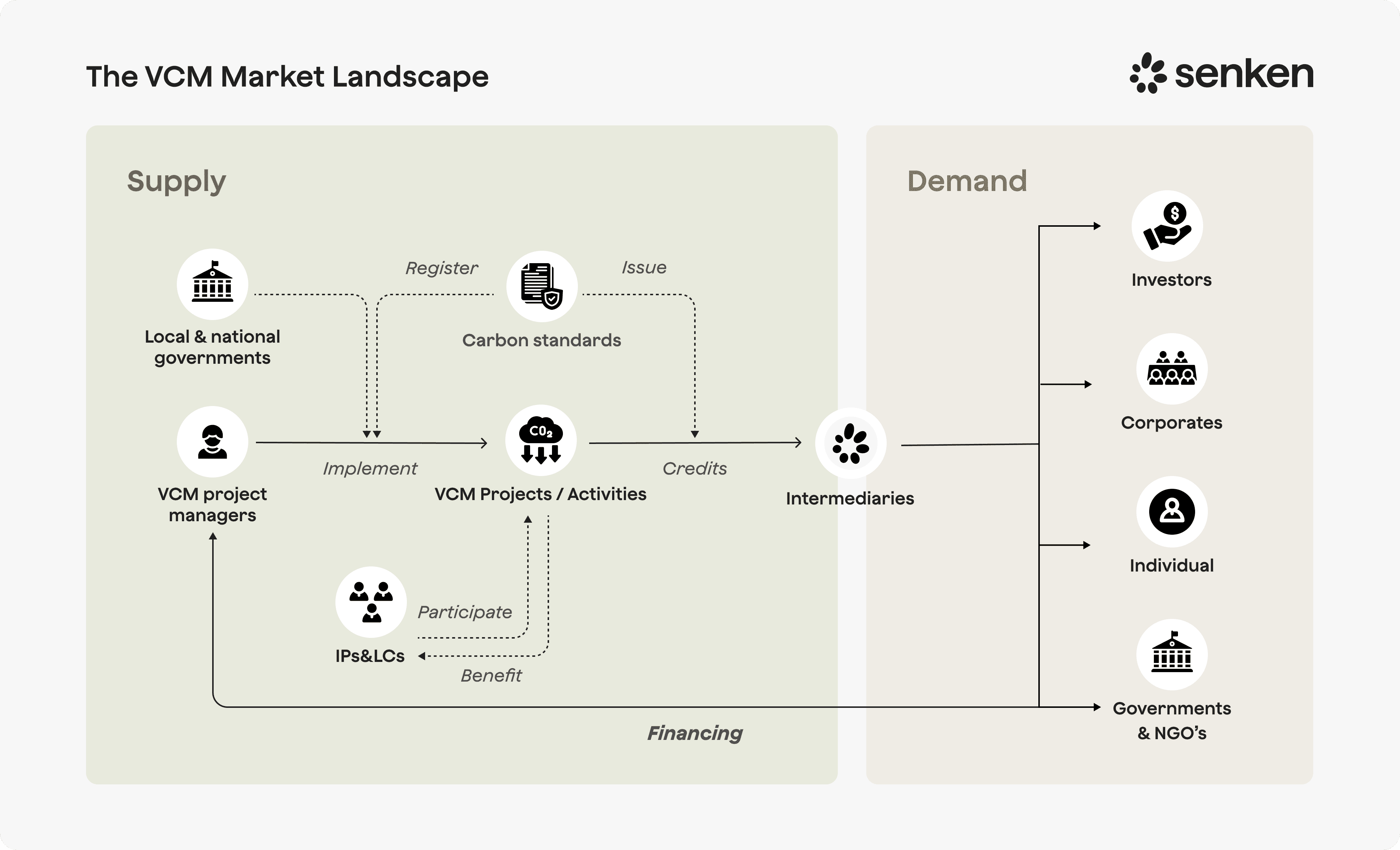
In short, treat Sylvera as a powerful, independent quality verification layer, essential for credibility but not sufficient on its own for full CSRD and Green Claims compliance. Pair it with robust internal processes, clear policies, and, where needed, specialised partners who can deliver traceability and regulatory-grade documentation.
Is Sylvera Enough? Designing Your Carbon Market Tech Stack for DACH
Where a carbon credit rating platform like Sylvera adds most value
For large DACH corporates, Sylvera's greatest value lies in portfolio risk management and benchmarking external offers. When a broker pitches you a portfolio of 50,000 credits at €25 per tonne, Sylvera lets you independently verify whether those projects are credible or riddled with low-quality cookstove and renewable energy methodologies. This diligence protects budget and reputation.
Sylvera also shines in early-stage project evaluation. If you're considering an advance purchase agreement or equity investment in a new forestry or biochar project, Sylvera's Pre-Issuance Assessments forecast expected rating, delivery schedule, and fair value before the first credit is issued. This de-risks capital deployment and aligns financial and sustainability teams around data-driven investment criteria.
For organisations with multi-country operations, Sylvera's Country Profiles simplify risk assessment. Understanding whether a project sits in a jurisdiction with clear land tenure law, stable governance, and Article 6 readiness can prevent costly reputational blow-ups.
Finally, Sylvera is valuable for strategic market intelligence. Its Market Data product tracks pricing trends, issuance volumes, and retirement patterns across project types, registries, and geographies, helping you time purchases, negotiate better pricing, and forecast future supply constraints (e.g., post-ICVCM CCP implementation, when legacy renewable energy credits lose eligibility).
Gaps you still need to cover: procurement execution, documentation and traceability
Sylvera's business model, subscription-based data and ratings, also defines its limits. It doesn't execute procurement, meaning it won't negotiate contracts, handle legal terms, manage KYC/AML, or settle transactions. Connect to Supply facilitates introductions to developers, but you or your broker still do the contracting and payment.
Coverage is another constraint. Sylvera has rated around 600 projects, and while that includes 70% of issued ARR credits, it leaves significant gaps in the broader market. If you need to diversify into regenerative agriculture, biochar, or direct air capture, you may find fewer rated projects or none at all. In those cases, you'll need to layer in alternative due diligence frameworks, such as Senken's SII, which covers emerging project types and geographies.
Most critically for CSRD, Sylvera provides project intelligence but not end-to-end audit trails. It doesn't reconcile your purchase orders with registry serial numbers, generate retirement certificates on your behalf, or package documentation into assurance-ready evidence packs. For a compliance-first market, this is a major gap. When your external auditor asks, "Show me the complete file for every tonne you retired in 2024," you need contracts, invoices, Sylvera reports, registry screenshots, and accounting postings in one indexed folder. Few organisations have the internal systems or resources to assemble that manually across dozens of projects and suppliers.
How Senken complements Sylvera in a compliance-first setup
This is where a procurement and quality platform like Senken becomes essential. Senken's Sustainability Integrity Index evaluates projects across 600+ data points, five categories (Basic Project Analysis with 31 points, Carbon Impact with 350, Beyond Carbon with 105, Reporting Process with 90, Compliance & Reputation with 78), and accepts only the top ~5% of projects. Where Sylvera provides ratings, Senken provides curated portfolios that have passed multi-layered due diligence, including cross-checks against external ratings (Sylvera, BeZero, Calyx), ICVCM CCP alignment, CSRD compliance, and SDG contribution.
Senken also handles procurement execution: sourcing, pricing negotiation, contracting, and settlement, so you're not managing ten different brokers or developer relationships. For DACH companies, this means faster approvals (Finance and Legal deal with one supplier, not a fragmented marketplace) and lower transaction costs.
Most importantly, Senken delivers CSRD-ready documentation as standard. Every purchase comes with a transparent scorecard (SII breakdown, external ratings, methodology and country profiles), signed contracts, itemised invoices, registry retirement certificates with serial numbers, and impact reporting dashboards. These are packaged into evidence packs designed to meet external assurance requirements under CSRD, cutting your internal documentation burden by 80% or more.
In practice, many sophisticated buyers combine both: they use Sylvera for **market intelligence and independent validation (tracking rating updates, benchmarking new methodologies, evaluating brokers' offers) and Senken for execution and compliance infrastructure (purchasing, traceability, audit files). Vodafone Germany and Deutsche Telekom are examples of this dual approach, using scientific quality frameworks (including Senken's SII, which integrates external ratings) to shortlist projects, then relying on end-to-end procurement partners to deliver portfolios with full traceability and long-term supply agreements.
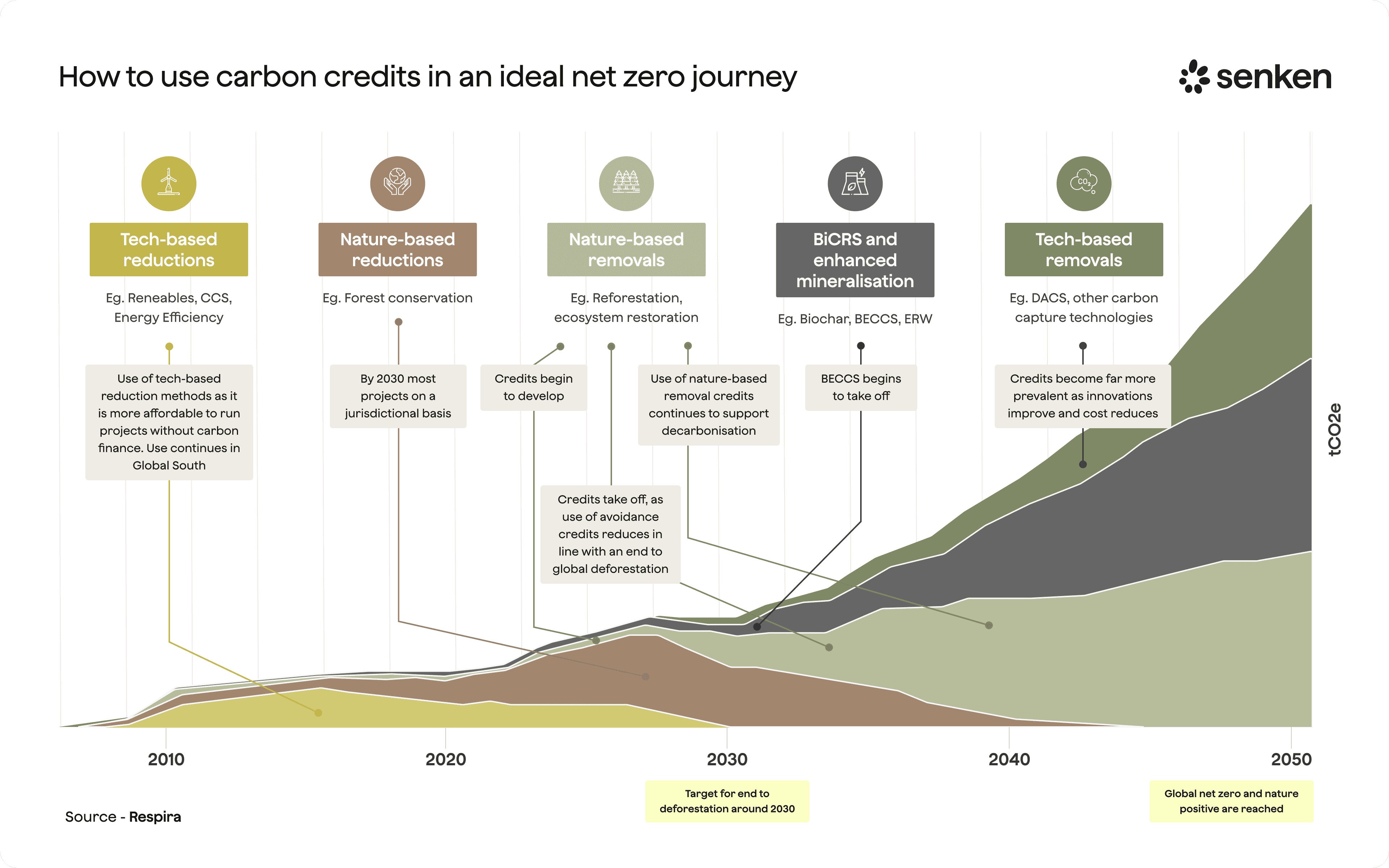
If you're a >1000-employee DACH company subject to CSRD assurance, the question isn't "Sylvera or Senken?" but "how do we layer these tools to meet both quality and compliance needs?" A simple decision rule: if you have significant internal procurement capacity, strong ERP integration, and a dedicated carbon markets team, Sylvera plus manual processes might suffice. If you don't, or if you're under time pressure to get CSRD-ready, pairing Sylvera-style intelligence with a full-service partner like Senken is the faster, lower-risk path.
Putting It All Together: A Simple, Audit-Ready Carbon Credit Quality Playbook
You now have the building blocks. Here's how to synthesise them into a repeatable, board-approved process that turns Sylvera ratings and quality due diligence into defensible, low-risk climate action.
Step one: Define and document your carbon credit policy. In 1–2 pages, specify your net-zero strategy (Oxford Principles, SBTi, custom), the role of credits (residual neutralisation, bridging finance, voluntary leadership), minimum quality thresholds (e.g., Sylvera BBB+ or Senken SII pass, ICVCM CCP-eligible, permanence >100 years), eligible project types and geographies, co-benefit requirements, and governance (who approves purchases, at what budget threshold). Get this approved by your CFO, General Counsel, and board Sustainability Committee. This document is your North Star and your first line of defence in any audit or legal challenge.
Step two: Select and onboard your quality and procurement partners. Decide whether you'll use Sylvera (or another rating platform) as a data layer, procure through a specialised partner like Senken, or manage everything in-house. Run a structured RFP if needed, evaluating on coverage, methodology transparency, regulatory alignment, execution support, and documentation quality. Onboard your chosen partners, integrate their data into your approval templates, and train Procurement, Finance, and Legal on how to read ratings and scorecards.
Step three: Design cross-functional workflows with clear handoffs. Map the process from strategy to reporting: Sustainability sets policy and screens projects (using Sylvera catalog and SII), Procurement negotiates and contracts (with mandatory rating and SII evidence), Finance approves and books (requiring full invoice-to-registry reconciliation), and Sustainability retires and reports (under CSRD E1-6/E1-7/E1-8). Assign a DRI (directly responsible individual) for each stage and document the required evidence at each gate.
Step four: Pilot a small, high-quality portfolio with full documentation. Don't go big in year one. Buy 5,000–10,000 tonnes across 3–5 projects that score well on Sylvera and Senken SII, span different types (e.g., one ARR, one biochar, one regenerative agriculture), and come with complete audit trails. Use this pilot to stress-test your workflows, identify documentation gaps, and train auditors on what good looks like. Document lessons learned and update your policy and templates accordingly.
Step five: Scale with governance and annual review cycles. Once your pilot works, scale up to meet your neutralisation or financing targets. Maintain a live portfolio tracker (project name, rating, vintage, volume, retirement date, cost, CSRD disclosure line) and review it quarterly. Set calendar reminders to check for Sylvera rating updates, methodology changes (e.g., ICVCM decisions), and country-risk developments. When ratings fall or controversies emerge, decide fast: retire early, replace, or accept and disclose the risk.
Step six: Prepare CSRD-ready evidence packs each year. Sixty days before your sustainability report deadline, compile evidence for every credit retired: policy document, project scorecards (Sylvera + SII), contracts, invoices, registry certificates, accounting entries, and a narrative explaining how credits fit your decarbonisation pathway and why they meet quality standards. Share this with your external assurance provider early, so they can raise questions before report finalisation.
Step seven: Stay ahead of regulation. Monitor EU Green Claims Directive implementation, ICVCM label expansions, Article 6 rulebook updates, and German case law on environmental claims. Update your policy annually and re-screen your portfolio against new standards. What's high-quality today may be challenged tomorrow, proactive stewardship is your best defence.
This playbook isn't theory. It's how leading DACH companies, from telecommunications to automotive to banking, are building credible, audit-proof carbon credit programs in a compliance-first era. The combination of independent ratings (Sylvera), deep scientific due diligence (Senken SII), end-to-end execution, and rigorous documentation is the practical path to low-risk, high-integrity climate action. Start small, document everything, and iterate. Within two years, you'll have a carbon credit function that Finance trusts, auditors approve, and your board can defend to investors and the public with confidence.