Chapter
10
of
14

Enhanced Rock Weathering

Published:
Last updated:
December 21, 2025
Jump to section

Key Takeaways

  • Enhanced rock weathering spreads crushed silicate rocks on farmland to accelerate a natural CO₂ capture process, storing carbon as stable bicarbonates in oceans for 1,000+ years—making it one of the most durable removal methods available today.
  • The market has matured rapidly: Microsoft, Google, and Frontier buyers have locked in hundreds of thousands of tonnes through multi-year contracts, while the first independently verified ERW credits were issued in early 2025 under rigorous MRV protocols.
  • For DACH sustainability teams, ERW offers a rare combination of Oxford-aligned permanence, agricultural co-benefits (soil pH correction, nutrient release), and integration into existing supply chains—but only when backed by transparent documentation and conservative carbon accounting.
  • High-quality ERW credits require robust field measurement, life-cycle emissions accounting, and third-party verification; buyers should demand clear MRV protocols (Isometric, Puro.earth) and avoid projects that rely solely on modelled estimates or supplier claims.

Enhanced rock weathering is a geochemical carbon dioxide removal method that spreads finely crushed silicate rocks—typically basalt or olivine—on agricultural land to permanently capture CO₂ from the atmosphere. The technique accelerates a natural weathering process that normally unfolds over millennia: as minerals dissolve in soil moisture and react with atmospheric CO₂, they form stable bicarbonates that flow through groundwater and rivers into the ocean, where carbon remains locked away for over 1,000 years. What was once an academic concept is now backed by commercial offtake agreements from Microsoft, Google, and British Airways, with the first independently verified credits issued in January 2025.

For DACH sustainability managers navigating SBTi's increasing requirements for durable removals and CSRD's demand for audit-ready documentation, ERW presents a practical option—but one that still requires careful due diligence. You're under pressure to build a defensible carbon portfolio without the internal bandwidth to become a geochemistry expert, and your finance and legal teams are rightly cautious about greenwashing exposure. This guide cuts through the complexity: it explains how ERW works in plain language, what it costs, where the technology can fail, and how to evaluate projects using the same quality lens that leading buyers apply. Think of it as the practical decision framework you'd want a trusted peer to share—not a chemistry textbook.

What Is Enhanced Rock Weathering

Enhanced rock weathering is a carbon dioxide removal technique that spreads finely crushed silicate rocks on agricultural land to accelerate a natural geochemical process that captures CO2 from the atmosphere. When rainwater, which has absorbed CO2, contacts these rocks, chemical reactions convert the CO2 into dissolved bicarbonates and stable carbonates. These compounds then move through soils and waterways into oceans and deeper geological formations, where carbon remains locked away for more than 1,000 years.

ERW is a subset of the broader category of enhanced weathering, which also includes ocean alkalinity enhancement and other mineralization approaches. It sits within the family of geochemical carbon dioxide removal methods alongside direct air capture and industrial mineralization. Unlike biological removals such as afforestation or soil carbon, ERW stores carbon primarily in inorganic mineral forms rather than in plant biomass or organic matter, which gives it fundamentally different durability characteristics.

For sustainability managers, the key distinction is straightforward: ERW transforms atmospheric CO2 into rock. This is not speculative technology. It builds on decades of Earth science research into natural weathering cycles, and is now moving into commercial deployment with verified credits, multi-year offtake contracts from buyers like Microsoft and Google, and independently developed MRV protocols from registries including Puro.earth and Isometric.

How Enhanced Rock Weathering Removes Carbon Dioxide

Natural Mineral Weathering Process

Natural mineral weathering has regulated Earth's climate for hundreds of millions of years. When CO2 dissolves in rainwater, it forms weak carbonic acid. This slightly acidic water reacts with calcium- and magnesium-rich silicate rocks exposed at the surface, slowly dissolving them and releasing dissolved ions. These ions, primarily bicarbonates, travel through soils, groundwater, and rivers, eventually reaching the oceans where they either remain dissolved or precipitate as carbonate minerals on the seafloor. Over geological timescales, this natural cycle draws down billions of tonnes of CO2 and prevents runaway greenhouse warming.

The limitation of the natural process is speed. It unfolds over tens of thousands to millions of years, far too slowly to help meet mid-century climate goals. Enhanced rock weathering intervenes by dramatically accelerating the same chemistry.

Accelerating Weathering with Crushed Silicate Rocks

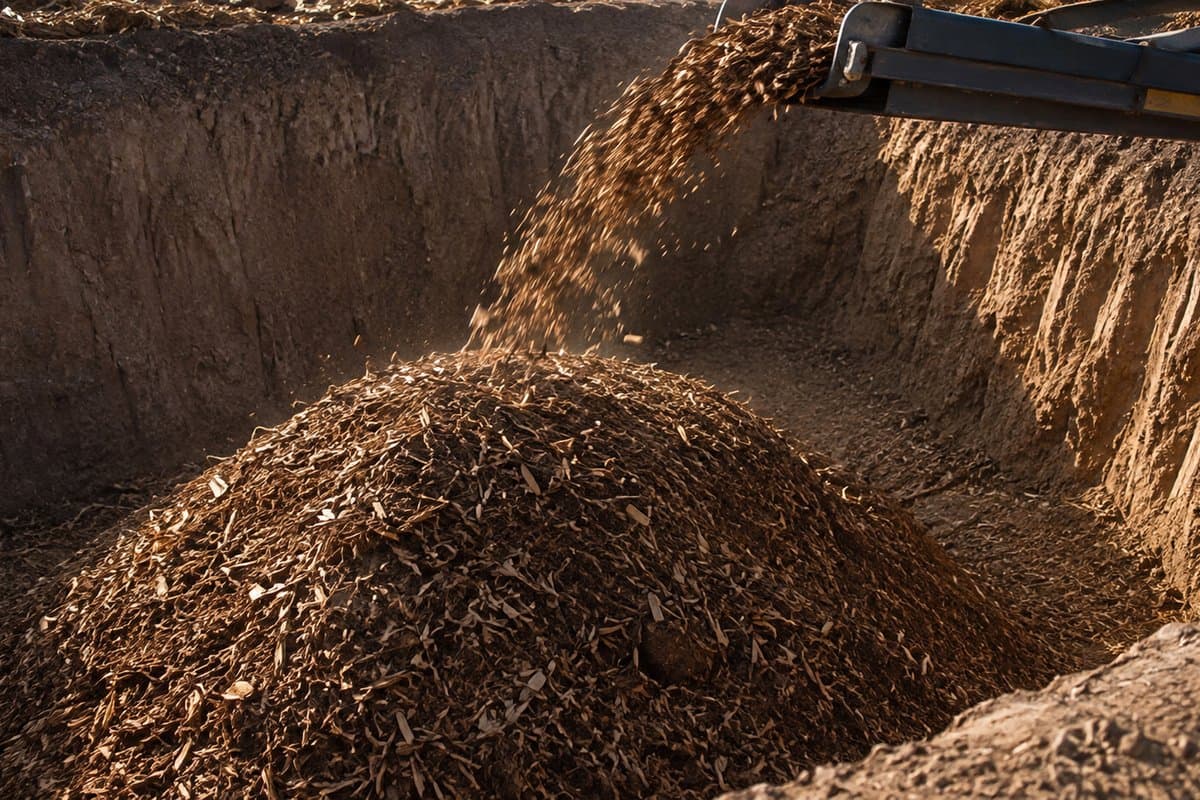
The key to acceleration is surface area. Crushing silicate rocks into fine powder, typically to particle sizes measured in micrometers or millimeters, increases the reactive surface available for weathering reactions by orders of magnitude. Spreading this rock dust on agricultural land exposes it to moisture, organic acids produced by soil microbes and plant roots, and seasonal freeze-thaw cycles, all of which speed dissolution.

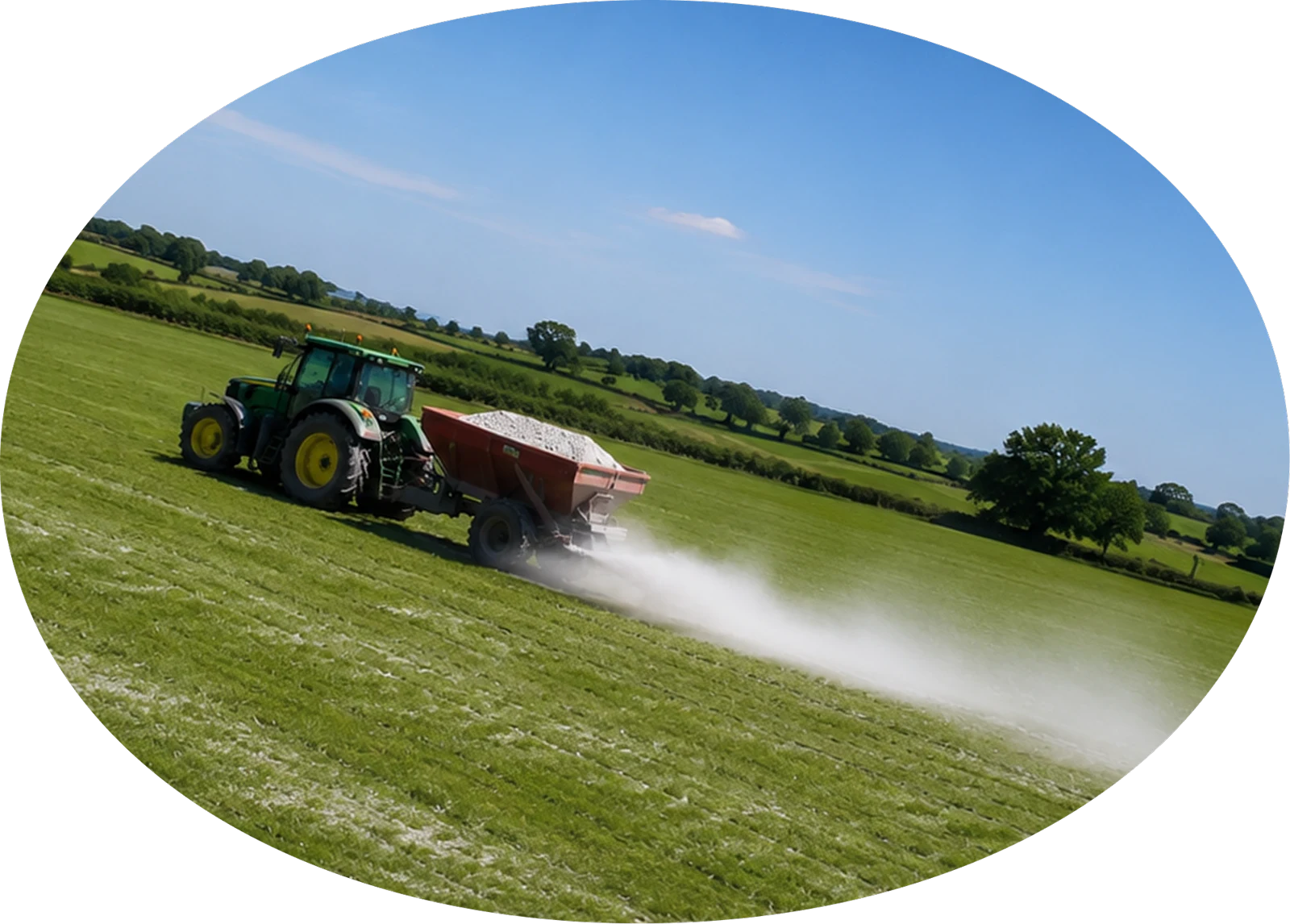
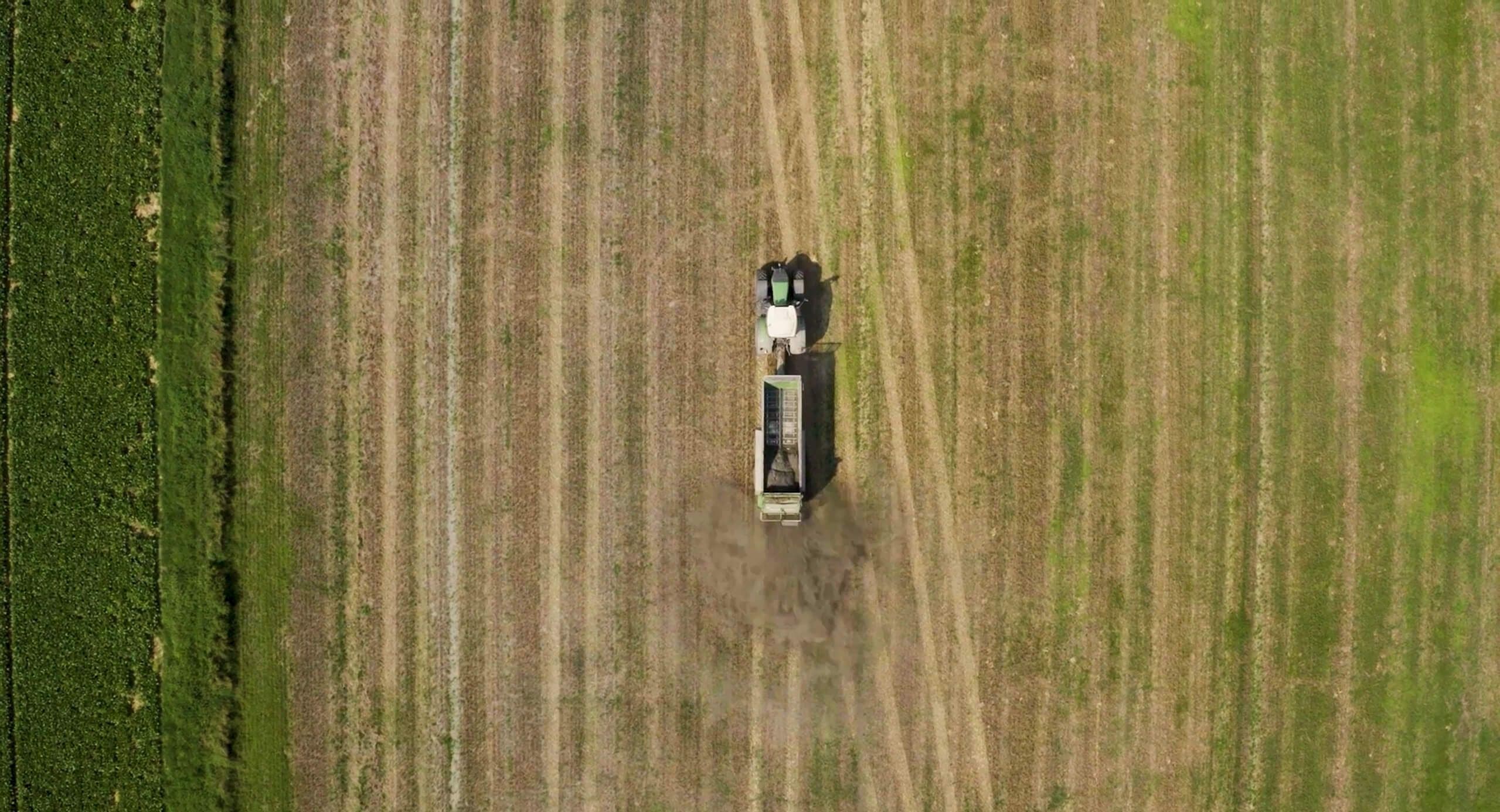
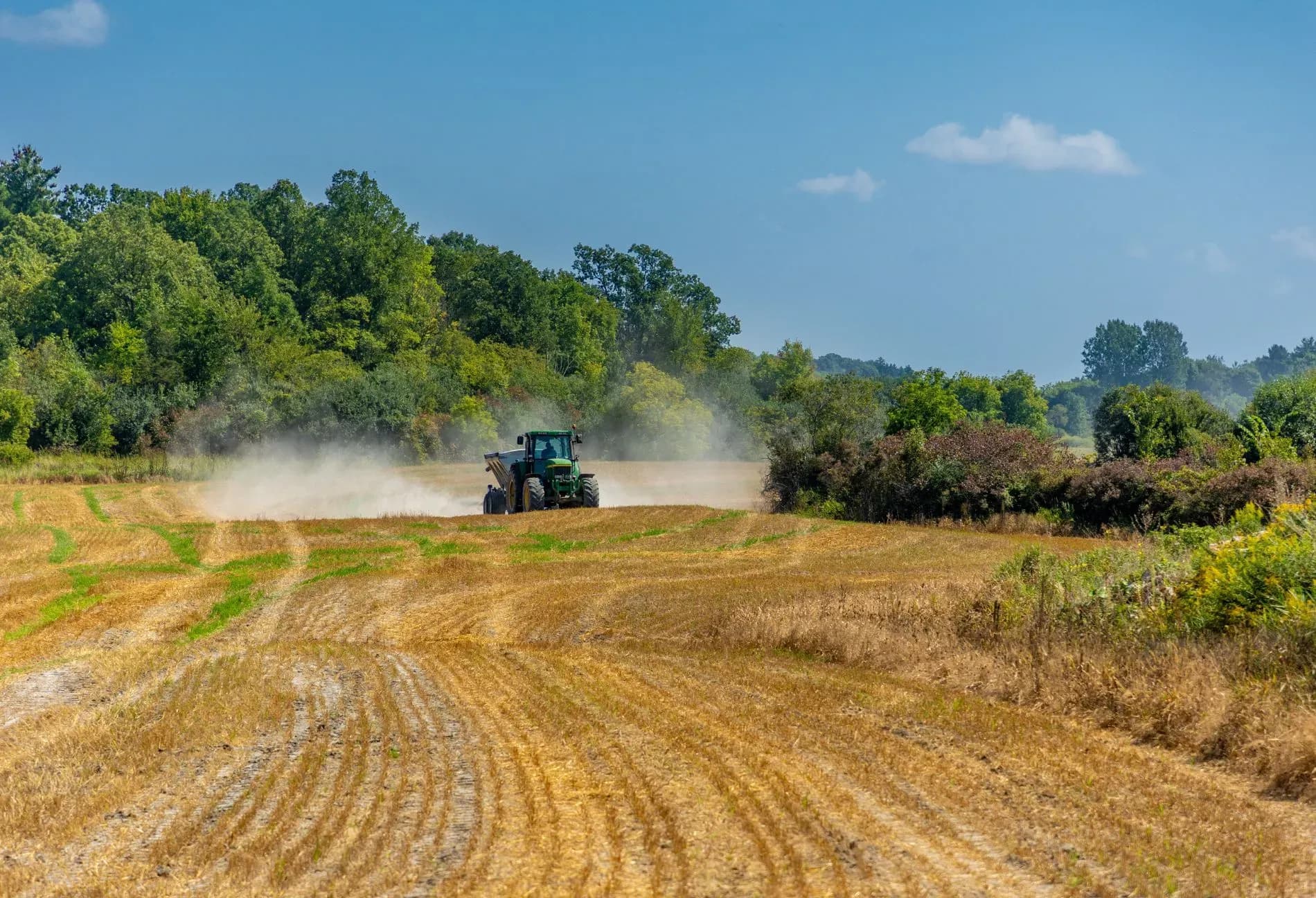
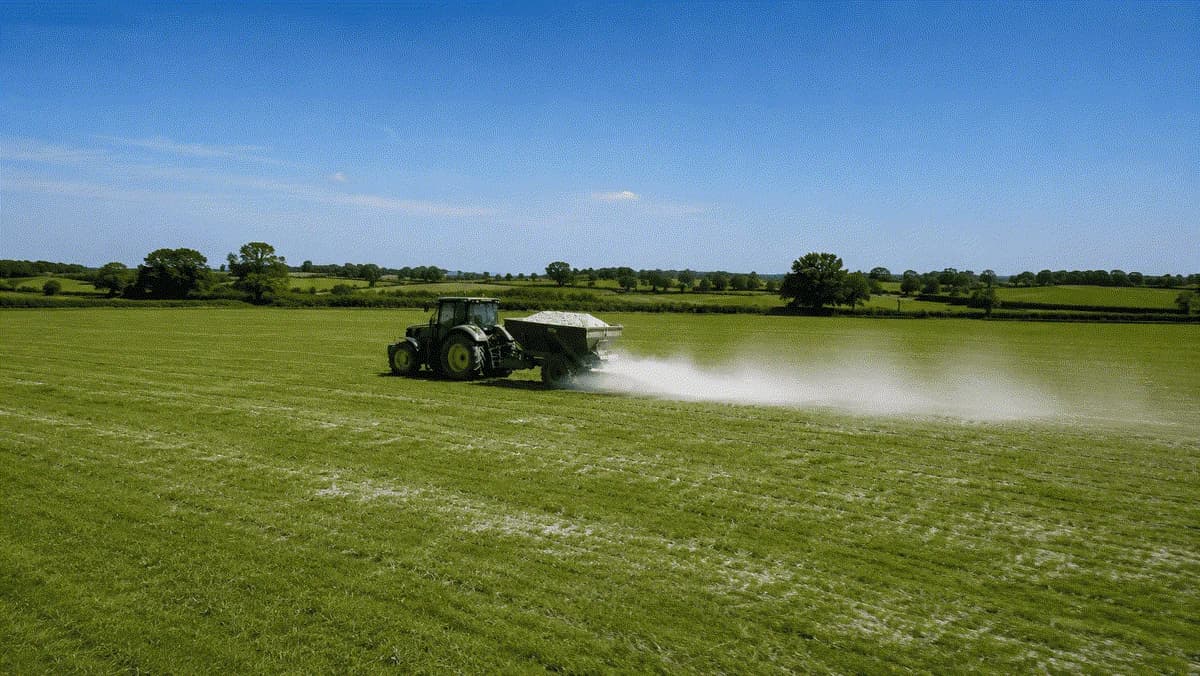
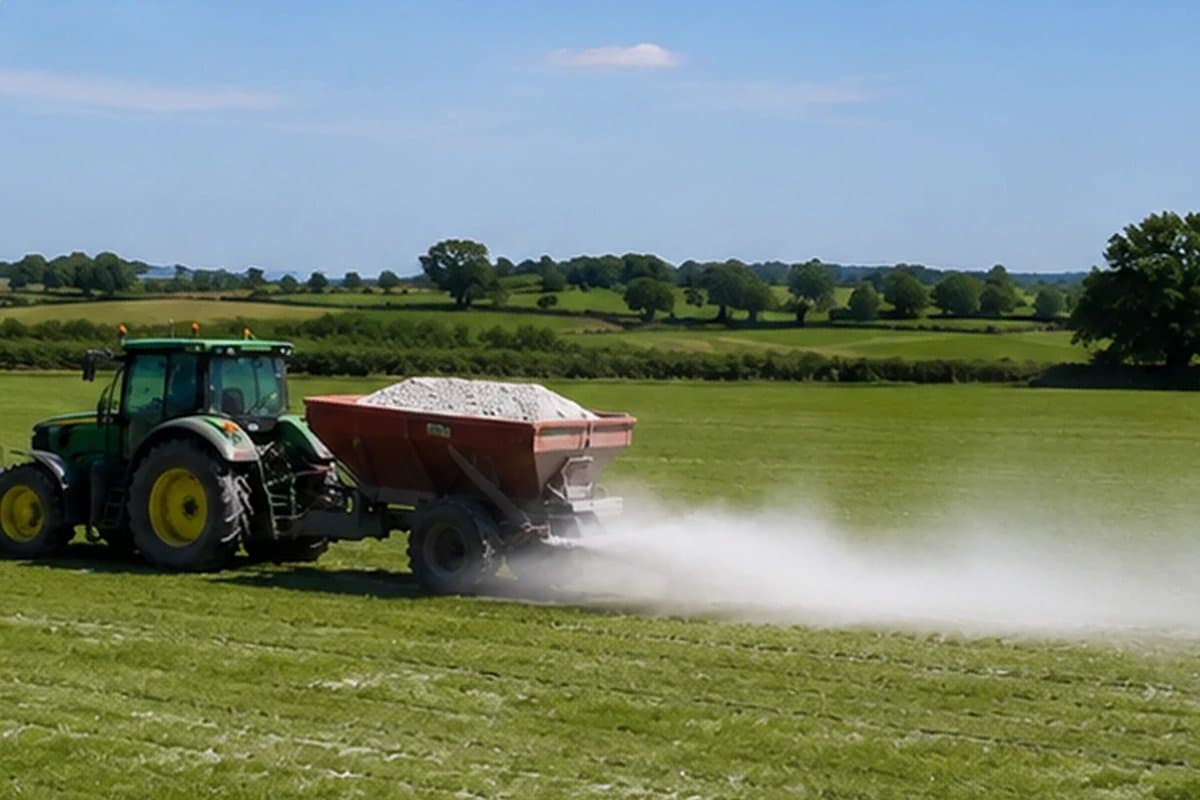
Farmers apply rock dust using the same lime spreaders and fertilizer equipment they already own, integrating ERW into routine field operations. Once on the land, weathering begins immediately and continues over years to decades depending on rock type, climate, soil conditions, and particle size. Warmer, wetter climates with high biological activity typically see faster weathering rates, which is why many early projects focus on tropical and temperate agricultural regions.

Carbon Storage in Soil and Oceans

As silicate minerals dissolve, they release bicarbonate ions that move downward through the soil profile with percolating water. Some bicarbonate is taken up by plants or reacts with soil minerals to form secondary carbonates, providing localized soil carbon storage. The majority, however, continues into groundwater and surface water systems, eventually reaching rivers and oceans.

Enhanced Rock Weathering Process Diagram

In the ocean, dissolved bicarbonates contribute to seawater alkalinity and remain in circulation for thousands of years before slowly precipitating as carbonate sediments or being incorporated into marine organisms' shells and skeletons. This oceanic carbon pool is stable on millennial timescales, giving ERW its classification as a long-duration carbon removal method. Unlike forest carbon that can reverse due to fire or land-use change, bicarbonates in the ocean do not return to the atmosphere on any timescale relevant to corporate climate commitments.

Carbon Removal Potential of Enhanced Rock Weathering

Global modelling studies indicate that ERW applied to suitable agricultural land could remove hundreds of millions to potentially billions of tonnes of CO2 per year by mid-century if deployed at scale. Regional assessments suggest strong potential in countries with large agricultural sectors and accessible silicate rock resources, including the United States, China, India, Brazil, and parts of Europe. For example, recent US-focused research estimates technical potential in the range of 160 to 300 million tonnes of CO2 per year by 2050, with costs converging toward competitive levels as supply chains mature.

Global and Regional Enhanced Rock Weathering Potential

These are theoretical and technical potentials, not forecasts. Real-world deployment will be constrained by rock availability, quarrying and transport infrastructure, farmer adoption rates, regulatory permitting, and the speed at which MRV systems can scale to verify millions of tonnes of removal annually. For DACH companies sourcing ERW credits, this means the method can contribute meaningfully to corporate carbon strategies and global climate targets, but it is not a silver bullet, and early engagement is necessary to secure allocation as demand increases.

The practical implication for sustainability leads is clear: ERW is one pillar in a diversified removal portfolio. It can deliver durable, high-integrity tonnes at scales that matter for both corporate net zero and 1.5°C pathways, but it must be combined with aggressive emissions reductions, high-quality nature-based solutions, and other technological removals like biochar and direct air capture.

How Permanent Is Enhanced Rock Weathering Carbon Storage

ERW delivers carbon storage durability that aligns with the Oxford Offsetting Principles and emerging SBTi guidance for long-duration removals. Most of the carbon captured through ERW ends up as dissolved bicarbonates and carbonates in oceans and stable mineral phases in soils, with storage timescales exceeding 1,000 years. This places ERW in the same permanence category as direct air capture with geological storage and significantly ahead of biological carbon pools in forests or agricultural soils, which typically store carbon for decades to a century before reversing due to disturbance, disease, or land-use change.

Registries and carbon credit methodologies recognize this durability. For example, Puro.earth classifies ERW as a long-duration removal method, and Isometric's Enhanced Weathering Protocol explicitly quantifies permanence in terms of the stability of bicarbonate pools in the ocean and secondary carbonates in soils. For corporate buyers facing scrutiny under CSRD and external assurance, this durability profile is critical. It allows ERW credits to be reported as highly durable removals, reducing the risk of future write-downs or restatements if permanence requirements tighten.

That said, scientific uncertainties remain. Exact dissolution rates vary by rock type, climate, and soil conditions, and there is ongoing research into the fate of dissolved carbon in different ocean basins and the potential for localized re-emission in certain soil types. Conservative crediting addresses this by applying uncertainty buffers and discount factors during quantification, ensuring that only verifiable, net-permanent removal is claimed. Buyers should look for methodologies that transparently document these adjustments and prioritize projects using field measurements rather than purely model-based estimates.

Types of Rocks Used in Enhanced Rock Weathering

Basalt

Basalt is the most widely used rock in commercial ERW projects. It is a volcanic silicate rock abundant worldwide, often available as a byproduct of quarrying for construction aggregates, which lowers cost and environmental impact. Basalt weathers at moderate to fast rates depending on particle size and climate, and releases beneficial nutrients including calcium, magnesium, and trace elements that support crop growth.

For procurement teams, basalt-based ERW projects offer a balance of availability, agronomic co-benefits, and mature supply chains. Projects like UNDO in the UK and ZeroEx in Germany have demonstrated multi-year operational deployment using basalt, providing proof of concept that sustainability managers can point to when building internal business cases.

Olivine

Olivine is a fast-weathering silicate mineral with high theoretical CO2 uptake per tonne of rock. Its magnesium-rich composition allows it to capture more CO2 relative to basalt, making it attractive from a carbon accounting perspective. However, olivine's mining and handling can raise environmental and dust exposure concerns, and its availability is more geographically concentrated than basalt.

Early-stage ERW suppliers have piloted olivine-based projects, particularly in regions with existing olivine mining infrastructure. For corporate buyers, olivine projects require additional due diligence on lifecycle emissions, dust management protocols, and community engagement, but they can deliver competitive removal rates when these factors are well managed.

Wollastonite and Other Silicate Minerals

Wollastonite, a calcium silicate mineral, and various industrial by-products such as returned concrete fines and steel slag are also being explored for ERW. These materials often have fast dissolution kinetics and can be sourced from waste streams, providing circular economy benefits alongside carbon removal.

Projects using these materials are still relatively early in commercial scale-up, but they represent important diversification pathways for the ERW supply chain. Buyers evaluating such projects should pay close attention to the lifecycle assessment to ensure that emissions from processing and transport do not erode net removal, and verify that MRV protocols account for the specific chemistry and weathering behavior of non-standard rock types.

A simple comparison: basalt offers proven availability and moderate weathering speed; olivine provides higher per-tonne CO2 capture but requires careful risk management; wollastonite and industrial by-products can deliver fast weathering and circularity benefits but demand rigorous lifecycle verification.

Enhanced Rock Weathering for Agriculture

Application Methods on Cropland

ERW integrates directly into existing agricultural operations. Farmers spread rock dust using lime spreaders, broadcast spreaders, or precision application equipment already used for fertilizers and soil amendments. Application typically occurs before planting, post-harvest, or during fallow periods to minimize crop disturbance. Rates vary by project design and rock type, but commonly fall in the range of several tonnes to tens of tonnes of rock dust per hectare per year.

This operational simplicity is a major advantage for scaling. There is no need for specialized machinery or complex farm-level infrastructure. The main logistical challenge is sourcing and transporting rock from quarries to fields at reasonable cost, which is why most commercial ERW projects focus on regions with local silicate rock availability and dense agricultural land.

Effects on Soil Health and pH

Silicate rock dust acts as a slow-release liming agent, gradually raising soil pH in acidic soils. This can reduce aluminum toxicity, improve nutrient availability for crops, and support healthier soil microbial communities. Field trials in the US Corn Belt and other temperate regions have documented measurable pH improvements over multiple growing seasons, with some trials also reporting increased cation exchange capacity and better soil structure.

For sustainability managers, these soil health benefits translate into stronger engagement with agricultural supply chains. ERW is not just a carbon offset; it can be positioned as a soil improvement initiative that supports long-term farm productivity. This dual value proposition is particularly useful when negotiating with agribusiness partners or when building cases for insetting programs where carbon removal occurs within a company's own supply chain.

Impact on Crop Yields

Emerging evidence suggests that ERW can maintain or modestly increase crop yields in certain contexts, particularly on acidic soils with micronutrient deficiencies. Large-scale trials have reported yield benefits from the liming effect and nutrient release, while other studies show neutral impacts. It is critical not to overclaim. Results are crop-, soil-, and climate-specific, and ERW is not a substitute for comprehensive nutrient management.

For buyers, the key takeaway is that ERW should not harm productivity and, in many cases, supports it. This makes farmer adoption more feasible and reduces the risk of negative press or community opposition. When evaluating projects, ask for transparent yield data and ensure that agronomic monitoring is part of the project's MRV framework.

Cost of Enhanced Rock Weathering per Tonne of CO2

ERW costs break down into several components: rock sourcing, crushing and grinding energy, transport from quarry to fields, and field application. Transport distance is often the largest variable cost driver. Projects located near quarries with access to low-cost silicate rock, or those using industrial by-products, can achieve significantly lower costs than projects requiring long-haul trucking.

Current market pricing for ERW credits from leading suppliers sits in the range of several hundred euros per tonne, broadly in line with other mid-range engineered removals. This is higher than most nature-based credits but typically below or overlapping with direct air capture and some BECCS deployments. Importantly, ERW costs are expected to decline as MRV becomes more efficient, logistics optimize, and rock supply chains scale. Early buyers can lock in strategic allocations now and benefit from cost learning curves over time.

For DACH sustainability leaders building a business case, position ERW as a long-duration, agricultural-linked removal that complements a diversified portfolio. The cost premium relative to short-lived biological credits is justified by permanence, additionality, and alignment with Oxford principles and future SBTi requirements for durable removals. Early procurement also mitigates the risk of price increases and supply shortages as regulatory mandates for carbon removals tighten.

Co-Benefits Beyond Carbon Removal

Reduced Soil Acidity

ERW functions as a natural liming agent, raising soil pH on acidic agricultural land. This reduces the need for conventional agricultural lime, which must be quarried, processed, and transported. By offsetting some lime expenditure, ERW can deliver direct cost savings to farmers, improving project economics and accelerating adoption.

For corporate buyers, this co-benefit strengthens the narrative around value creation. ERW is not purely a compliance cost; it supports agricultural resilience and input efficiency in supply chains that many DACH companies rely on for raw materials.

Lower Fertilizer Requirements

As silicate rocks weather, they release essential plant nutrients including potassium, calcium, and magnesium. Where soils are deficient in these nutrients, ERW can partially substitute for synthetic fertilizers, reducing both farmer costs and the upstream emissions associated with fertilizer production. This benefit is site-specific and must be validated through soil testing and agronomic monitoring, but it represents a tangible sustainability co-benefit that goes beyond carbon.

Buyers evaluating ERW projects should ask whether nutrient release is quantified and monitored, and whether farmers are adjusting their fertilizer programs based on rock application. Projects with strong agronomic partnerships and transparent data provide greater confidence that co-benefits are real and not overstated.

Improved Air Quality

Preliminary research suggests that ERW may improve regional air quality by reducing ammonia volatilization from agricultural soils and decreasing particulate matter emissions. These effects arise from chemical interactions between rock minerals and soil nitrogen compounds. While the evidence base is still emerging, air quality benefits are relevant for DACH companies operating in regions with strict emissions regulations and public health mandates.

Include air quality co-benefits as a supplementary narrative point in internal business cases, but do not treat them as primary justifications for ERW procurement until the science matures further.

Challenges of Enhanced Rock Weathering

Measurement and Verification Complexity

MRV for ERW is inherently more complex than for point-source removals like direct air capture. Carbon flows through multiple pathways, soils, groundwater, rivers, and oceans, and unfolds over years rather than hours. Quantifying net removal requires a combination of direct field measurements, geochemical modeling, and careful tracking of upstream emissions from rock extraction, grinding, and transport.

Leading MRV protocols address this by requiring projects to establish clear baselines, conduct regular soil and water sampling, apply conservative uncertainty discounts, and report full lifecycle emissions. Isometric's Enhanced Weathering Protocol and Puro.earth's ERW methodology both set explicit requirements for sampling frequency, analytical methods, and third-party verification. Buyers must check which standard and version a project follows, as methodologies are evolving rapidly and not all are equally rigorous.

For sustainability managers, the practical implication is simple: do not rely on supplier claims alone. Require independent verification, transparent documentation of measurement approaches, and clear quantification of uncertainty. This is where platforms like Senken provide value by screening projects against a 600+ datapoint framework that includes MRV robustness as a core criterion.

Energy for Rock Crushing and Transport

Crushing silicate rocks to fine particle sizes requires significant energy, and transporting rock dust from quarries to dispersed agricultural fields generates emissions. If these lifecycle emissions are not properly accounted for, the net carbon removal benefit of ERW can be substantially overstated. High-integrity projects conduct full lifecycle assessments, factor in emissions from diesel-powered machinery and trucking, and report net removal after deducting these impacts.

Buyers should ask for lifecycle carbon efficiency metrics. Projects achieving above 90% net removal efficiency, meaning less than 10% of gross removal is offset by lifecycle emissions, represent best practice. Be wary of projects that do not transparently report lifecycle emissions or that rely on long-distance transport without clear justification.

Scaling and Logistics

Scaling ERW to gigatonne levels will require massive increases in quarrying capacity, crushing infrastructure, and logistics coordination. Suitable rock sources are geographically concentrated, and not all agricultural regions have easy access to local silicate deposits. Regulatory permitting for new quarries and transport corridors can be slow, and securing farmer buy-in across large areas requires sustained outreach and education.

For corporate buyers, these scaling constraints mean that ERW supply will remain tight relative to demand in the near term. This reinforces the strategic value of early procurement and long-term offtake agreements. It also highlights the importance of working with suppliers who have demonstrated multi-year operational track records and established relationships with quarries and farming communities.

How to Evaluate Enhanced Rock Weathering Carbon Credits

MRV Standards and Protocols

MRV, or Measurement, Reporting, and Verification, is the backbone of credit integrity. For ERW, a robust MRV setup includes a defensible baseline that quantifies how much CO2 would have been captured without the project, a combination of direct field measurements and validated geochemical models to estimate removal, explicit treatment of uncertainty through conservative discount factors, and full accounting of leakage and lifecycle emissions.

Currently, the most developed ERW MRV frameworks are Isometric's Enhanced Weathering Protocol and Puro.earth's ERW methodology. Isometric has issued the world's first independently verified ERW credits, and Puro.earth has released a major methodology update with detailed requirements for sampling, dual-approach quantification, and loss accounting. Verra's basalt-soil ERW methodology remains on hold pending further development, illustrating that not all standards are ready for commercial deployment.

For buyers, the key question is: which methodology does the project use, and has it been independently verified? If a supplier cannot clearly answer this or points to an unrecognized or proprietary standard, treat it as a red flag.

Project Transparency and Traceability

High-integrity ERW projects provide clear documentation at every step. This includes rock sourcing records showing mineralogy and origin, field application logs with GPS coordinates, dates, and tonnages applied, soil and water sampling plans and results, lifecycle emissions calculations with transparent assumptions, and the full methodology document describing how measurements are converted into issued credits.

This documentation is not just for internal due diligence. It is what you will need to satisfy CSRD reporting requirements, external assurance auditors, and any future regulatory or legal scrutiny. Insist on receiving comprehensive project documentation before committing to purchases, and verify that data is updated regularly as monitoring continues.

Third-Party Verification

Independent third-party verification is non-negotiable for any technology-based removal. ERW credits should be verified by accredited auditors under recognized standards such as ISO 14064-3 or registry-specific verification protocols. The verifier's role is to confirm that the project followed its stated methodology, that measurements and calculations are accurate, and that all claims are supported by evidence.

Buyers should ask to see verification reports and check the credentials of the verifying body. Projects that have undergone multiple verification cycles and maintained consistent credit issuance over time demonstrate operational maturity and lower greenwashing risk. This is a core element of Senken's due diligence process, which evaluates not only the project's carbon impact but also its governance, compliance, and reputation through more than 600 data points.

Enhanced Rock Weathering Compared to Other CDR Methods

Positioning ERW within the broader carbon removal landscape helps sustainability leaders understand where it fits in a diversified portfolio. Compared to direct air capture, ERW typically costs less per tonne today and leverages existing agricultural infrastructure, but DAC offers highly controlled, point-source removal that can be sited near low-carbon energy or geological storage. Relative to biochar, ERW provides comparable or longer permanence and strong agricultural co-benefits, but biochar benefits from more mature supply chains in some regions and may offer faster near-term scale-up.

Compared to afforestation and reforestation, ERW delivers significantly longer permanence with lower reversal risk, but at a higher cost per tonne. Forest projects remain valuable for biodiversity and near-term carbon uptake, while ERW complements them by addressing the need for durable, millennial-scale storage. Ocean alkalinity enhancement shares geochemical principles with ERW but applies minerals directly to seawater, a pathway still largely in research and development with complex marine monitoring requirements.

The strategic takeaway is that ERW is not a replacement for other CDR methods but a complementary tool. A well-designed carbon portfolio includes a mix of short-, medium-, and long-duration removals, balancing cost, scalability, co-benefits, and risk. ERW's strengths lie in its high permanence, agricultural integration, and growing commercial availability, making it a strong candidate for the long-duration slice of a portfolio aligned with Oxford principles and SBTi guidance.

How Enhanced Rock Weathering Fits into a Durable Carbon Portfolio

Carbon credit permanence chart comparing short-, medium-, and long-duration carbon removal options for a corporate carbon removal portfolio

Building a durable carbon portfolio means systematically increasing the share of long-duration removals over time while maintaining aggressive emissions reductions as the foundation of your climate strategy. ERW plays a key role in this transition. Its thousand-year-plus permanence aligns with Oxford Offsetting Principles, which call for portfolios to shift toward durable removals as net zero target dates approach. Early SBTi guidance on novel, long-duration removals similarly points toward increasing shares of methods like ERW, biochar, and DAC in corporate removal strategies.

Practically, this means allocating a small but growing budget slice to ERW today while continuing to invest in high-quality nature-based solutions and other technological removals. Start with pilot purchases, perhaps a few hundred to a few thousand tonnes per year, to build internal knowledge, test supplier relationships, and generate documentation for CSRD and assurance. As MRV matures and supply scales, increase ERW allocations in line with your net zero roadmap and regulatory timelines.

Senken supports this portfolio design by curating ERW supply through its Sustainability Integrity Index. Projects are screened against more than 600 data points covering carbon impact, MRV robustness, co-benefits, governance, and reputation, ensuring that only high-integrity ERW credits enter customer portfolios. This multi-layer verification process, spanning registry approval, third-party audits, lifecycle assessment, and external ratings, gives buyers the documentation and traceability required for CSRD, SBTi reporting, and internal audit.

The next step is straightforward. Define your durable removal targets, identify an internal policy for ERW credit quality using the evaluation criteria in this guide, pilot a small ERW allocation alongside other removals, and build the documentation package you need for compliance and assurance. Contact Senken to explore high-integrity ERW projects and design a balanced, future-proof carbon portfolio that meets your climate commitments without exposing you to greenwashing risk.

Frequently Asked Questions

Does enhanced rock weathering work in cold climates?

Weathering rates are slower in cold climates due to reduced chemical reaction speeds, but ERW can still function effectively. Projects in Canada (UNDO) and northern US states have demonstrated measurable removal, though per-hectare rates are typically lower than in warmer regions. Economic viability depends on local rock availability, transport distances, and whether agronomic co-benefits (such as pH correction) justify deployment even with slower weathering. For DACH companies sourcing ERW, prioritize projects with transparent climate-adjusted modeling and conservative crediting that accounts for regional weathering rates.

What is the difference between enhanced rock weathering and direct air capture?

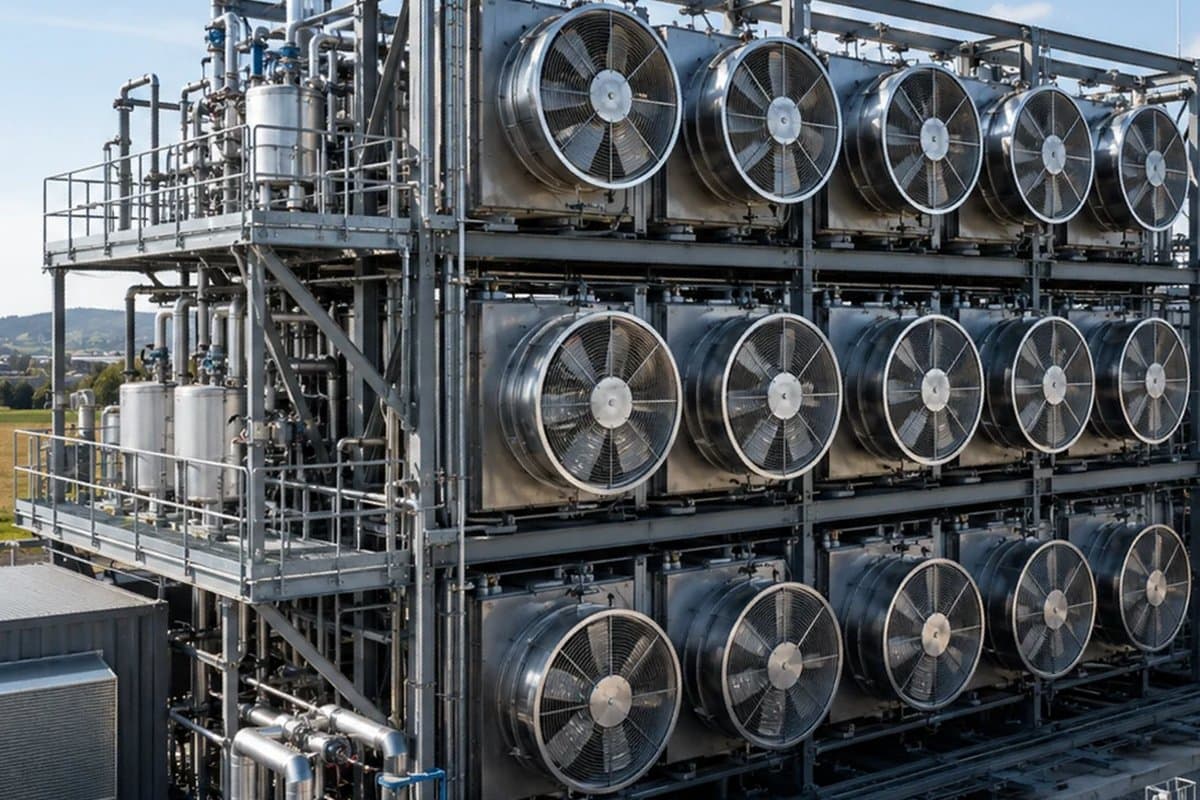
ERW uses natural chemical processes accelerated by spreading crushed rock on land, while direct air capture (DAC) uses engineered machines to filter CO₂ from ambient air. Both achieve durable carbon removal, but ERW typically costs less per tonne today ($300–$420/t vs. $600–$1,000+/t for DAC) and integrates with existing agricultural infrastructure. DAC offers highly controlled, point-source removal that can be sited near low-carbon energy or geological storage, making it attractive for companies seeking maximum permanence certainty. A well-designed portfolio includes both: ERW for cost-effective, agriculture-linked removal and DAC for the highest-durability fraction of your Oxford-aligned strategy.

Are enhanced rock weathering credits eligible for CSRD and SBTi reporting?

ERW credits can support climate claims under CSRD and SBTi when they meet rigorous quality standards, but eligibility depends on the specific methodology, verification standard, and how your organization defines "high-quality removal." For CSRD, you'll need full traceability, third-party verification, and lifecycle emissions accounting—look for credits issued under Isometric or Puro.earth with transparent MRV documentation. For SBTi, ERW's 1,000+ year permanence aligns with emerging guidance on long-duration removals, but confirm that your chosen credits meet SBTi's evolving requirements for neutralization claims. Senken's Sustainability Integrity Index pre-screens ERW projects against these frameworks, ensuring that only credits with audit-ready documentation enter your portfolio.

How do I evaluate whether an ERW project's MRV is robust enough for our compliance needs?

Start by confirming which registry methodology the project follows—Isometric's Enhanced Weathering Protocol and Puro.earth's ERW methodology are currently the most rigorous, with explicit requirements for field sampling, dual-approach quantification (measurement + modeling), and conservative uncertainty discounts. Ask for documentation showing baseline establishment, soil and water sampling plans, lifecycle emissions calculations, and third-party verification reports. Red flags include projects that rely solely on modeled estimates without field measurements, lack transparent uncertainty quantification, or cannot provide clear records of rock sourcing and application. For CSRD assurance, your auditors will expect the same level of documentation you would demand for financial controls—if the project cannot provide it, walk away.

Can we integrate ERW into our agricultural supply chain as an insetting strategy?

Yes, and this is an emerging opportunity for companies with direct agricultural sourcing relationships. Eion's 3,500-tonne pilot with Perdue demonstrates how ERW can be deployed on farms within a company's supply chain, creating insetting credits that strengthen sustainability narratives and supplier engagement. The key is ensuring that the ERW deployment delivers genuine additionality (it wouldn't happen without your financing), that MRV is independently verified, and that you have clear contractual arrangements with farmers and the ERW supplier. Insetting also requires internal coordination across procurement, sustainability, and legal teams to structure agreements that satisfy both carbon accounting standards and commercial sourcing requirements—start with a small pilot to build internal knowledge before scaling.

What happens if an ERW project fails to deliver the contracted removal volumes?

This is a real risk given that ERW removal rates depend on variables like weather, soil conditions, and rock quality that can shift over multi-year deployment periods. High-quality offtake agreements include performance guarantees, buffer pools (a percentage of credits held back to cover underperformance), and clear remediation clauses specifying how shortfalls will be addressed—typically through replacement credits from other projects or refunds. Before signing, review the contract's force majeure provisions, dispute resolution mechanisms, and whether the supplier carries insurance or has financial backing to cover delivery risk. Platforms like Senken mitigate this by curating only suppliers with demonstrated operational track records, third-party verification, and transparent risk management, reducing the likelihood that you'll face a shortfall in the first place.