
Puro
Key Takeaways
- Puro.earth CORCs represent one tonne of CO₂ durably removed and independently verified—but they cannot be netted against your Scope 1–3 emissions under CSRD or SBTi rules; they belong in a separate 'beyond value chain' or neutralisation disclosure.
- Use a layered quality framework to evaluate individual Puro.earth projects: the platform's 100+ year durability threshold and ex-post verification are strong starting points, but project-level risks around additionality, leakage, and counterparty stability still require your own due diligence.
- Current CORC pricing averages €125–131 per tonne, with biochar and geologic storage dominating issuance; plan procurement as a multi-year portfolio strategy rather than one-off purchases to lock in volume, manage cost, and align with your net-zero timeline.
- Treat CORC purchases as audit-ready from day one: secure registry entries, verification reports, and contract documentation that your CSRD auditors can trace end-to-end, and ensure internal sign-off from procurement, legal, and finance before any external claims.
SBTi is tightening its stance on carbon removals, CSRD auditors are asking for documentation you didn't know you needed, and Puro.earth keeps appearing in procurement tenders and vendor decks. If you're a sustainability lead in a large DACH company, you've likely been asked whether engineered carbon removal—and specifically, CO₂ Removal Certificates (CORCs) from Puro.earth—should be part of your climate strategy.
Here's what you need to know: Puro.earth is a Nasdaq-backed crediting platform and standard for engineered carbon removal. A CORC represents one tonne of CO₂ removed from the atmosphere and durably stored (for at least 100 years) under an approved methodology, issued only after independent third-party verification and tracked through the public Puro Registry to prevent double-counting. Since 2019, Puro.earth has issued over one million CORCs across methods like biochar, enhanced rock weathering, carbonated building materials, and direct air capture with geologic storage.
This guide is not marketing—it's a practical playbook for deciding if, when, and how to use Puro.earth CORCs in a CSRD-compliant, SBTi-aligned climate strategy without creating audit or greenwashing risk. You'll learn where CORCs fit in your net-zero roadmap, how to assess quality at both the standard and project level, what documentation your auditors will demand, and how to structure procurement so finance and legal can sign off with confidence.
1. What Puro.earth Is and What You Actually Buy (CORCs in Plain Language)
If you're hearing "Puro.earth" in vendor pitches or seeing it referenced in net-zero tenders, here's what you need to know upfront. Puro.earth is a Nasdaq-backed crediting platform and standard focused exclusively on engineered carbon removal . It's not a project developer or broker; it's the registry and methodology framework that issues, tracks, and retires certificates called CO2 Removal Certificates (CORCs).
Each CORC represents one metric ton of CO2 that has been removed from the atmosphere and durably sequestered under an approved Puro Standard method, issued only after third-party verification . The key word is ex-post: credits are only issued after removal has happened and been independently audited, not projected or forecasted.
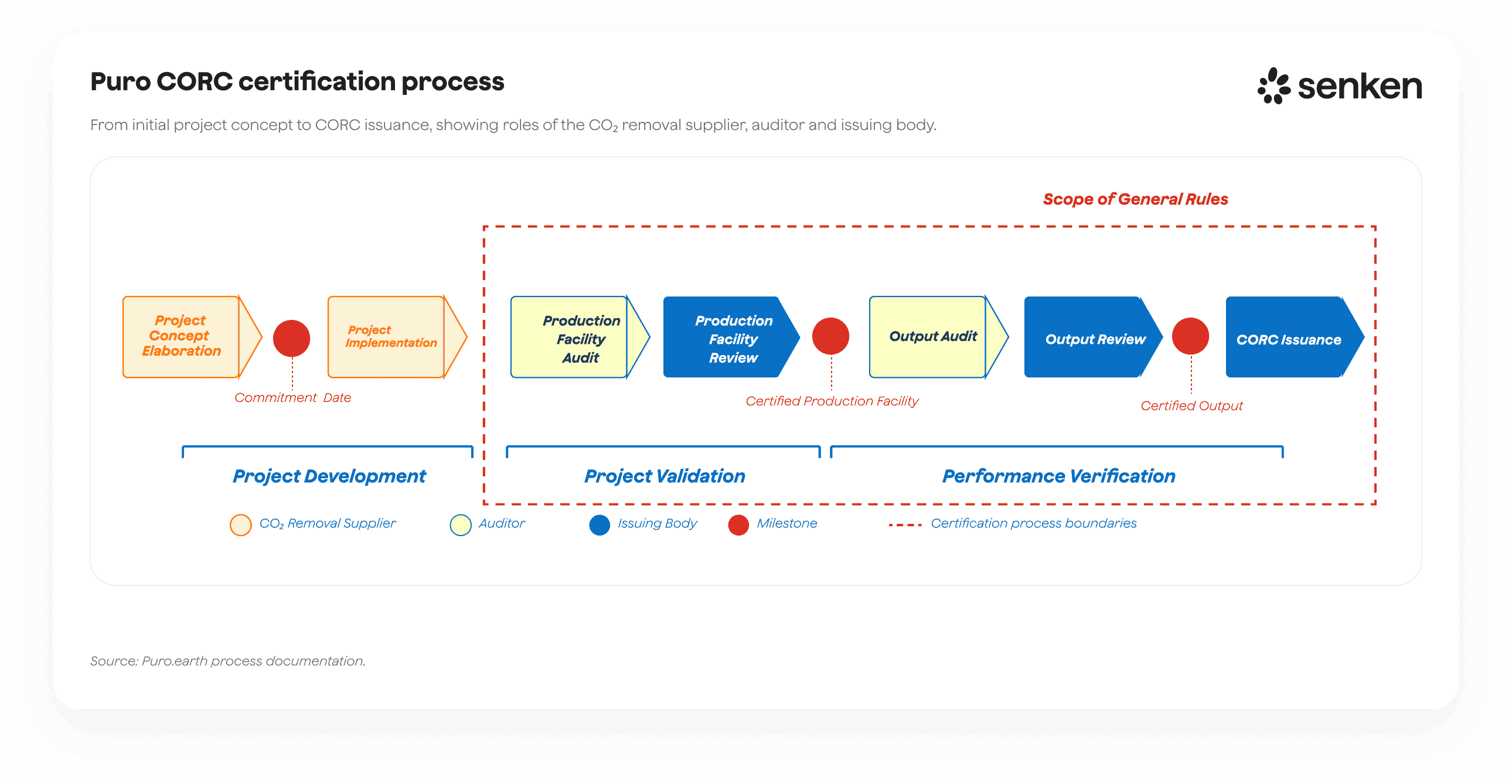
Here's how the mechanics work in practice. A project developer applies an approved Puro methodology (biochar production, enhanced rock weathering, geologic CO2 storage, etc.), measures and reports removal activity, then submits lifecycle assessments or environmental product declarations to an accredited verification body. Puro.earth covers verification costs to maintain assessor independence. Once verified, CORCs are recorded in the public Puro Registry, which tracks their full lifecycle from issuance to retirement to prevent double-counting. After you retire a CORC, it's locked and can't be traded or claimed by anyone else.
Understanding Durability Labels: CORC100+, CORC200+, CORC1000+
Not all CORCs store carbon for the same length of time. Puro.earth uses tiered durability labels: CORC100+ (minimum 100 years), CORC200+ (several centuries), and CORC1000+ (millennia) . These labels matter because SBTi's draft net-zero guidance requires "like-for-like" durability matching: if you're neutralizing fossil emissions, you should use removals with comparable permanence.
From January 2023, Puro.earth raised its minimum durability threshold to 100 years; methods with shorter storage (wooden building elements, soil amendments) were discontinued . This tightening signals a maturing standard, but it also means you need to check which durability band your CORCs fall into and confirm it aligns with your target-year residuals.
In short: when you buy a CORC, you're buying verified, durable removal with a clear storage timeframe and public traceability. That's a stronger foundation than many nature-based credits offer, but it doesn't automatically make your procurement strategy audit-proof or SBTi-compliant. The next sections show you how to fill those gaps.
2. Where Puro Earth Fits in Your Net-Zero, SBTi and CSRD Strategy
The hardest question most DACH sustainability heads face isn't "Should we buy CORCs?" It's "Where exactly do these sit in our roadmap, and how do we report them without creating greenwashing risk?"
The SBTi Reality: Removals Come Last, Not First
SBTi's Net-Zero Standard (version 2.0 draft) allows removal credits only for neutralizing final residual emissions after the net-zero target year; before that, removals can be used for beyond-value-chain mitigation (BVCM), which is voluntary . Translation: you cannot use Puro.earth CORCs to avoid deep decarbonization in your Scope 1, 2, or 3. Your near-term and long-term targets must prioritize absolute emission reductions; CORCs are the safety net for what's left after every feasible abatement lever has been pulled.
The same draft guidance emphasizes durability matching. If your residual emissions come from hard-to-abate industrial processes or long-haul transport (fossil CO2 that stays in the atmosphere for centuries), you should prioritize high-durability removals like CORC1000+ rather than shorter-lived nature-based storage. This is where Puro.earth's engineered methods (geologic storage, carbonated materials, enhanced rock weathering) naturally fit.
For companies targeting net zero in 2040 or 2045, the practical procurement question is: how much BVCM do you want to fund now to show leadership and lock in prices, versus how much neutralization capacity do you need contracted by your target year? Puro.earth CORCs work well for both, but the claim language and disclosure differ.
CSRD and ESRS: No Netting, Transparent Disclosure
CSRD prohibits netting purchased carbon credits against reported Scope 1–3 emissions and requires separate disclosure of external carbon credits, including type (removal vs reduction), methodology, location, and corresponding Paris Agreement adjustments . That means your Scope 1, 2, and 3 footprint stays as-is in your ESRS E1 disclosures. CORCs appear in a separate line, labeled clearly as externally purchased removals used for BVCM or neutralization.
CSRD assurance starts with limited assurance and moves toward reasonable assurance by 2028 . In practice, this means your auditors will expect the same rigor for CORC purchases as they do for financial transactions: contracts, invoices, registry confirmations, retirement certificates, and clear internal controls. If you're used to treating carbon credits as a "soft" ESG line item, that era is over.
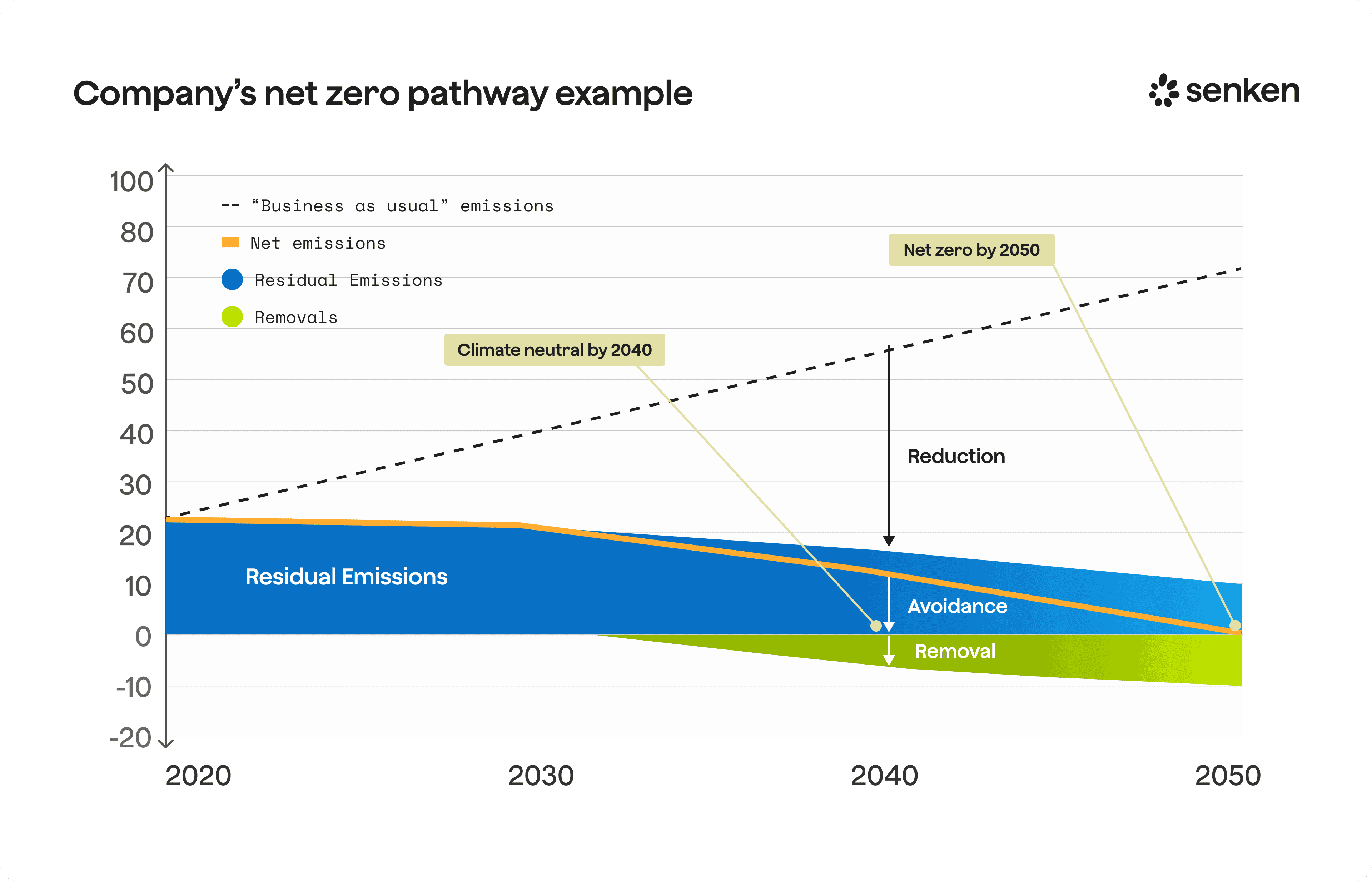
One scenario to illustrate: imagine you're a DACH industrial with a 2030 near-term target (42% reduction) and a 2040 net-zero target. By 2030, you've cut Scope 1+2 from 500,000 tCO2 to 290,000 tCO2. You decide to fund 10,000 tCO2 of BVCM annually using Puro.earth biochar and ERW CORCs to signal climate leadership and support frontier technology. In your CSRD report, your Scope 1+2 shows 290,000 tCO2 (no adjustment), and a separate Beyond Value Chain section shows 10,000 tCO2 of durable removals purchased and retired. By 2040, your residual is down to 50,000 tCO2, which you neutralize with an ongoing offtake of CORC1000+ geologic storage credits. That 50,000 tCO2 still appears in your Scope 1+2 inventory, but you separately disclose the neutralization activity and can claim "net-zero Scope 1+2" if your removal volume and durability match the residual.
The key takeaway: Puro.earth CORCs are a tool for BVCM and post-target neutralization, not a shortcut around reporting your actual emissions. If your internal communications or investor decks imply otherwise, you're setting yourself up for audit issues and regulatory scrutiny.
3. Inside the Puro Standard: Methods, Durability and MRV – What Matters for Quality
To decide whether Puro.earth CORCs meet your quality bar, you need to understand what's under the hood. The Puro Standard is actually a family of methodologies, each tailored to a specific removal pathway.
Approved Removal Methods and Their Durability Profiles
Current approved methods include biochar (stable carbon in soils, 100+ years), terrestrial biomass storage (woody biomass under controlled conditions, 100+ years), carbonated materials (CO2 mineralized in alkaline industrial byproducts, 1000+ years), enhanced rock weathering (silicate weathering to bicarbonate/carbonate, 1000+ years), geologically stored carbon (DACCS or BECCS with deep injection, 1000+ years), and marine anoxic carbon storage (lignin-rich biomass in deep-sea basins, 200+ years) .
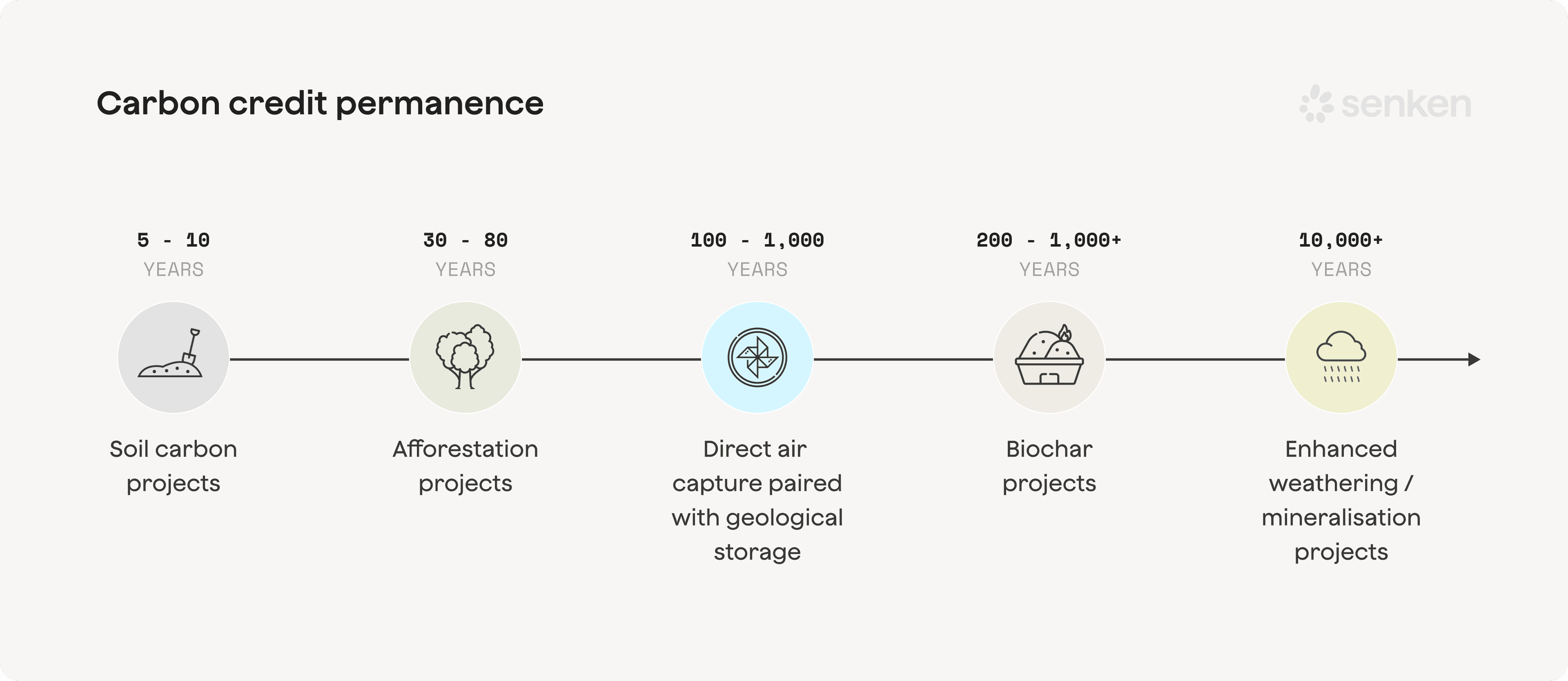
Each method maps to a durability band and a typical cost range. For example, biochar and terrestrial biomass tend to be CORC100+, with prices in the €100–250/tCO2 range. Enhanced rock weathering, carbonated materials, and geologic storage fall into CORC1000+, often priced €180–500+/tCO2 depending on the technology maturity and supply constraints. As of October 2025, Puro.earth's composite CORC index averaged around €131/tCO2, with the biochar-specific index at €125/tCO2 .
Understanding these profiles helps you decide: if your residual emissions are relatively short-lived (e.g., biogenic CO2 from waste or agriculture), CORC100+ biochar might suffice. If you're neutralizing fossil CO2 from cement or aviation, CORC1000+ geologic storage or mineralization is the better match.
MRV Rigor: Ex-Post Issuance, Site Visits, and Uncertainty Deductions
The Puro Standard General Rules (latest version 4.2) define quantification, monitoring, reporting, and independent verification procedures; third-party auditors perform site visits, validate data, and issue audit statements . Unlike forward-credit systems that rely on projections, Puro only issues CORCs after removal activity is complete and verified.
For enhanced rock weathering, the methodology update introduced uncertainty quantification requirements, including statistical uncertainty discounts and Bayesian or frequentist modeling for each component of the carbon removal calculation . This means that if measurement uncertainty is high, fewer credits are issued, a conservative approach that protects credit buyers from over-crediting.
Puro.earth applies pre-issuance deductions to account for expected degradation or reversal over contracted storage periods, eliminating the need for a separate risk buffer pool . In practice, this means the CORC you buy already incorporates a permanence discount, so you don't have to manage buffer credits or worry about pooling mechanisms across projects.
What's Still Evolving (and Why That Matters)
Standards evolve, and that's both a strength and a risk. Puro.earth convened a 2025 cross-standard biochar persistence workshop with Verra, Rainbow, and Carbon Standard International; key outcomes included alignment on open-source persistence equations and a preference for conservative durability labels (≤200 years) until millennial-scale persistence has stronger scientific consensus . This is good governance, transparent science, and responsive to critique. But it also means that if you're building a 15-year CORC portfolio today, you should expect methodologies to tighten further and plan for potential re-evaluation of older vintages.
To date, no peer-reviewed studies have publicly evaluated Puro Standard methodologies , though external validation comes from Frontier's designation of Puro.earth as a "Leading Credit Issuer" for scientific rigor, governance, and transparency . For a risk-averse DACH corporate, this gap means you shouldn't rely solely on Puro.earth's label. Layer on independent project-level due diligence (which is exactly where Senken's Sustainability Integrity Index adds value, as we'll cover next).
4. A Practical Due-Diligence Framework for Puro.earth CORCs (and How Senken Adds a Second Filter)
Even under a strong standard, not all projects are created equal. Here's a checklist you can take into your next investment committee or procurement review.
Eight Quality Questions to Ask Every CORC Supplier
- Additionality: Would this removal have happened without carbon finance? For engineered CDR, additionality is usually strong (no one builds a biochar kiln or spreads basalt dust at scale without revenue), but check for double-subsidies or regulatory mandates that might weaken the case.
- Permanence and reversal risk: What's the actual storage duration, and what could go wrong? For biochar, soil disturbance or re-excavation. For ERW, unexpectedly low weathering rates. For geologic storage, well integrity. Does the project have monitoring and liability provisions?
- Leakage: Does the removal activity shift emissions elsewhere? For example, does the biomass feedstock for biochar displace other uses, or does the basalt transport for ERW generate significant upstream emissions?
- MRV robustness: Who verified the project, and what level of site-level validation occurred? Can you see the verification report, or at least a summary? Are key assumptions (e.g., carbon content, weathering rate) grounded in peer-reviewed literature or site-specific measurement?
- Double-counting safeguards: Confirm that the CORC has a unique serial number in the Puro Registry, that retirement is public and timestamped, and that the project developer isn't claiming the same tonne elsewhere (e.g., in voluntary or compliance markets).
- Policy and compliance risk: Is the project operating in a jurisdiction with stable land tenure, clear regulatory frameworks, and low corruption? For DACH corporates, reputational risk from projects in high-risk geographies can outweigh carbon benefits.
- Co-benefits and safeguards: Does the project support or harm local communities, biodiversity, water resources, or food security? Engineered CDR often has fewer social touchpoints than land-based projects, but it's not zero. Check for documented stakeholder engagement.
- Controversies and track record: Has the project or developer faced public criticism, methodology disputes, or credit withdrawals? For example, rare CORC withdrawals (such as 2 out of 3,424 CORCs from a Wakefield biochar facility in 2023) illustrate that even under a strong standard, project-level risks exist .
Layering Senken's Sustainability Integrity Index on Top
Senken's 600+ datapoint AI Quality Framework applies these questions systematically across five verification stages: Basic Project Analysis (methodology, registry, location), Carbon Impact (additionality, permanence, leakage, baseline), Beyond Carbon (social, environmental, governance co-benefits), Reporting Process (MRV transparency and ongoing monitoring), and Compliance & Reputation (alignment with ICVCM, CSRD, external ratings, controversies).
When you shortlist a Puro.earth project, Senken's SII provides a project-level scorecard that goes deeper than the standard-level label. For example, two biochar CORCs might both be Puro-certified, but one scores 21/25 on Senken's index (strong additionality, transparent MRV, positive community impact, no controversies) while the other scores 15/25 (weaker baseline documentation, limited third-party MRV detail, unclear benefit-sharing). The difference matters for audit confidence and long-term reputational safety.
Think of Puro.earth as your first filter (is this real, verified removal?) and Senken as your second filter (is this the best removal I can buy for my risk appetite and reporting needs?). Using both keeps you in the top tier of corporate climate integrity.
5. Commercial Reality: Pricing, Contracting and Building a Durable Removal Portfolio with Puro Earth
Now the practical part: how much should you budget, when should you buy, and should you do spot purchases or multi-year offtakes?
What DACH Corporates Should Know About CORC Pricing Today
Recent market data shows Puro.earth's composite CORC index at approximately €131/tCO2, with biochar averaging €125/tCO2, both experiencing modest year-to-date declines of 6–11% . These prices reflect durable, high-integrity engineered removal, an order of magnitude higher than many nature-based avoidance credits but increasingly liquid and scalable.
Since 2019, Puro.earth has issued 1 million CORCs, with roughly one-third from geologic storage and one-third from biochar.
Biochar in particular shows strong primary transfer rates (93% completing a first sale) and high retirement activity (80% retired within the reporting period), signalling real end-buyer demand rather than speculative holding.
What does this mean for you? First, budget €100–250/tCO2 for CORC100+ (biochar, terrestrial storage) and €180–500+/tCO2 for CORC1000+ (ERW, geologic storage, carbonated materials). Second, expect prices to rise as SBTi removal mandates kick in; early procurement locks in today's rates and avoids the 2030+ supply crunch. Third, recognize that biochar is currently the most liquid and cost-effective entry point for durable removals, but diversify across methods to manage technology and counterparty risk.
Spot vs Offtake: How to Balance Cost, Certainty, and Flexibility
Spot purchases give you immediate delivery, no long-term commitment, and the ability to adapt as methodologies and prices evolve. The downside: you're exposed to price volatility and supply tightness, and you may miss out on volume discounts or strategic partnerships.
Multi-year offtakes (forward purchase agreements) lock in pricing, guarantee supply, and often come with relationship benefits like site visits, co-marketing, and priority allocation. The trade-off: you're committing capital and volume before delivery, and if the project under-delivers or a methodology is downgraded, you face re-procurement risk.
A balanced portfolio approach for a large DACH corporate might look like this:
- Year 1–2: 50% spot biochar CORCs to build experience and internal buy-in, 50% pilot offtake with a high-quality ERW or geologic storage project to test governance and reporting workflows.
- Year 3–5: Scale up offtakes for 60–70% of your BVCM or neutralization needs, keeping 30–40% flexible for spot purchases of emerging methods (marine storage, new mineralization pathways) or geographic diversification.
- Year 6+: Blend long-dated offtakes (5–10 year commitments) for cost certainty with annual spot top-ups to respond to evolving SBTi guidance, new Puro methodologies, and internal footprint changes.
This structure balances risk, demonstrates leadership (long-term commitments signal seriousness to stakeholders), and preserves optionality as the market matures.
6. Making Puro Earth Audit-Ready: Governance, Documentation and a Simple Decision Checklist
CSRD assurance isn't optional, and it's getting stricter. Here's what you need to secure for every CORC purchase and retirement so your auditors sign off without pushback.
Your Minimum Documentation Package
For each CORC transaction, collect and archive:
- Puro Registry entries: Screenshots or API exports showing issuance date, serial numbers, project ID, methodology, and retirement timestamp.
- Verification reports: Third-party audit statements confirming removal volumes, methodologies applied, and compliance with Puro Standard rules.
- Lifecycle assessments or EPDs: Where available (especially for biochar and carbonated materials), secure the underlying LCA data that supports the net-removal claim.
- Contracts and offtake terms: Purchase agreements, pricing, delivery schedules, liability and warranty clauses, and any co-benefit or impact reporting commitments.
- Internal approvals: Sign-offs from procurement, legal, finance, and sustainability, documenting why you chose this project, how it fits your net-zero roadmap, and what quality criteria you applied.
Store this documentation in a controlled system (not just email inboxes) with version control and access logs. By 2028, CSRD requires reasonable assurance, meaning auditors will trace data end-to-end just like financial statements . Treat CORC procurement as you would a capital investment, not a discretionary donation.
A Simple Decision Checklist: Should You Use Puro.earth CORCs Now?
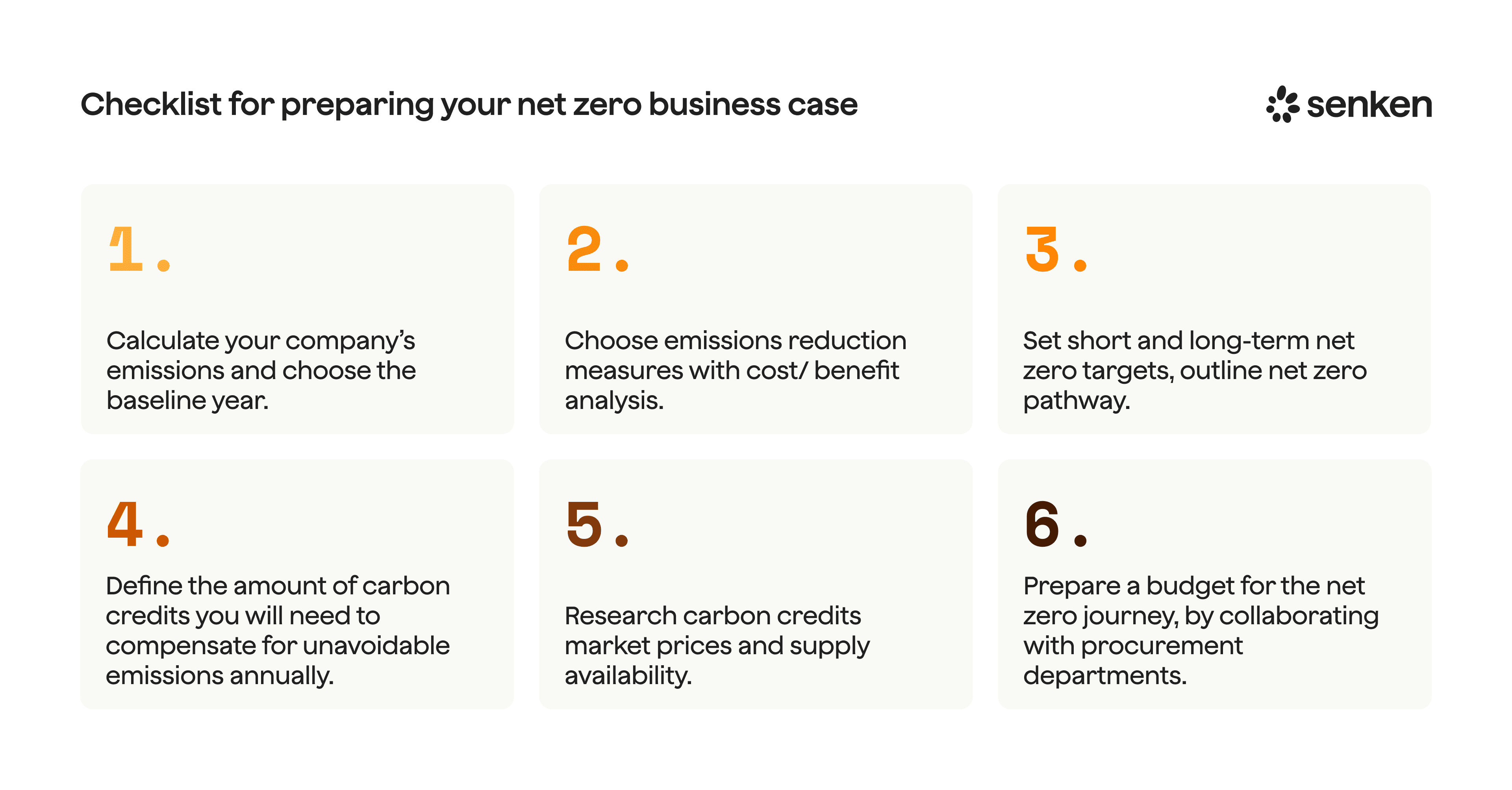
Run through these eight questions before committing budget:
- Have we maximized abatement? Can you credibly say you've pursued all feasible near-term reductions before buying removals?
- Is our governance ready? Do procurement, legal, and finance understand what CORCs are, how they're verified, and where they sit in CSRD and SBTi frameworks?
- What's our budget and risk appetite? Are you prepared to pay €100–500/tCO2 for durable removals, and can you absorb potential offtake under-delivery or methodology changes?
- Do we have clear claim language? Can you distinguish BVCM from neutralization in your reporting and communications, avoiding "carbon neutral" or "offset" language that regulators are cracking down on?
- Is our chosen CORC mix aligned with SBTi durability guidance? If your residuals are fossil-based, are you prioritizing CORC1000+ over CORC100+?
- Do we have project-level due diligence beyond the Puro label? Are you applying an independent quality framework (e.g., Senken's SII) to shortlist only top-tier projects?
- Can we trace and document everything for audit? Do you have the registry entries, contracts, verification reports, and internal approvals in place?
- Have we built stakeholder alignment? Are your board, investors, and internal teams comfortable with the rationale, or will this create friction later?
If you answer "yes" to all eight, Puro.earth CORCs are likely a strong fit for your strategy. If you have gaps, work on those first (abatement roadmap, governance education, procurement process design) before scaling CORC purchases.
How Senken Packages Audit-Ready Evidence and Partnership Support
Senken doesn't just shortlist high-quality CORCs; we package the full evidence trail you need for CSRD and internal audits. That includes SII scorecards for each project, traceability from purchase through retirement, CSRD-ready reporting templates, and ongoing governance support as regulations evolve. When you walk into an audit or board review, you're not handing over a stack of certificates and hoping for the best. You're presenting a defensible, documented, quality-screened portfolio with clear alignment to SBTi, CSRD, and your corporate climate strategy.
This end-to-end approach is what separates confidence from compliance risk. Puro.earth provides the standard and registry; Senken ensures you're using them in a way that withstands scrutiny and builds long-term credibility.