
Voluntary Carbon Market (VCM)
The voluntary carbon market lets companies, governments, and individuals buy carbon credits to offset emissions they cannot yet eliminate. Unlike compliance markets mandated by law, participation is entirely optional and driven by climate commitments rather than regulatory requirements.
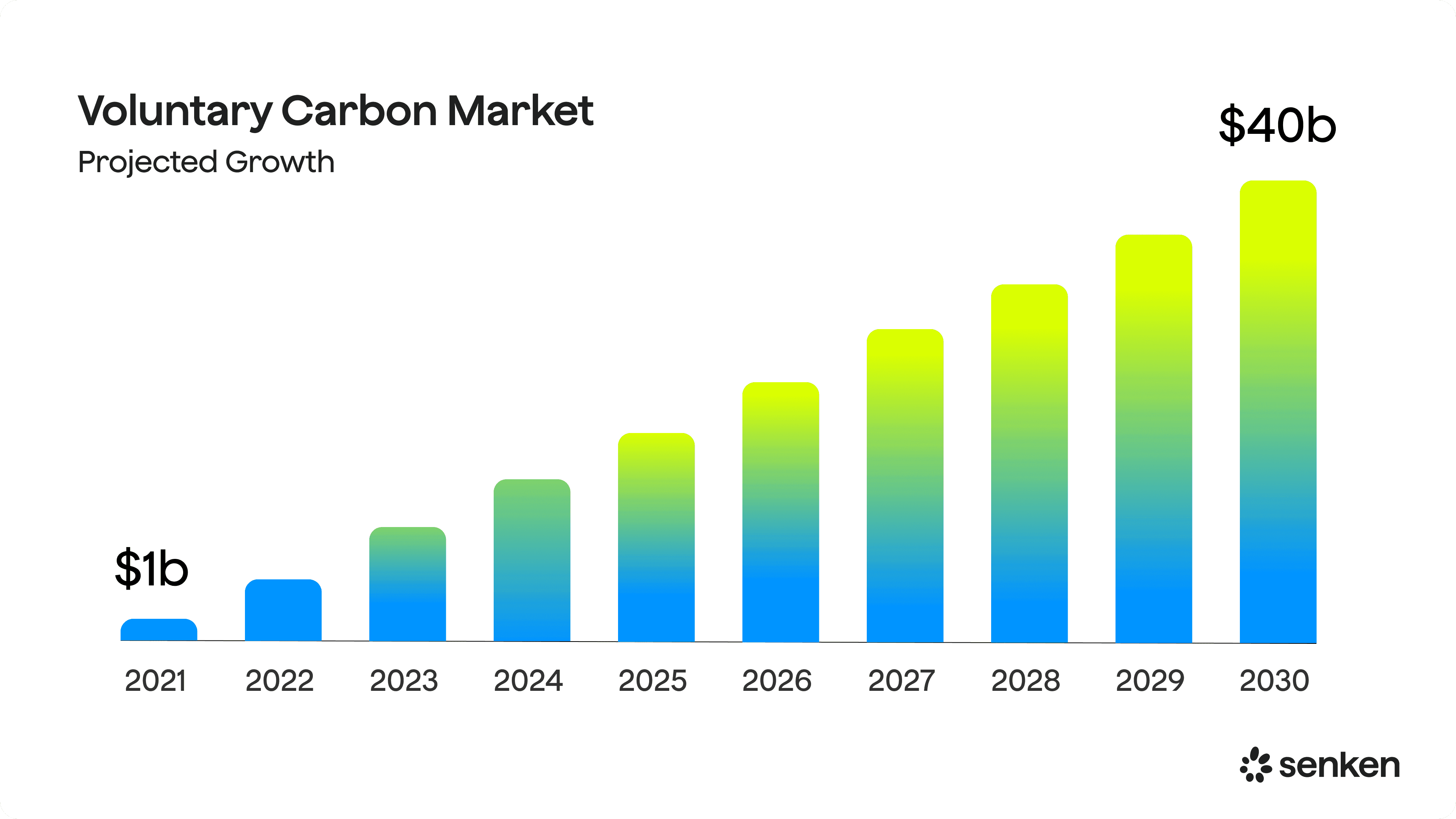
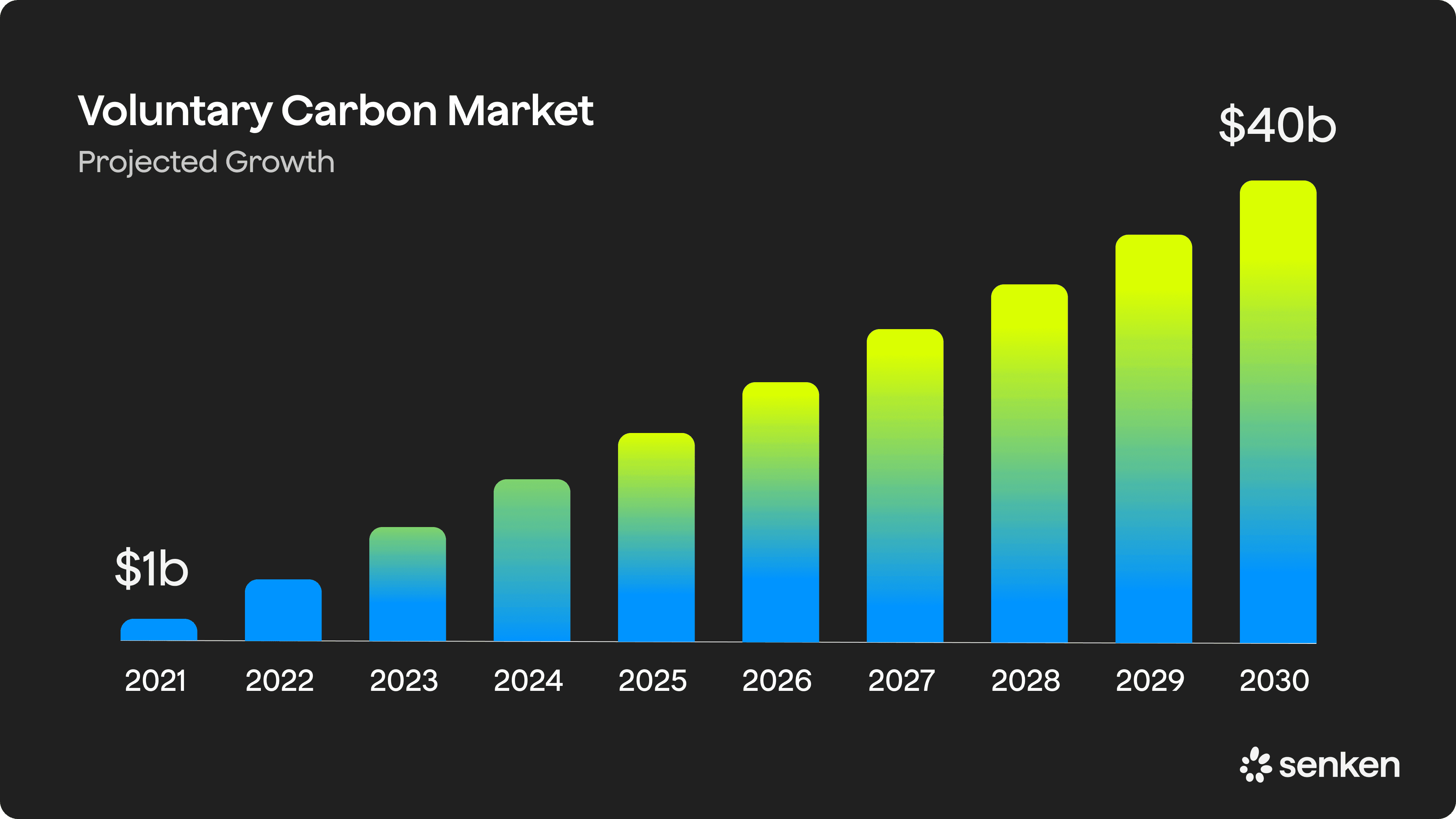
The VCM has grown into a global marketplace worth over a billion euros, yet quality varies dramatically across projects. This guide covers how the market works, who participates, what drives credit prices, and how to identify high-integrity credits that deliver real climate impact.
What is the voluntary carbon market
The voluntary carbon market (VCM) is where companies, governments, and individuals buy and sell carbon credits to offset their greenhouse gas emissions. Unlike compliance markets created by law, participation here is entirely optional. Companies join because they want to meet net-zero targets, strengthen their sustainability credentials, or fund climate projects they believe in.
One carbon credit equals one metric tonne of carbon dioxide equivalent (CO2e) reduced, avoided, or removed from the atmosphere. When a company buys and retires a credit, it compensates for emissions it cannot yet eliminate through its own operations.
You will often hear "carbon credits" and "carbon offsets" used interchangeably. Both refer to the same tradable unit. The difference is subtle: "offset" emphasises compensating for emissions, while "credit" describes the instrument itself.
How does the voluntary carbon market work
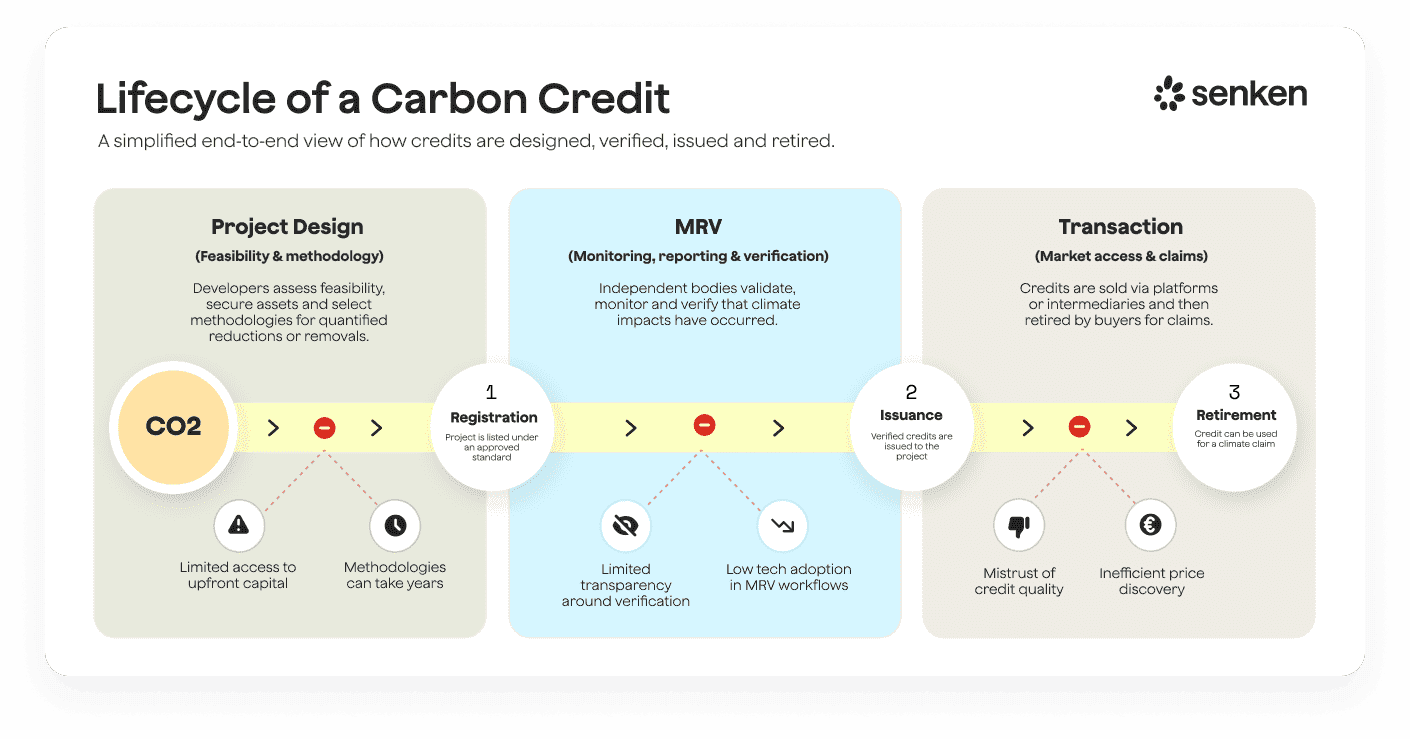
The VCM runs on supply and demand. Projects that reduce or remove greenhouse gases generate credits. Buyers purchase those credits to address emissions they cannot yet cut.
Carbon credit generation
Climate projects earn credits by proving they have reduced or removed greenhouse gases. A reforestation project, for example, sequesters carbon as trees grow. A landfill methane capture project prevents potent emissions from reaching the atmosphere.
Each project follows a methodology that defines how to calculate and monitor emission reductions. The methodology sets the baseline scenario (what would have happened without the project), measurement protocols, and the crediting period.
Verification and certification
Before credits enter the market, independent auditors verify that the project delivers real, additional, and measurable climate benefits. "Additionality" is a key concept here: it means the emission reductions would not have happened without the revenue from selling carbon credits.
Standards bodies like Verra and Gold Standard set the rules. Auditors review documentation, conduct site visits, and confirm that claimed reductions match what actually occurred.
Trading and retirement
Once verified, credits are issued to a registry where they can be bought and sold. Companies purchase credits directly from project developers, on exchanges, or through procurement platforms.
When a buyer uses a credit to offset emissions, they "retire" it. Retirement permanently removes the credit from circulation so it cannot be resold or counted twice.
Voluntary carbon market vs compliance carbon market
The VCM and compliance markets serve different purposes. Understanding the distinction helps clarify where voluntary credits fit.
| Factor | Voluntary Carbon Market | Compliance Carbon Market |
|---|---|---|
| Legal requirement | Optional | Legally mandated |
| Regulation | Private standards bodies | Government agencies |
| Participants | Any company or individual | Regulated industries only |
| Credit types | Broad project eligibility | Restricted to approved types |
| Flexibility | High | Limited |
Regulatory framework
Compliance markets like the EU Emissions Trading System (EU ETS) are government-created and government-enforced. Regulators cap total emissions, allocate allowances, and penalise companies that exceed their limits.
The VCM operates differently. Private standards bodies and registries provide governance, but no government agency mandates participation or sets prices.
Participation requirements
Anyone can participate in voluntary carbon markets. A multinational corporation, a 50-person company, or an individual can all purchase credits.
Compliance markets restrict participation to entities covered by specific regulations. In the EU ETS, only power plants and industrial facilities above certain size thresholds are required to participate.
Credit standards and eligibility
The VCM accepts a wider range of project types. Nature-based solutions, community cookstove programmes, and direct air capture projects all generate voluntary credits.
Compliance markets typically have stricter rules. The EU ETS, for instance, does not accept forestry credits, which limits options for regulated companies.
Why the matters for climate action
The VCM channels private capital into climate projects worldwide. It funds emission reduction and removal initiatives that might otherwise struggle to attract investment.
For companies, voluntary credits offer flexibility that compliance markets do not provide. Organisations can support projects aligned with their values, whether that means protecting rainforests, funding renewable energy in developing regions, or investing in carbon removal technologies.
The market also allows companies to act before regulations require it. Early movers build expertise, establish supplier relationships, and demonstrate climate leadership to stakeholders who increasingly scrutinise environmental claims.
Critics point out that credit quality varies significantly. Some projects have failed to deliver promised benefits, leading to greenwashing accusations. The solution, however, lies in better quality assurance rather than abandoning the market entirely.
Types of carbon credit projects in the VCM
Voluntary carbon credits come from diverse project types, each with distinct characteristics.
Emission avoidance projects
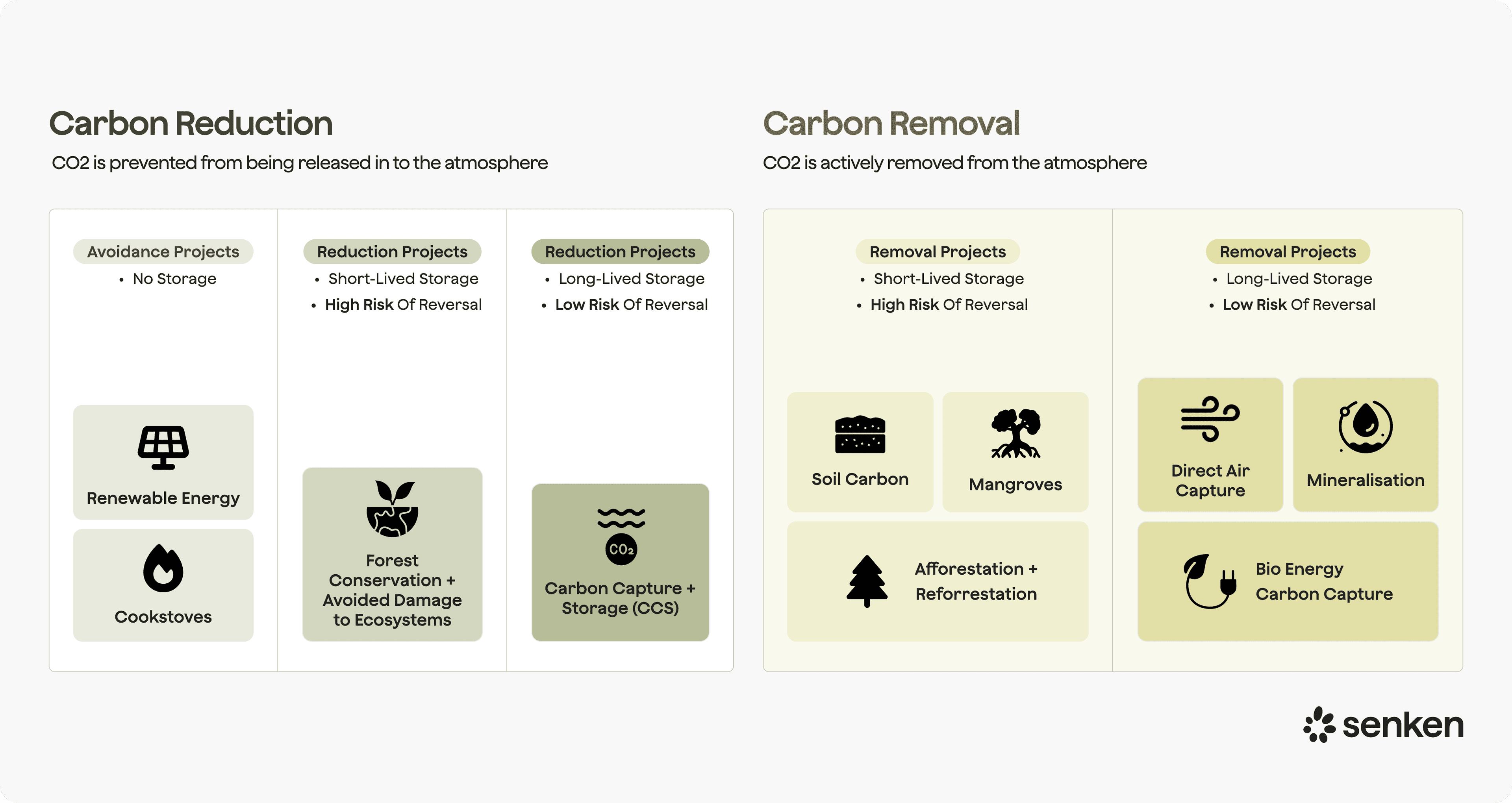
Avoidance projects prevent emissions that would have occurred under normal circumstances. Protecting a forest from planned deforestation avoids releasing stored carbon. Distributing efficient cookstoves reduces fuel consumption and the emissions that come with it.
Avoidance projects have faced scrutiny over baseline assumptions. If a forest was never truly at risk of being cleared, the credits may not represent real climate benefit.
Carbon removal projects
Removal projects actively extract CO2 from the atmosphere. Direct air capture facilities use chemical processes to pull carbon from ambient air. Biochar production locks carbon into stable forms that persist for centuries.
Removal credits typically cost more because they address atmospheric carbon directly rather than preventing future emissions.
Nature-based solutions
Reforestation, afforestation, mangrove restoration, and soil carbon sequestration fall into this category. These projects use natural processes to capture and store carbon while often delivering co-benefits like biodiversity protection and watershed management.
Nature-based credits face questions about permanence. A forest fire or disease outbreak can release stored carbon, reversing the climate benefit.
Technology-based solutions
Renewable energy installations, industrial efficiency improvements, and methane capture from landfills or farms generate technology-based credits. These projects often have more predictable outcomes and easier measurement than nature-based alternatives.
Who participates in the voluntary carbon market
The VCM brings together diverse actors, each playing a distinct role.
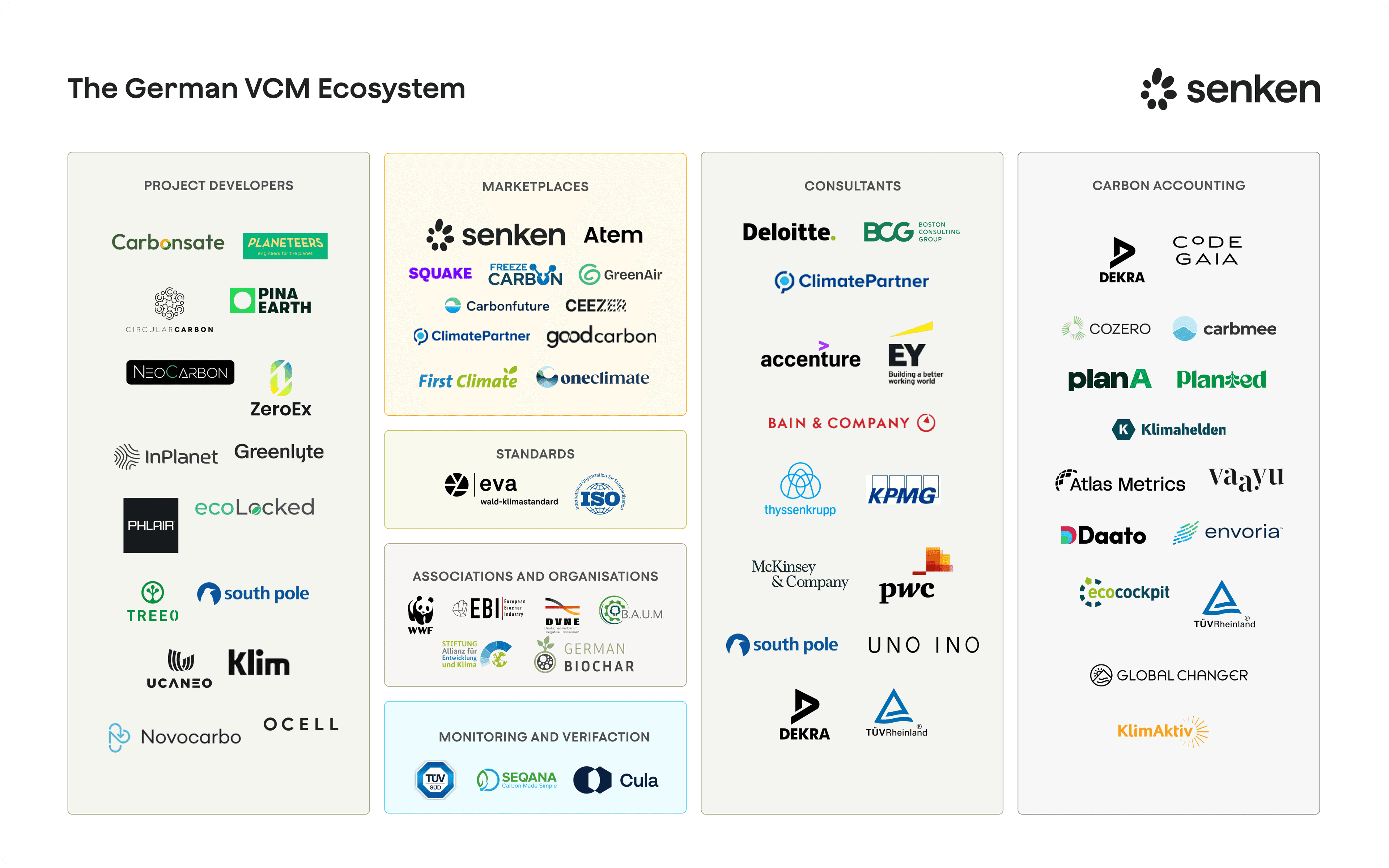
Companies with net-zero targets represent the primary source of demand. They purchase credits to address emissions that remain after implementing reduction measures.
Sectors like aviation, shipping, and heavy industry often rely heavily on offsets because decarbonisation options are limited or expensive.
Project developers
Project developers design, implement, and manage emission reduction or removal projects. They range from small community-based initiatives to large commercial operations. Developers bear the upfront costs and risks in exchange for credit revenues.
Standards bodies and registries
Independent organisations like Verra, Gold Standard, American Carbon Registry, and Climate Action Reserve set methodological rules, accredit auditors, and maintain registries that track credit issuance and retirement. They provide the infrastructure that enables market trust.
Brokers and procurement platforms
Intermediaries connect buyers with verified supply. Some operate as traditional brokers, facilitating transactions between parties. Others aggregate vetted projects, provide due diligence documentation, and simplify purchasing for corporate buyers.
Platforms with rigorous quality screening help buyers avoid low-quality credits that could expose them to greenwashing risk.
How voluntary carbon credits are priced
Carbon credit prices vary widely, from a few euros to several hundred per tonne. Several factors drive these differences.
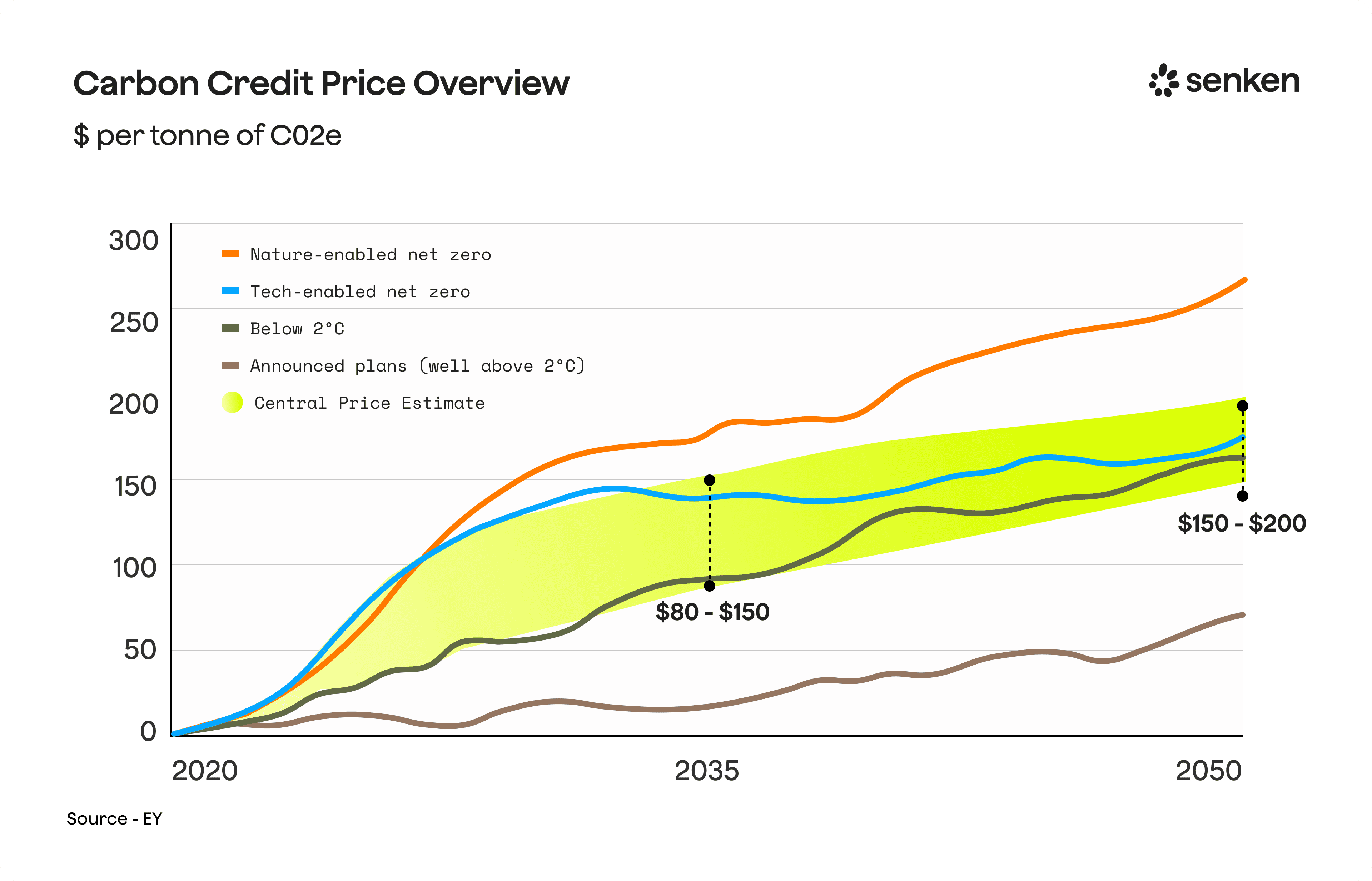
Removal credits generally cost more than avoidance credits. The market values permanence and the direct atmospheric benefit that removal provides. A direct air capture credit might cost ten times more than a renewable energy credit.
Co-benefits and additional certifications
Projects delivering social or environmental co-benefits often command premium prices. A reforestation project that also protects endangered species and provides community employment offers value beyond carbon alone.
Certifications like the Climate, Community & Biodiversity Standards (CCB) or Fairtrade Carbon Credits signal additional verification of these co-benefits.
Credit vintage and market supply
Newer credits from recent years typically sell for more than older vintages. Some corporate policies limit acceptable vintage ranges, reducing demand for older credits.
Supply and demand dynamics also affect pricing. When investigations question certain project types, prices for those credits often fall while alternatives rise.
Where companies buy voluntary carbon credits
Several procurement channels exist, each with trade-offs.
Direct from project developers
Buying directly offers the closest relationship with the project and potentially lower costs. However, this approach requires significant internal capacity for due diligence, contract negotiation, and ongoing monitoring.
Carbon credit exchanges
Spot markets and exchanges provide liquidity and price transparency. Buyers can quickly acquire credits at market prices. The trade-off is less project-level insight and limited ability to select specific initiatives.
Carbon credit procurement platforms
Platforms aggregate vetted supply from multiple projects and provide documentation, traceability, and reporting support. For companies without dedicated carbon market expertise, platforms offer a practical middle ground.
Working with a platform that evaluates projects across hundreds of data points can significantly reduce greenwashing risk and streamline purchasing.
Talk to an expert about carbon credit procurement
Who verifies voluntary carbon credits
Third-party verification underpins market credibility. Several major standards bodies dominate the landscape.
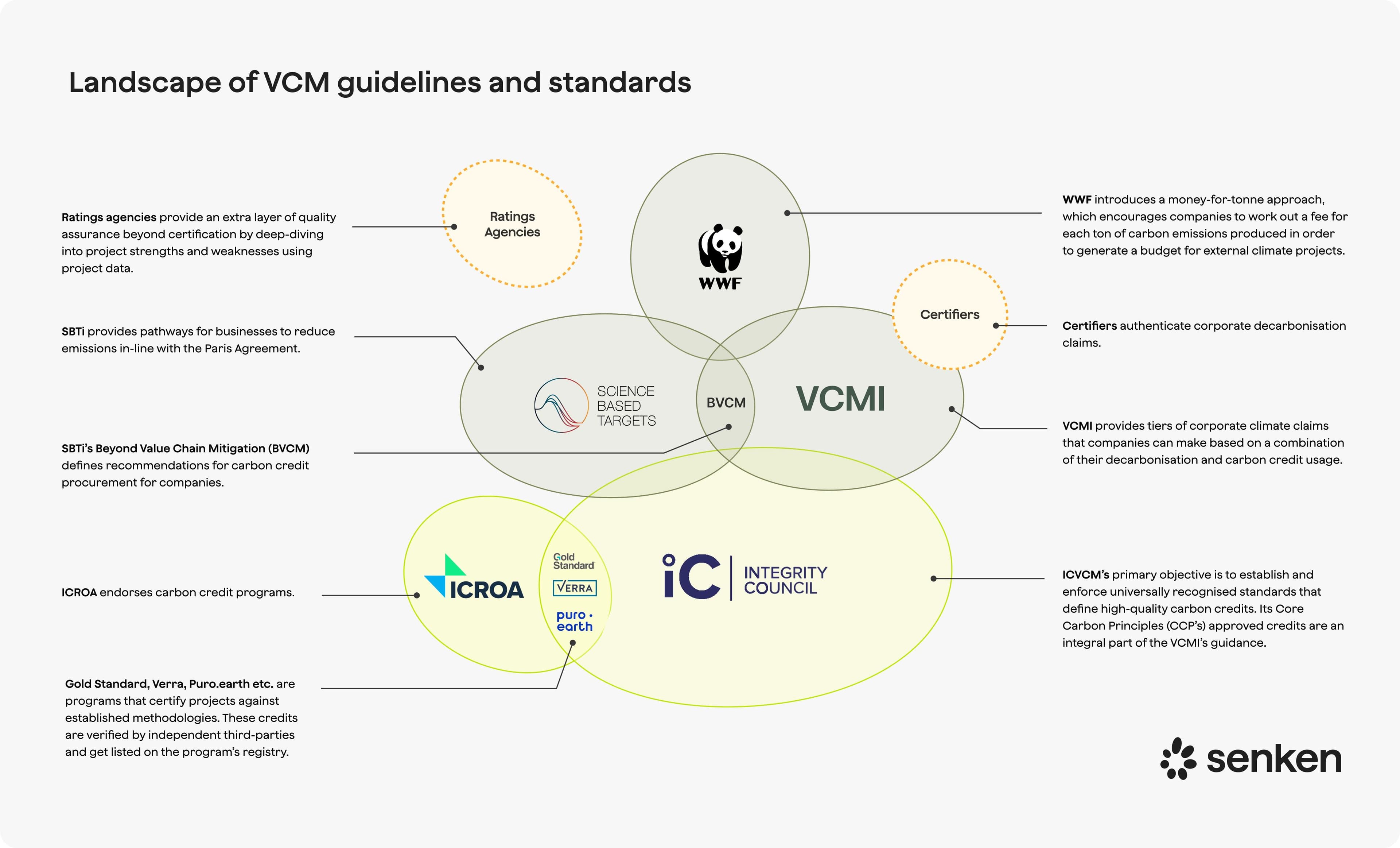
Verra operates the largest voluntary carbon registry globally. Its Verified Carbon Standard (VCS) covers a broad range of project types, from forestry to renewable energy to industrial gas destruction.
Gold Standard
Gold Standard emphasises sustainable development alongside carbon benefits. Projects demonstrate contributions to UN Sustainable Development Goals and meet stringent stakeholder consultation requirements. The standard is particularly strong in energy access and community-based projects.
American Carbon Registry
One of the oldest carbon registries, ACR has operated since 1996. It maintains rigorous protocols with particular strength in North American forestry and agricultural projects.
Climate Action Reserve
CAR focuses primarily on North American projects with detailed, sector-specific protocols. Its forestry and livestock methane programmes are widely recognised for methodological rigour.
Integrity initiatives shaping the VCM
Recent years have seen significant efforts to strengthen market governance.
Integrity Council for the Voluntary Carbon Market
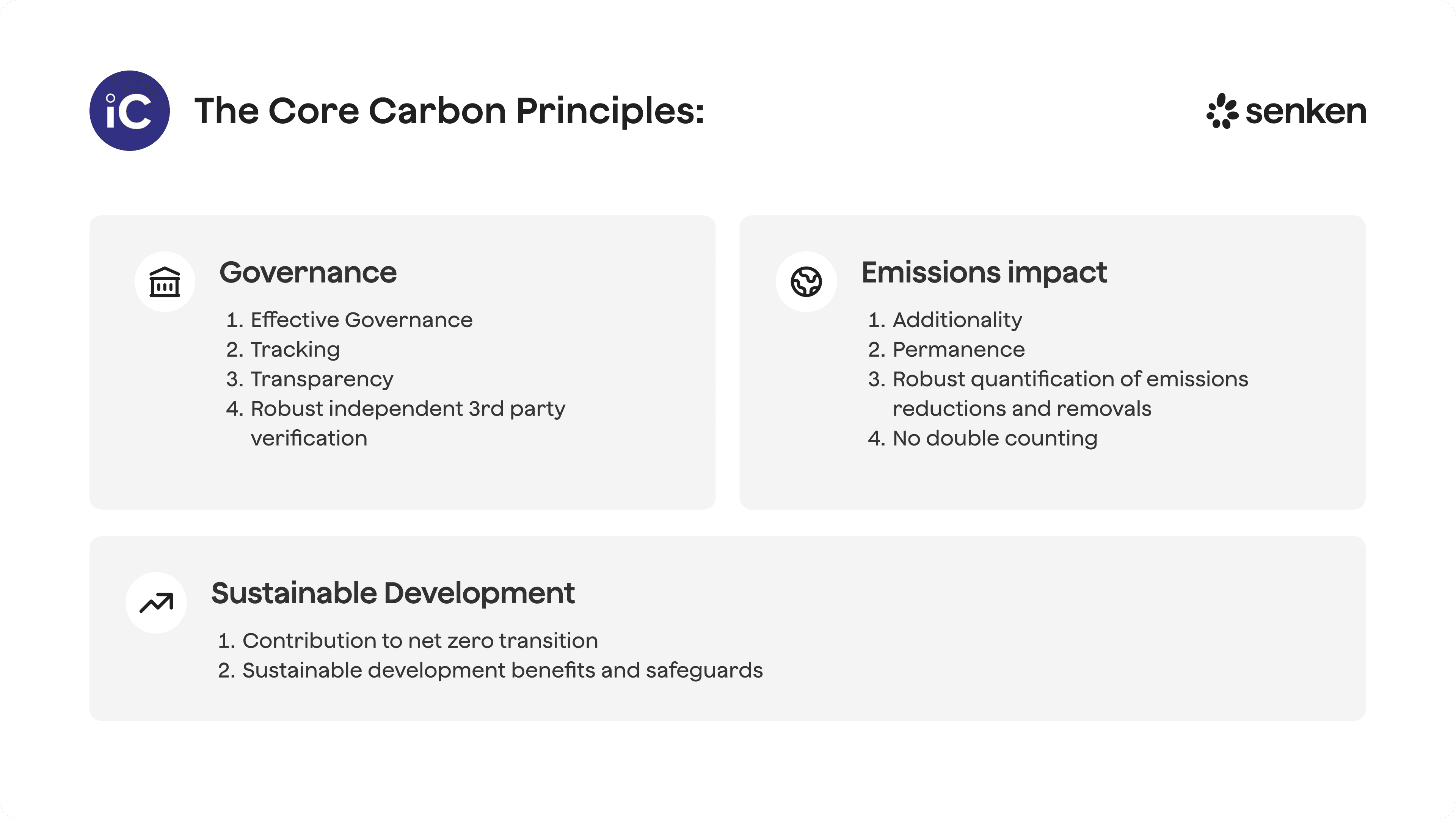
The ICVCM operates as an independent governance body setting global standards for credit quality. Its Core Carbon Principles (CCPs) establish a benchmark for identifying high-integrity credits. Projects meeting CCP requirements receive a label signalling quality to buyers.
Voluntary Carbon Markets Integrity Initiative
VCMI focuses on the demand side, providing guidance on credible corporate claims. Its Claims Code of Practice helps companies communicate their use of carbon credits alongside decarbonisation efforts without overstating their climate action.
Core Carbon Principles
The CCPs cover ten criteria:
- Additionality: The project would not have happened without carbon credit revenue
- Permanence: Carbon reductions or removals are long-lasting
- Robust quantification: Emission reductions are accurately measured
- Sustainable development safeguards: Projects do not harm local communities or ecosystems
Buyers increasingly reference CCP alignment in procurement policies.
The VCM has grown substantially over the past decade, though recent years have seen volatility. Market value reached record levels in 2021 and 2022 before contracting as quality concerns dampened corporate purchasing.
Despite short-term fluctuations, long-term projections remain positive. As more companies set net-zero targets and regulations like CSRD increase disclosure requirements, demand for high-quality credits is expected to grow.
The market operates globally. Buyers in Europe and North America represent the largest demand centres, while project supply concentrates in tropical regions, particularly for nature-based solutions.
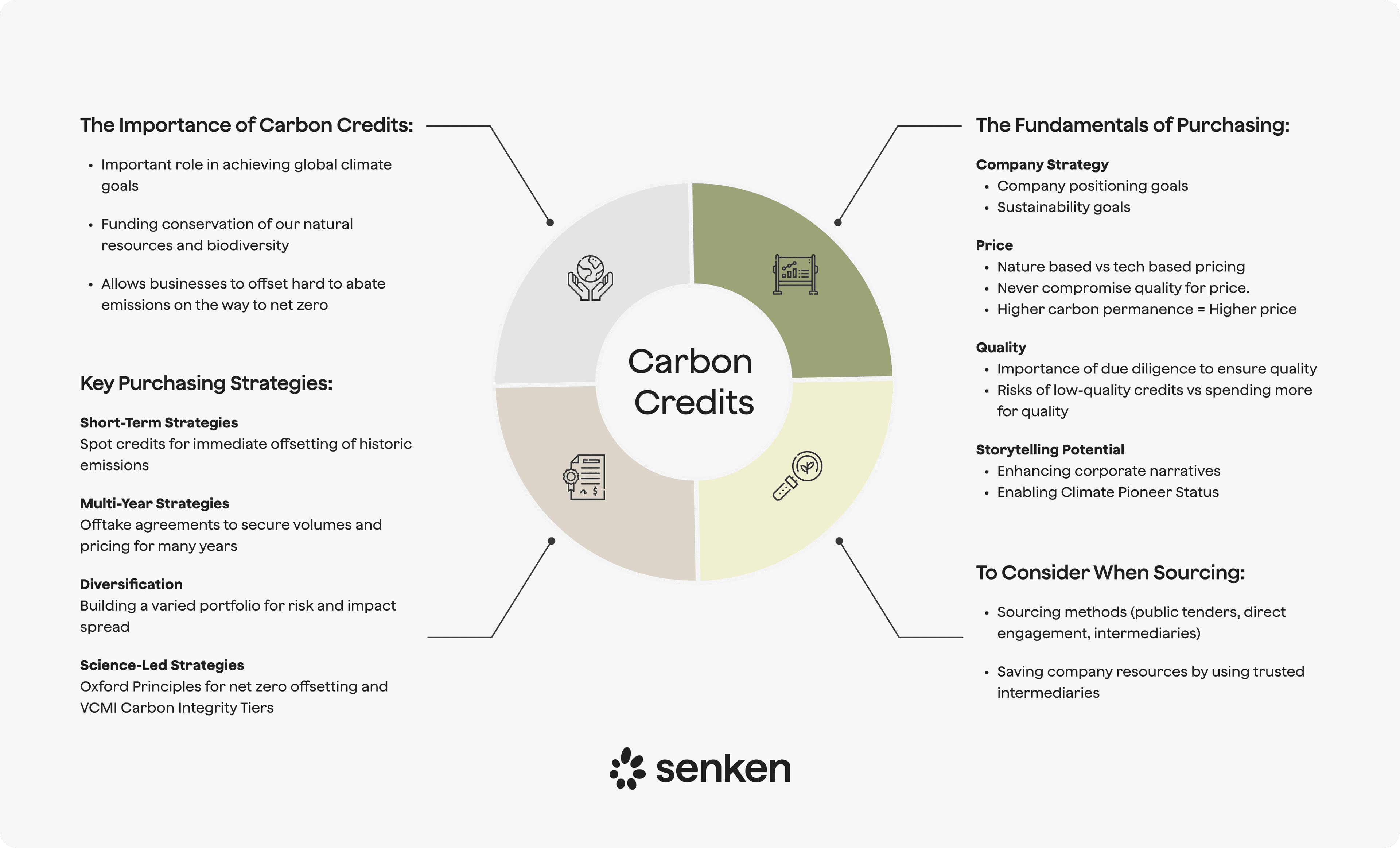
Quality varies dramatically across the VCM. A structured approach helps buyers identify credits that deliver real climate impact.
1. Conduct rigorous due diligence
Evaluate project documentation, methodology, and monitoring reports thoroughly. Look beyond marketing materials to understand baseline assumptions, additionality arguments, and verification findings.
2. Prioritise high-integrity standards
Select credits aligned with Core Carbon Principles or equivalent quality benchmarks. Check whether projects have received CCP labels or meet criteria from recognised rating agencies.
3. Demand full traceability and documentation
Require audit-ready records showing project details, verification status, and retirement proof. For companies subject to CSRD or similar reporting requirements, documentation quality directly affects compliance.
Building a carbon credit strategy that delivers real impact
Effective VCM participation requires quality over quantity. A smaller portfolio of high-integrity credits delivers more climate benefit and less reputational risk than a larger portfolio of questionable offsets.
Carbon credits work best as part of a broader decarbonisation strategy, not as a substitute for reducing emissions. The most credible corporate climate programmes prioritise internal reductions first, then use credits to address genuinely hard-to-abate emissions.
Working with procurement partners who screen for quality helps companies invest in real impact and make defensible climate claims. Rigorous evaluation across hundreds of data points, combined with full traceability and CSRD-ready documentation, provides the foundation for credible carbon credit use.
Talk to an expert about building your carbon credit strategy