
Direct air capture carbon removal
Direct air capture uses chemical filters to pull CO2 straight out of the air and stores it deep underground, where it turns to stone. It is the most permanent and most precisely measured carbon removal available, and the most expensive, at €350 to €500+ per tonne. Supply is scarce and mostly sold years ahead through offtakes, so most buyers hold DAC as a small share of a wider removal portfolio.


Overview
What you need to know about direct air capture

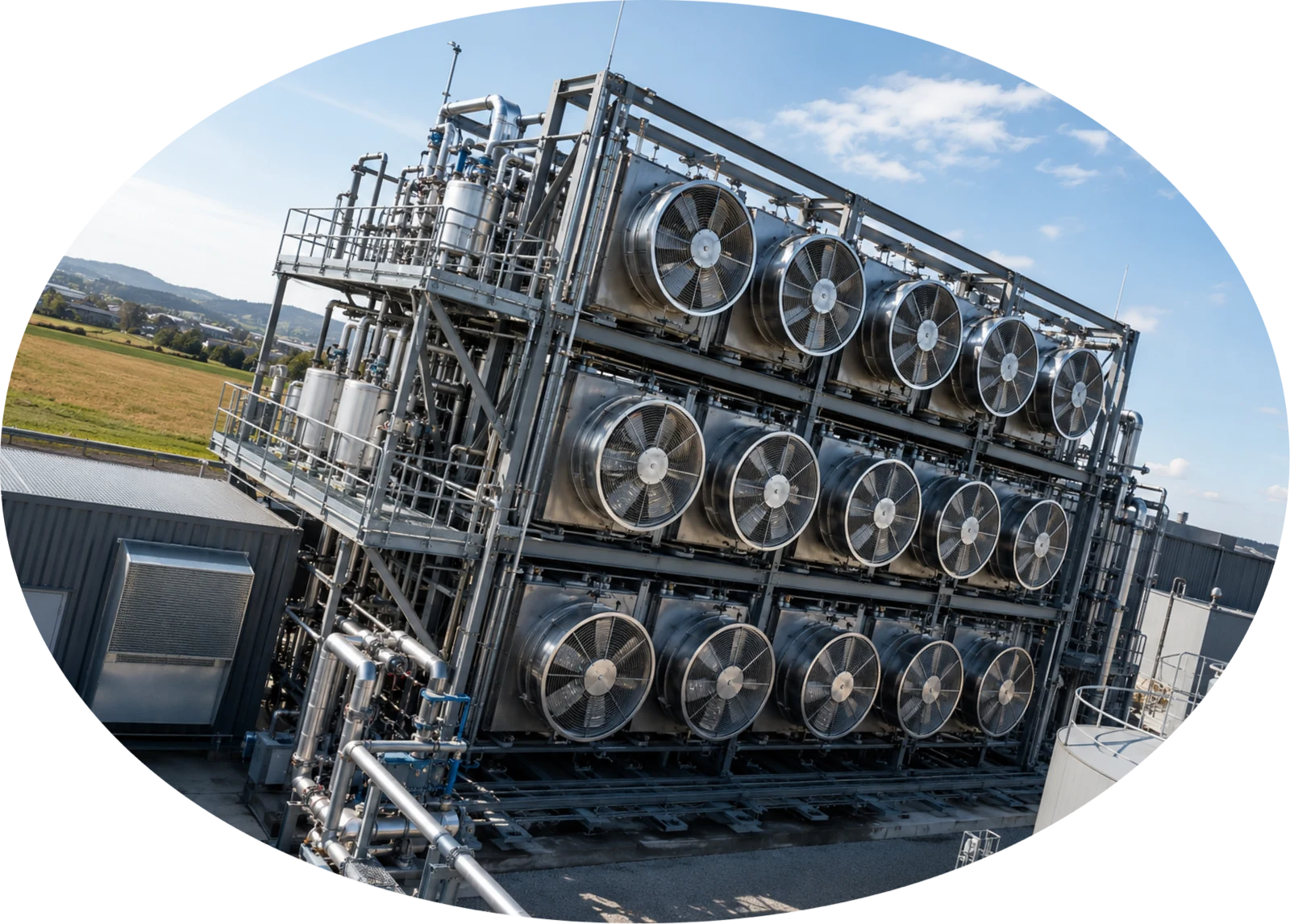
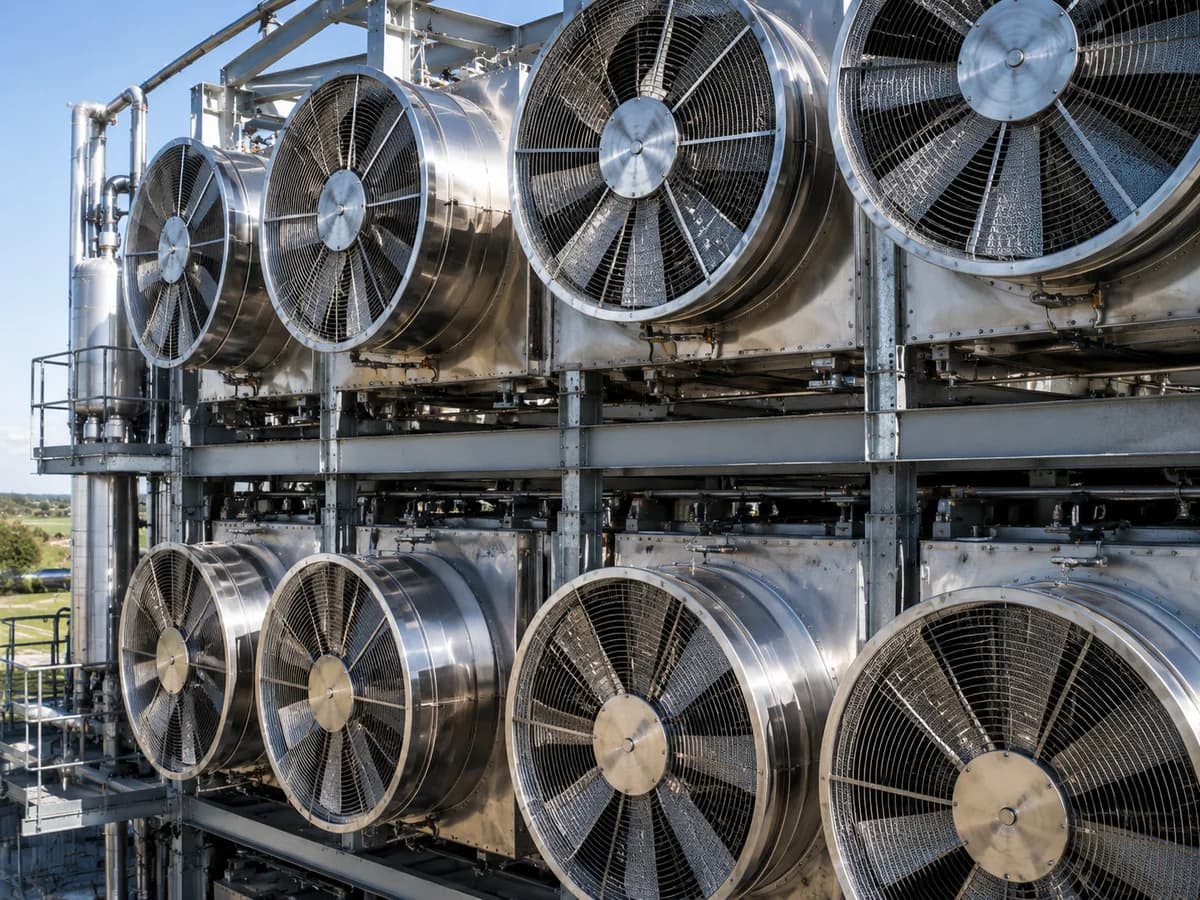
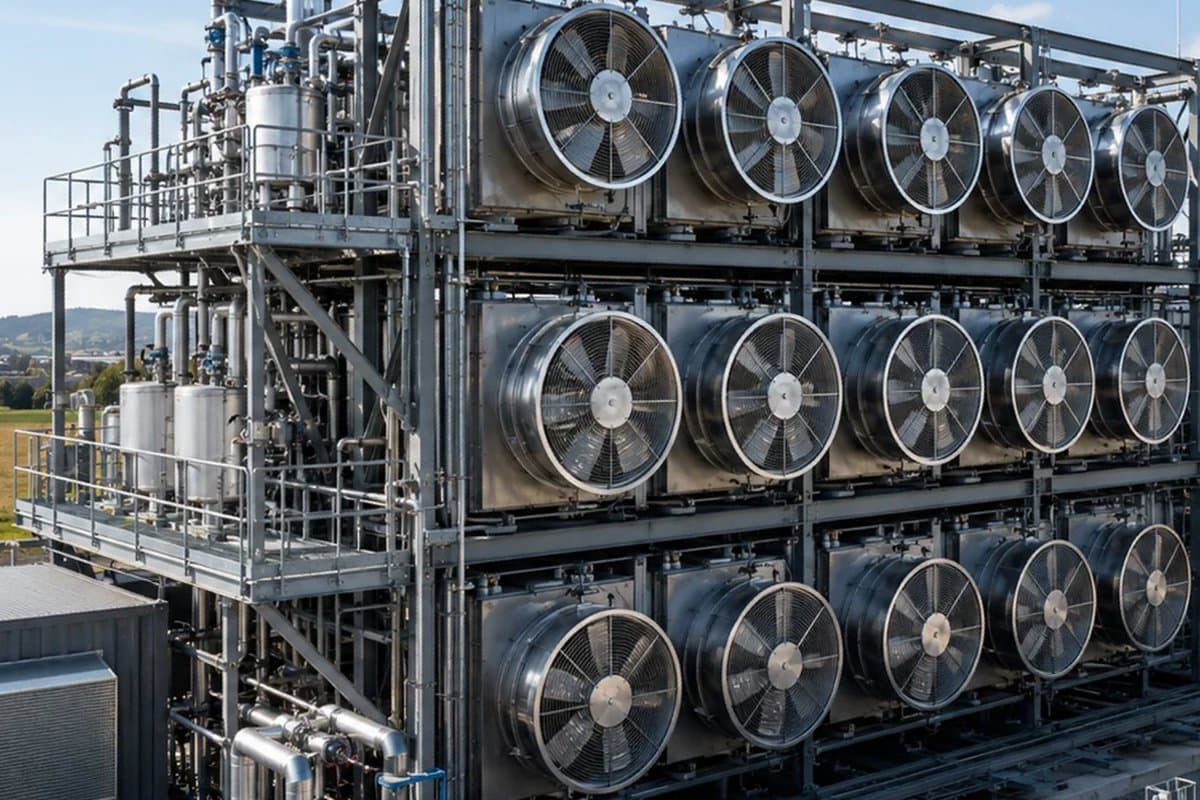
Fans blow ordinary air through a filter that chemically traps the CO2 and lets the rest of the air pass. Heating the filter releases the CO2 as a pure gas, which is pumped deep underground into volcanic rock, where it reacts and turns to stone.

10,000+ years. The carbon becomes solid rock, and from then on there is no way for it to return to the air.

€350 to €500+ per tonne, indicative. The most expensive removal method, and the one whose price is falling fastest.

Very limited: about 8% of durable removal contracted to date, and almost none of the delivered volume. The roughly 84 plants operating worldwide combine to about 570,000 tonnes a year of capacity.

Highest of any method. Tonnes are measured precisely as a physical gas stream at capture and at injection, not modelled or inferred from samples.

Puro.earth and Isometric; Verra and ACR methodologies for engineered removals are developing.

Removal with long-lived storage, Category V under the Oxford Offsetting Principles.
How it works
Science
Why DAC counts as removal
DAC removes carbon that is already in the atmosphere: its machines take in ordinary outside air and filter out CO2 that was emitted at some point in the past, so storing it lowers the total amount in the air. Carbon capture (CCS), in comparison, catches CO2 at a factory's exhaust: it prevents new emissions from being added, but takes nothing back out.
How mineralisation makes it permanent
Injected into reactive basalt, CO2 reacts with calcium and magnesium and precipitates as solid carbonate minerals. At Iceland's CarbFix site, more than 95% of the injected CO2 had mineralised within about two years, work that overturned the assumption it would take centuries. Saline formations, the other storage route, hold the CO2 under impermeable caprock and mineralise it far more slowly; both are assessed at 10,000+ year permanence.
How removal is measured
Every tonne is measured directly: once as the CO2 leaves the filter, and again as it is pumped underground, with the storage site monitored afterwards. Nothing is estimated from samples or models, which makes DAC the most reliably accounted carbon removal method.
What is still being worked out
Net removal stands or falls with the energy source, so lifecycle accounting has to be checked project by project. Long-term monitoring practice for saline storage is still maturing. And early plants have captured well below their design capacity while ramping up, which is why delivery risk, not storage risk, is the thing to scrutinise in a DAC contract.
Key research

Showed that more than 95% of CO2 injected into basalt at the CarbFix site in Iceland mineralised into carbonate within about two years, overturning the assumption that mineralisation takes centuries.
Matter et al. — 2016Reviewed CO2 mineralisation in basalt and concluded the storage is rapid, effectively permanent, and scalable where reactive rock and water are available.
Snæbjörnsdóttir et al. — 2020Benchmarked DAC's energy demand and mapped the cost-reduction path to large scale; the constraints it identified, energy and capital cost, still set DAC prices today.
National Academies — 2019Market and price
DAC deals make big headlines. Yet only 0.9% of the volume purchased in 2026 so far is direct air capture, while more than 90% is biochar (CDR.fyi). The main reason is that today's DAC capacity is very small, so supply, especially short-term supply, is scarce and prices are high. Most DAC volume is already pre-sold for the next few years; companies mainly secure durable removal through offtakes timed to their net-zero target years.
Microsoft
has contracted 500,000 tonnes from 1PointFive's Stratos plant in Texas.
Amazon and Airbus
have contracted 250,000 and 400,000 tonnes respectively from the same facility.
Frontier
the advance market commitment funded by Stripe, Alphabet, Shopify, Meta and McKinsey, has committed more than $1 billion to early durable removal, with DAC as part of it.
per tonne, the indicative 2026 market range (OPIS)
per year of nameplate capacity across all ~84 DAC plants operating worldwide (IEA, early 2026)
per year of long-run potential, the highest the IPCC assigns any method (IPCC AR6)
Durable removal prices, 2026
€ per tonne of CO2 removed
DAC
Other durable methods
Biochar
ERW
BECCS
Direct air capture costs roughly €350 to €500 per tonne in 2026, the most expensive removal on the market. Capital and energy are the main cost drivers: most plants are still being built or have only just been built.
Optimistic roadmaps, like the US Department of Energy's Carbon Negative Shot, target $100 per tonne within a decade, which would put DAC in the price range of nature-based removal today. The peer-reviewed cost analyses are more sober: an ETH Zurich study in Joule, 2024, puts DAC at $230 to $540 per tonne in 2050. At the current pace of plant construction, DAC will most likely remain the most expensive carbon removal for at least the next decade.
Sources: Senken price analysis database, OPIS Durable CDR Market Dynamics survey, IEA DAC tracking, Sylvera pricing benchmark.
Projects
DAC supply is small and largely forward-contracted, so Senken primarily offers offtakes and lower-volume spot contracts. Each project offered by Senken is verified with the 600+ data-point Sustainability Integrity Index (SII).
 Canada
 Germany
 Kenya
KenyaProcuring high-quality carbon removal for industry leaders











Procure Direct Air Capture before supply gets tight
Senken screens DAC projects, sources the offtake, and sizes the allocation against your budget and the rest of your portfolio. Tell us your target volume, timeline and compliance requirements, and we structure the procurement for you.
Compliance
DAC is eligible to neutralise residual emissions under the SBTi Corporate Net-Zero Standard, disclosed as a removal under CSRD, and one of the first methods with its own EU certification methodology.

SBTi
Under the Corporate Net-Zero Standard, durable removals are what neutralise the residual emissions a company cannot cut. Version 2.0, published in June 2026 and effective from February 2027, leans further into durable storage: from 2035, larger companies must cover a rising share of their remaining long-lived emissions with durable removals, starting at 10% and climbing to 100% by their net-zero year.

CSRD / ESRS E1-7
Purchased removals are disclosed on their own, separate from gross emissions, with their volume, registry, durability and quality attributes stated, and are never netted against gross emissions. DAC's metered tonnes and geological storage make that disclosure unusually clean, provided the project documentation holds up, which is why every Senken purchase comes with the audit trail attached.

EU CRCF
The EU Carbon Removals Certification Framework adopted its DACCS methodology in February 2026, recognising direct air capture with geological storage as permanent removal, alongside biochar and bioenergy with carbon capture. Certification applies to EU-based projects; DAC credits from outside the EU remain fully reportable under CSRD E1-7.
Standards
Fewer standards certify DAC than biochar, and the landscape is younger, but it is consolidating around metered tonnes and geological storage. Puro.earth and Isometric lead, and are usually where the highest-quality projects are purchased from.
The largest engineered-removal registry. Its Geologically Stored Carbon methodology covers DAC with mineral or geological storage; credits are issued as CORCs, every tonne metered. The registry behind Octavia Carbon's Kenyan plant.
Science-led registry whose DAC protocol carries the ICVCM's CCP label. Requires direct metering at capture and injection and long-duration geological storage.
The world's largest carbon registry; its engineered-removal methodologies covering DAC are still in development, so little DAC volume sits here yet.
US registry whose CCS methodology v2.0 (2025) opened eligibility to direct air capture; compliance-grade heritage in North America.
Comparison
Direct air capture is the most permanent and most precisely measured carbon removal, and also the most expensive and the hardest to buy. Most buyers therefore pair it with biochar, which costs roughly a third as much and delivers at scale today: biochar carries the volume, DAC adds permanence. The full breakdown across every method is below.
| Method | How it stores carbon | Permanence | Reversal risk | MRV maturity | Price €/t (2026) | At scale today | IPCC scale potential | Maturity (TRL, 2026) | SBTi / CSRD fit | Land footprint | Co-benefits |
|---|---|---|---|---|---|---|---|---|---|---|---|
| Nature-based | |||||||||||
| Afforestation / reforestation | Trees photosynthesise CO2 into biomass | Decades to centuries, reversible | High: fire, disease, land-use change; buffer-pooled | Moderate: remote sensing + field plots | €25–45 | Yes | 0.5–10 Gt/yr | 8–9, mature | Removal, temporary tier; CSRD-reportable | High: needs new land | Biodiversity, water, rural jobs |
| Soil carbon | Roots and residues build soil organic carbon | Years to decades, reversible | High: tillage, land-use reversal; buffer-pooled | Low, contested: sampling + modelling | €20–55 | Yes | 0.6–9 Gt/yr | 8–9, mature | Removal, temporary tier; CSRD-reportable | Low: works existing farmland | Yield, water retention, soil health |
| Engineered / durable | |||||||||||
| Direct air capture (DACCS) | Chemically filters CO2, stored geologically | 10,000+ years | Negligible: geological | Highest: directly metered | €350–500+ | Very limited | 5–40 Gt/yr | 6–7 | Durable removal; SBTi-eligible; EU CRCF | Minimal | None |
| Biochar | Pyrolysis converts biomass to stable carbon | 100–1,000+ years | Very low: chemically stable; 10% buffer | High: batch lab analysis + digital MRV | €130–250 | Yes, strongest delivery record | 0.3–6.6 Gt/yr | 8–9, highest durable | Durable removal; SBTi-eligible; EU CRCF | Low: uses residues | Soil health, rural income, energy |
| Biomass storage | Waste biomass sealed from oxygen and decay | 100–1,000+ years | Low: anoxic isolation; site-dependent | High: mass balance + site monitoring | €120–170 | Emerging; scaling from 2027 | ~1–5 Gt/yr (early est.) | 5–7 | Durable removal; SBTi-eligible | Low: uses residues | Avoids residue burning |
| Enhanced rock weathering | Crushed silicate rock mineralises CO2 in soil | 10,000+ years, geochemical | Negligible: mineralised | Emerging: soil and water sampling, modelling | €185–300 | Limited | 2–4 Gt/yr | 4–6 | Durable removal; SBTi-eligible | Low: works existing farmland | Soil pH, crop yield |
| Bioenergy + CCS (BECCS) | Bioenergy plus captured CO2 stored geologically | 1,000+ years | Very low: geological | High: metered CO2 | €210–390 | Limited | 0.5–11 Gt/yr | 6–8 | Durable removal; SBTi-eligible | High: needs feedstock land | Dispatchable energy |
Sources: Prices from Sylvera nature-based corridors and the OPIS Durable CDR Market Dynamics survey; permanence and IPCC scale potential from IPCC AR6 (Chapter 12, Table 12.6); TRL from 2026 readiness synthesis; SBTi Corporate Net-Zero Standard; ESRS E1-7.
Direct air capture FAQ

Explore other removal methods
Afforestation, reforestation and revegetation
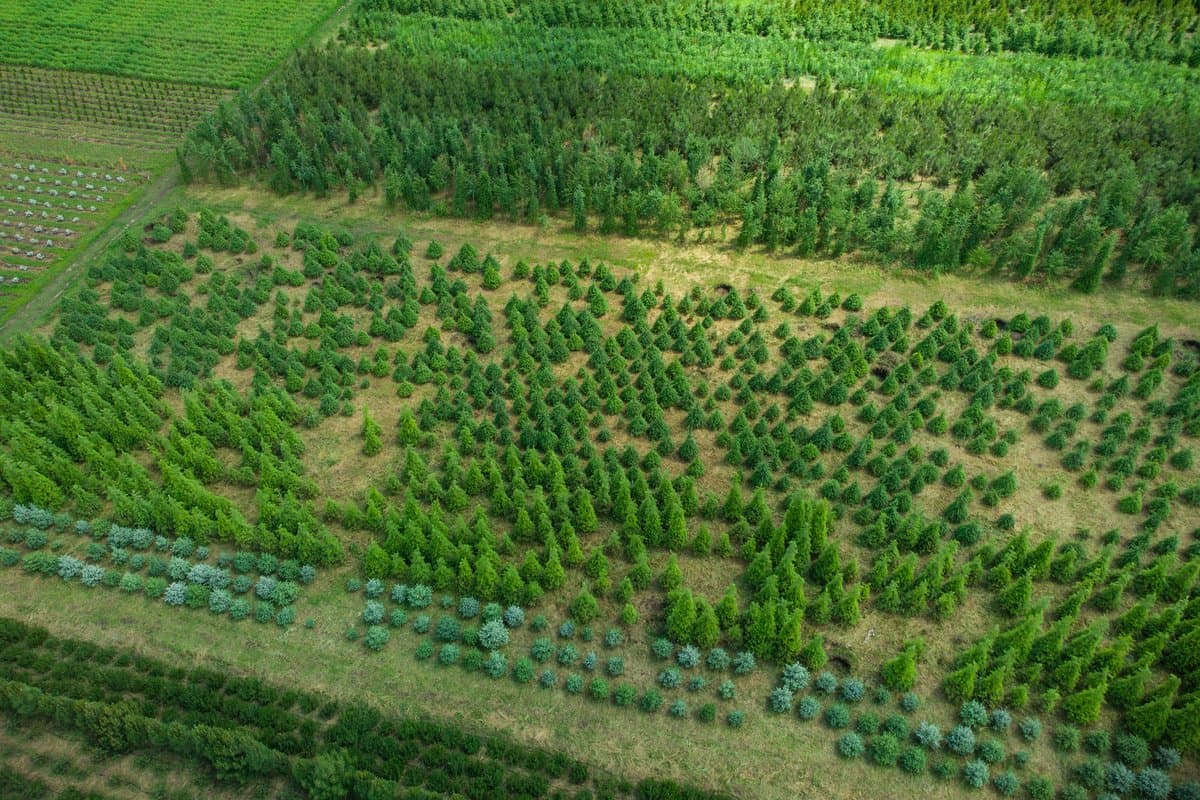
Trees and other woody vegetation remove CO2 and store it in wood, roots and soil. The most widely available removal method, with top-rated projects from about €25 per tonne.
Soil carbon
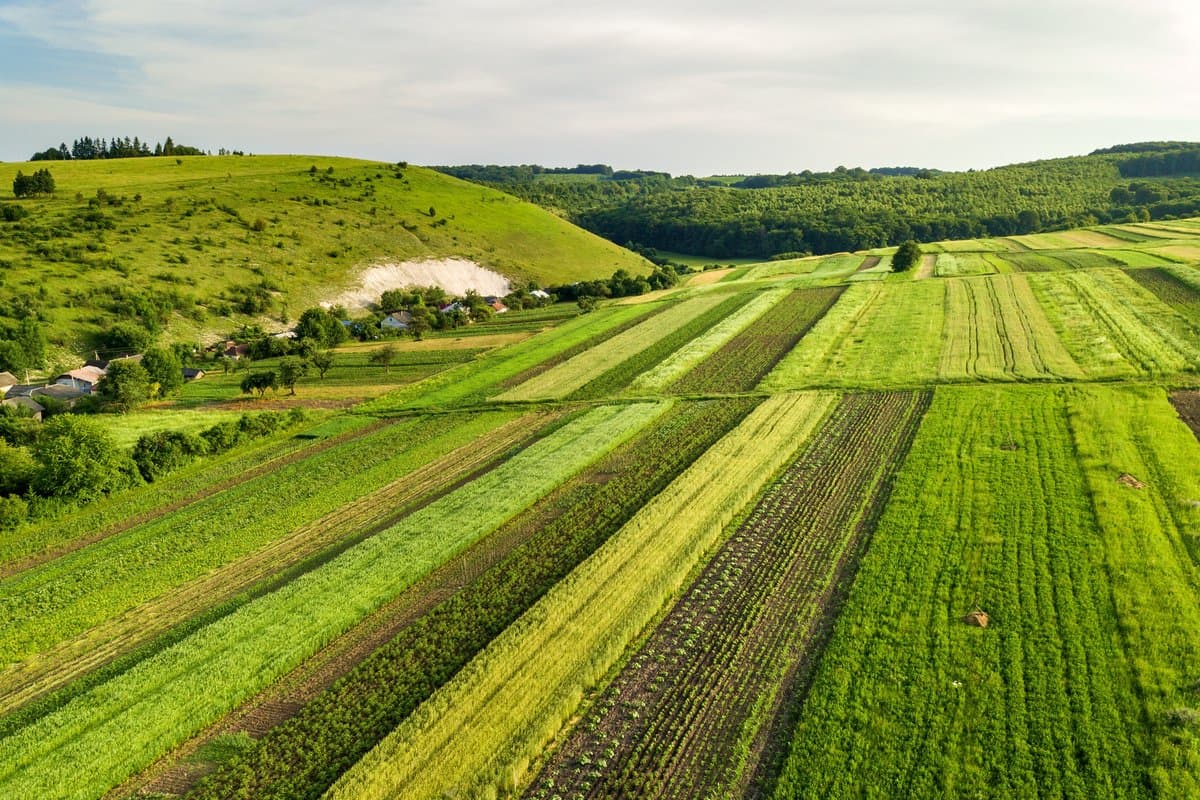
Farming practices move plant-captured carbon into agricultural soils. The lowest-cost removal method, scalable across existing farmland from about €20 per tonne.
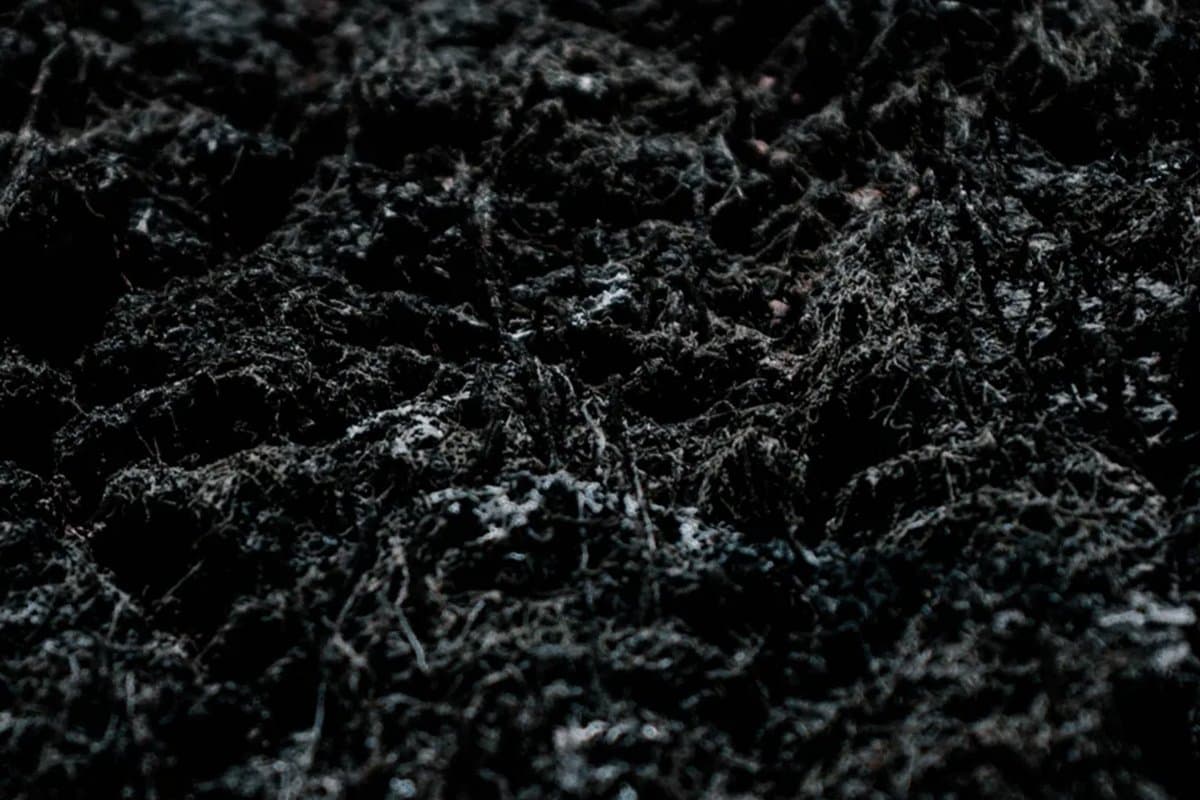
Biochar
Pyrolysis converts waste biomass into stable carbon that stays locked away for centuries. The durable method that already delivers at scale, from about €100 per tonne.
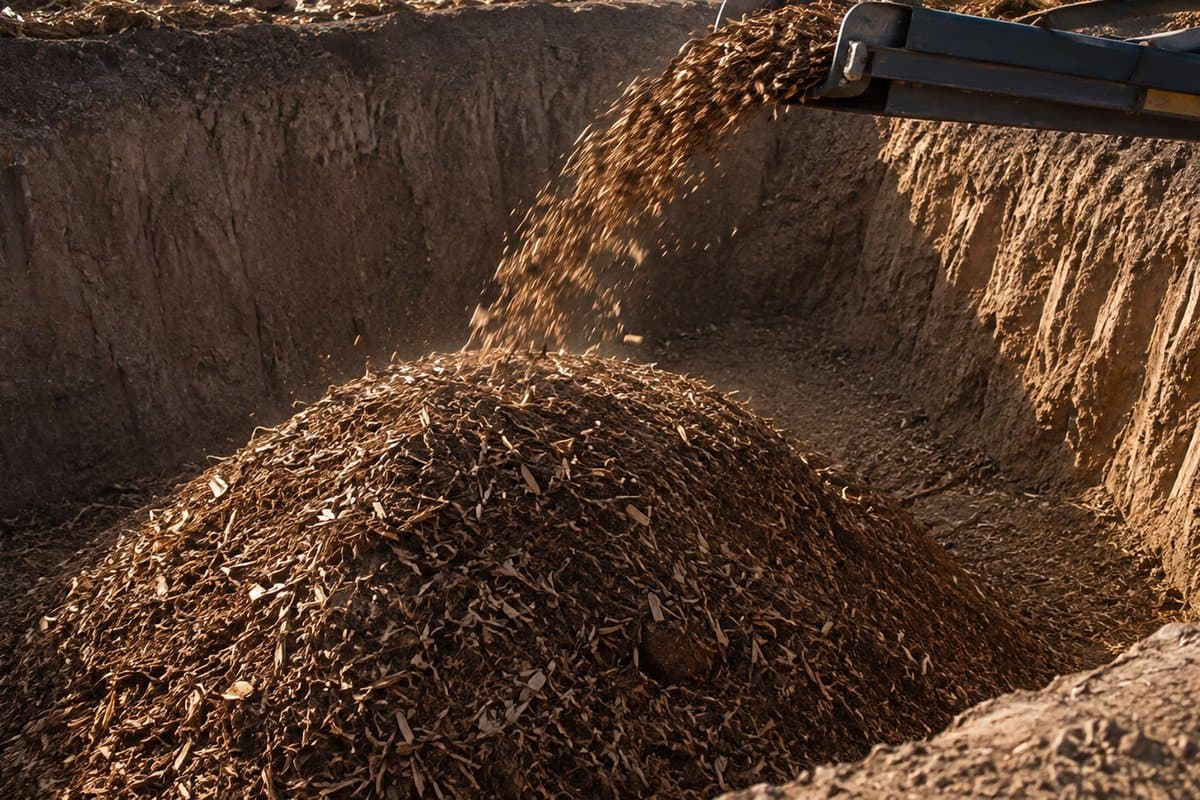
Biomass storage
Waste biomass is stored in conditions that slow or prevent decomposition. A simpler durable biomass pathway that avoids the capture equipment needed for BECCS.
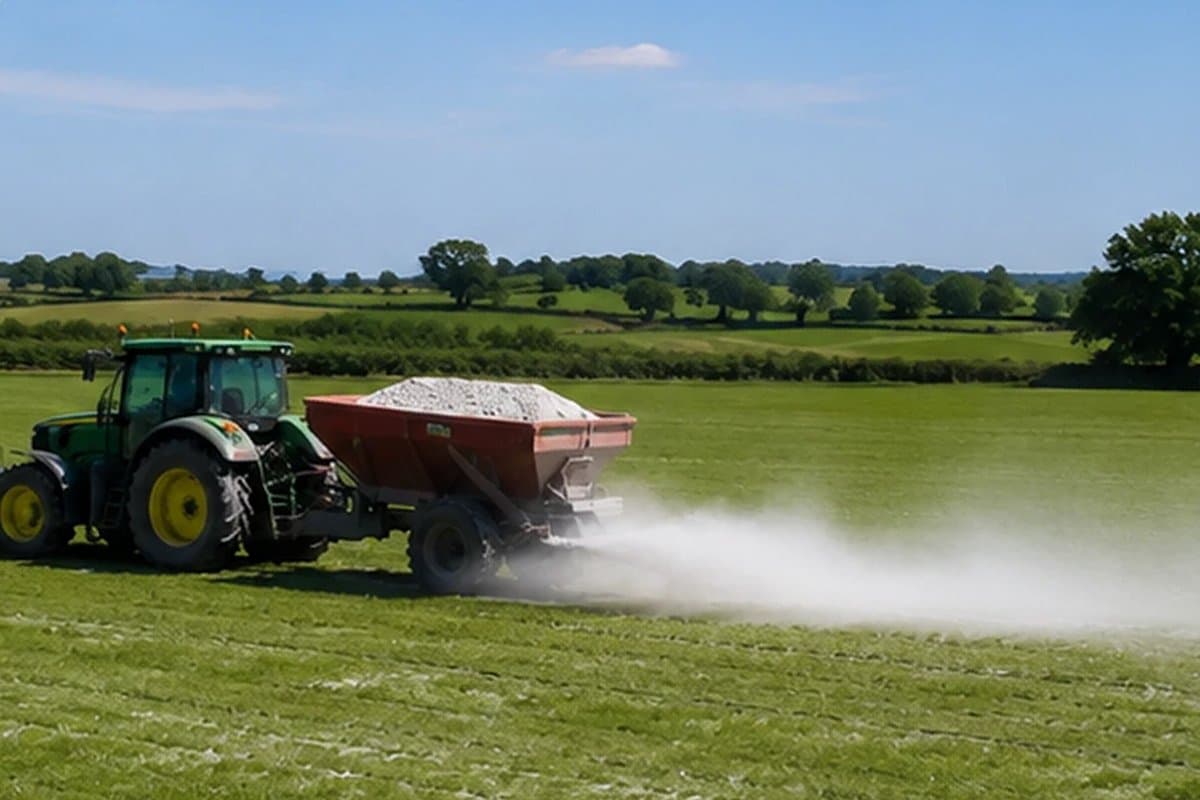
Enhanced rock weathering
Crushed silicate rock reacts with CO2 and stores it as stable bicarbonate and carbonate. A durable removal method with agricultural co-benefits, from about €185 per tonne.
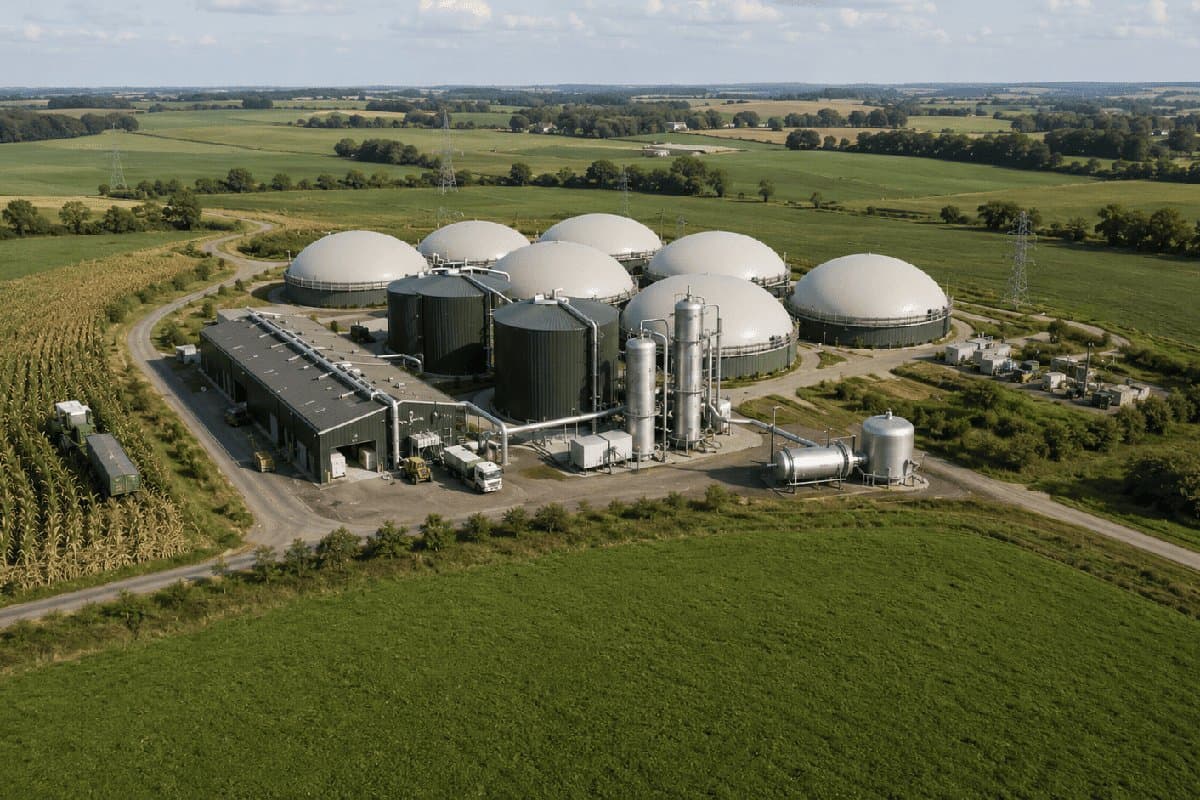
BECCS
Biomass is used for energy or fuel, while the biogenic CO2 released is captured and stored underground. A larger industrial pathway with geological storage.