
No policy this week. Just 96 minutes worth watching.

Author
Adrian WonsThis week's issue is a little different.
No regulation. No price tables. No timelines. Instead, I want to recommend a film.
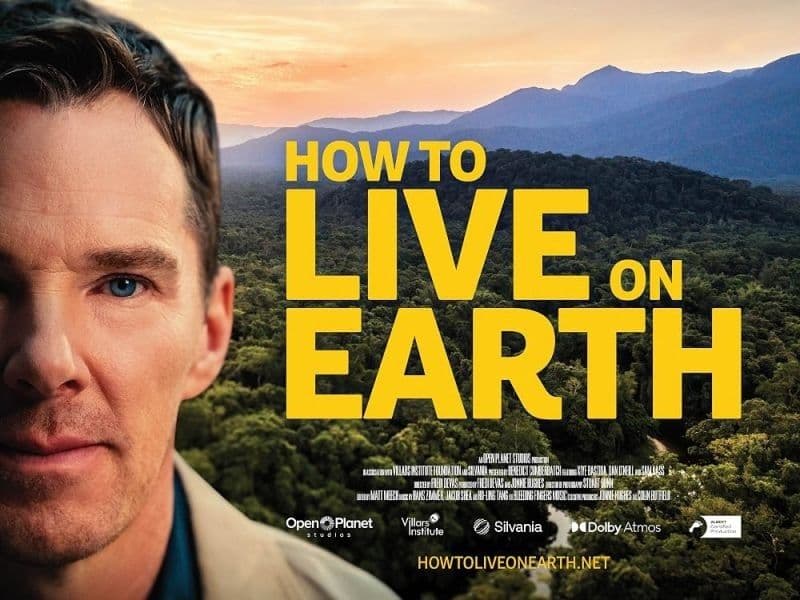
How to Live on Earth is a 96-minute documentary presented by Benedict Cumberbatch. It has been free to watch on YouTube since 20 September.
I think it is exactly the kind of mainstream climate communication we need. And I want to explain why it matters for people like us, who spend our days on the technical side of this problem.
What the film is
The film comes from Open Planet Studios, the team behind Ocean with David Attenborough and A Life on Our Planet. Its director, Fredi Devas, worked on Planet Earth II and Planet Earth III.
So the cinematography is what you would expect: stunning.
What sets the film apart is the question it asks.
Most nature documentaries show us what we are losing. This one sets out to be a how-to guide. It looks at how humans are learning to work with nature, rather than against it, to address food, biodiversity and climate problems at the same time.
Cumberbatch hosts from London’s Natural History Museum, then takes us into stories from around the world: a field biologist in Mexico’s Calakmul forest, former White House chef Sam Kass on the future of food, climate activist Xiye Bastida in New York, and farmers dealing with the collapse of natural pollinators.
Why I think it matters
We are good at the detail: CSRD datapoints, SBTi thresholds, CCP labels and Oxford categories.
What we are often less good at is telling the story. Why does any of this matter to a CFO, a board member or a colleague in procurement who never reads a sustainability report?
This film tells that story better than anything I have seen in a while.
Three things stood out to me.
It is hopeful without being naive.
It does not hide how bad things are, but it spends most of its time on solutions that already work. Fear makes people switch off. A credible path forward makes them lean in.
It treats nature as an asset, not a cost.
One of the film’s lines is “green is the new gold”. That is not a slogan I would put in a CSRD report, but it captures the shift in thinking our sector needs from finance and leadership.
It is also telling that the impact partners include TNFD and UNEP FI, not just conservation NGOs.
It is built for people outside our bubble.
It is funny in places, moves quickly and never talks down to the viewer. It is the kind of film you can send to your leadership team without a disclaimer.
What this has to do with carbon markets
Much of what the film shows is what high-quality nature-based projects look like on the ground: standing forests, restored landscapes and communities that benefit from protecting them rather than clearing them.
When we talk about REDD+ or ARR credits, this is the reality behind the tonne.
The film also carries an implicit lesson in claims.
It communicates with ambition and emotion without overclaiming. That balance is exactly what companies now need to find under the new green claims rules: talk about your contribution with conviction, but keep it honest.
How to use it
Watch it yourself first. Then think about who in your organisation would benefit most.
A few ideas:
- Share it with your leadership team before your next climate strategy discussion.
- Run a lunchtime screening for colleagues outside the sustainability team.
- Use it to open a workshop on your nature or carbon strategy.
The film team also supports organised screenings and offers a free discussion guide on its website.
Bottom line
Our work only moves as fast as the people around us understand why it matters. Most of them will never read a policy brief. Many of them will watch a well-made film.
This is one of the best tools for that job I have come across this year, and it costs nothing but 96 minutes.
Normal service resumes next issue.
For our German-speaking readers: Join our upcoming webinar with PwC Germany to learn how to turn your climate strategy into an audit-ready carbon credit strategy.
Thanks for reading,
Adrian
CEO & Co-Founder | Senken
📺 More from me on YouTube:
Two recent conversations worth your time:
Why is Google betting on rice methane credits?
Mitti Labs’ co-founder on what actually convinces smallholder farmers to switch. Plus: Agreena on its 4.45 million tonne soil carbon deal.
How did Europe’s largest biomass storage deal get signed?
We unpack the structure behind the deal, and what buyers consistently underestimate.