
The Top 5 Biochar Carbon Removal Projects in 2026
Biochar is quietly becoming one of the most compelling carbon removal solutions on the market. Unlike traditional offsets that can be temporary or hard to verify, biochar offers something rare in climate tech: carbon that stays locked away for centuries, often 100+ years or more, with clear co-benefits for communities and ecosystems.
For corporate buyers looking to build credible carbon removal portfolios, biochar represents a sweet spot, more durable than nature-based solutions, more affordable than direct air capture, and ready to deploy at scale today. But not all biochar projects are created equal. Here's what you need to know about the leading players that have already earned the trust of major corporations.
The Largest Deal in Biochar History: Microsoft & Exomad Green
In May 2025, Microsoft signed the world's largest biochar carbon removal agreement with Exomad Green, a 10-year deal to remove 1.24 million tonnes of CO2. This wasn't just the biggest biochar deal ever, it was one of the largest agreements in the entire durable carbon removal industry.
Why does this matter? Because Microsoft isn't making small bets. The tech giant has been the most aggressive corporate buyer of carbon removal, accounting for 63% of all CDR purchases in 2024, securing about 5.1 million metric tons of durable CDR credits. When Microsoft puts this much capital behind biochar, it signals that the technology has reached industrial-scale maturity.
Five Projects Leading the Biochar Revolution
1. Exomad Green (Bolivia)
Industrial Scale with Community Impact
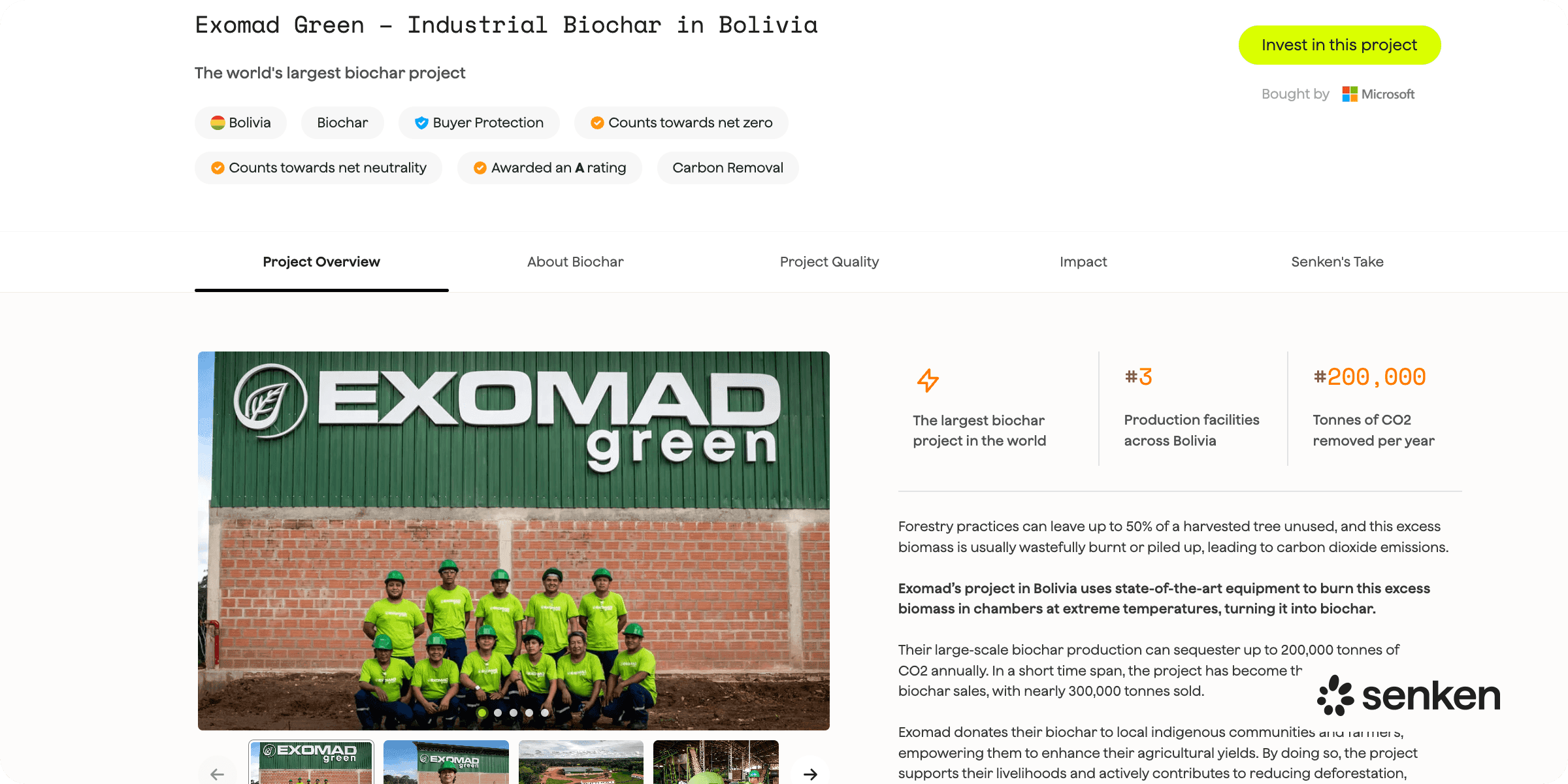
What They Do: Exomad Green operates the world's largest biochar production facilities in Bolivia, currently removing about 260,000 tonnes of CO2 per year. They take sawmill waste—wood residues that would otherwise be burned in open pits—and convert it into stable biochar through pyrolysis. This biochar is then donated to indigenous farming communities to enrich degraded soils.
Why Buyers Trust Them:
- Verification: Certified by Puro.earth with digital tracking from Carbonfuture's MRV+ platform, ensuring every tonne is traced from production to application
- Quality Ratings: Rated "AA" by both Sylvera and BeZero, the highest tier for carbon removal integrity
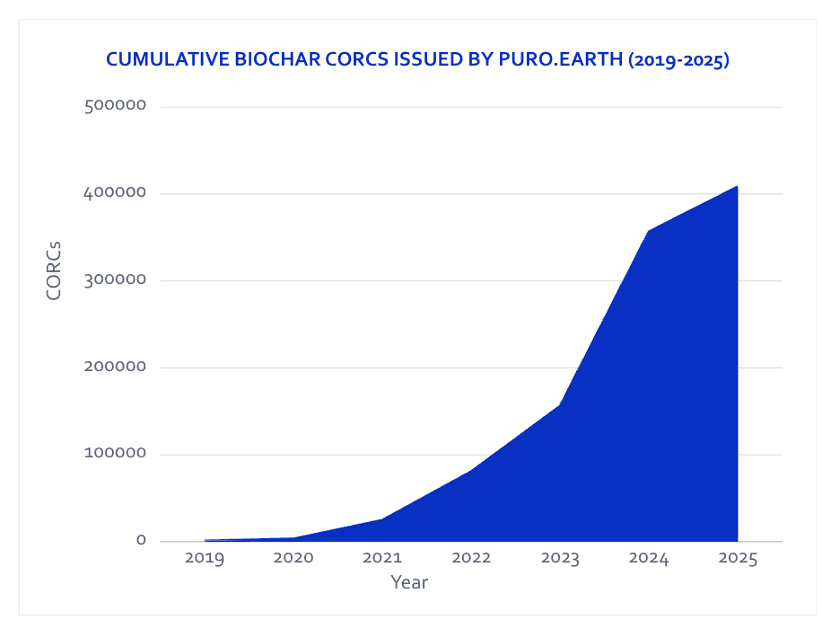
- Scale: Over 1.2 million tonnes removed to date—roughly 25% of all durable carbon removals industry-wide as of 2025
Notable Buyers:
- Microsoft: The record-breaking 1.24 million tonne deal over 10 years
- NextGen CDR: Multi-year offtake agreement, NextGen's first South American purchase
The Appeal: Exomad proves that biochar can work at massive scale while delivering real community benefits. The biochar they produce has ~84% carbon content and over 1,000-year stability. Plus, by improving soil on existing farmland, they're helping prevent deforestation—climate action with clear co-benefits.
2. Varaha (India)
Tackling Invasive Species While Removing Carbon
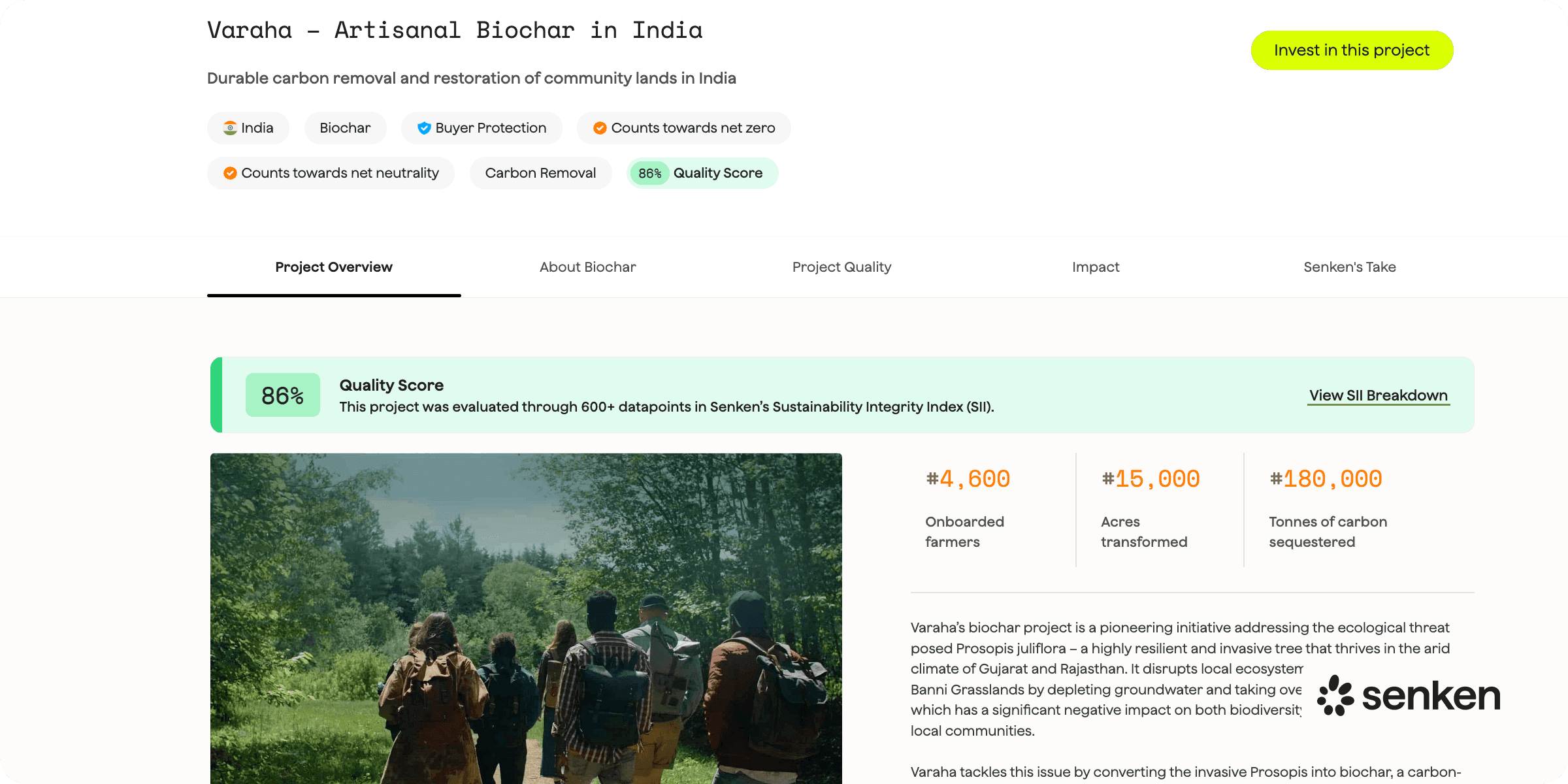
What They Do: Varaha runs India's first industrial biochar project, with a clever twist. Their flagship facility in Gujarat converts an invasive bush (Prosopis juliflora) that has overtaken native grasslands into biochar. By removing this invasive species and turning it into carbon removal credits, they're simultaneously restoring ecosystems and sequestering carbon for 1,600+ years.
Why Buyers Trust Them:
- Digital MRV System: End-to-end tracking with remote sensing for biomass availability and a mobile app capturing geo-tagged proof of biochar application
- Puro.earth Certified: India's first Puro.earth-certified biochar facility
- Quality Rating: "A" rating for integrity and impact
Notable Buyers:
- Google: 100,000 tonnes of removal by 2030—the world's largest biochar purchase by a tech company
- Louis Dreyfus Company: 5-year contract for 6,000 tonnes per year, integrating carbon removal into their agricultural supply chain
The Appeal: Varaha demonstrates how carbon removal can solve multiple problems at once. Beyond sequestering carbon, they're tackling air pollution (by avoiding crop residue burning), improving soil fertility, and generating income for farming communities. In their first year alone, they processed 40,000 tonnes of biomass to produce 10,000 tonnes of biochar.
3. Novocarbo (Germany)
Carbon Removal Parks with Clean Energy
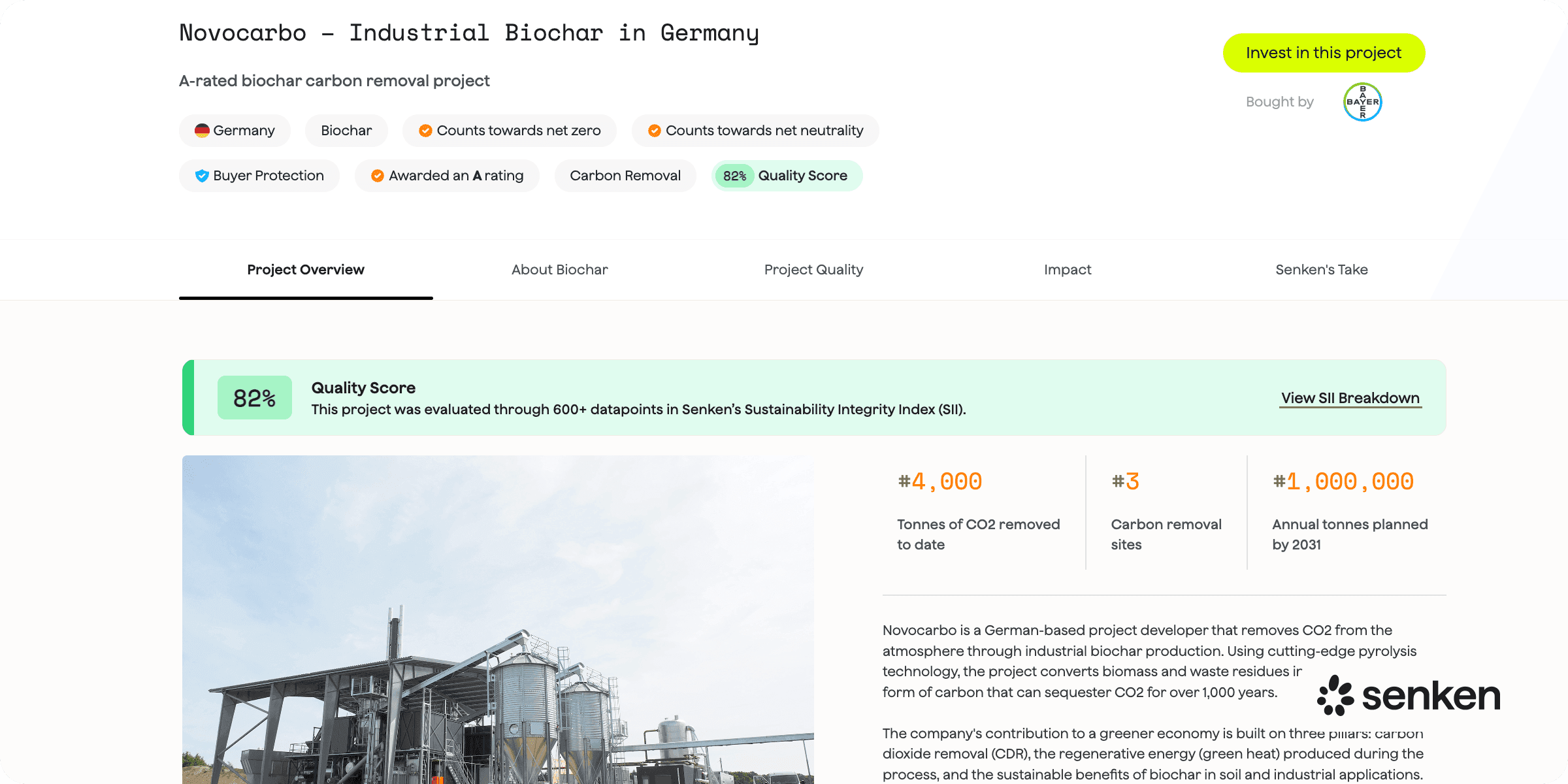
What They Do: Novocarbo builds "Carbon Removal Parks" that combine biochar production with renewable energy. Their flagship site in Grevesmühlen, Germany features advanced PYREG pyrolysis units that convert local plant residues into biochar while generating ~6,600 MWh of waste heat for district heating—enough to warm about 1,800 households.
Why Buyers Trust Them:
- Puro.earth Certified: Multiple facilities registered under Puro's methodology
- BeZero Rating: "A" rating for their Rhine facility, indicating high likelihood that credits represent real removal
- Transparent Marketplace Presence: Credits available through multiple marketplaces with clear verification
Notable Achievements:
- After receiving their BeZero rating in late 2023, Novocarbo doubled their long-term offtake contracts and saw 40% increase in buyer interest
- Secured €27 million in 2025 funding to expand across Europe
The Appeal: Novocarbo shows that biochar can be economically sustainable in developed markets. By co-producing carbon-neutral heat, they've created a business model that doesn't rely solely on carbon credit revenue. Their goal: remove 1 million tonnes of CO2 by 2030 through a network of removal parks.
4. Carboneers (Ghana & India)
Community-Powered Carbon Removal
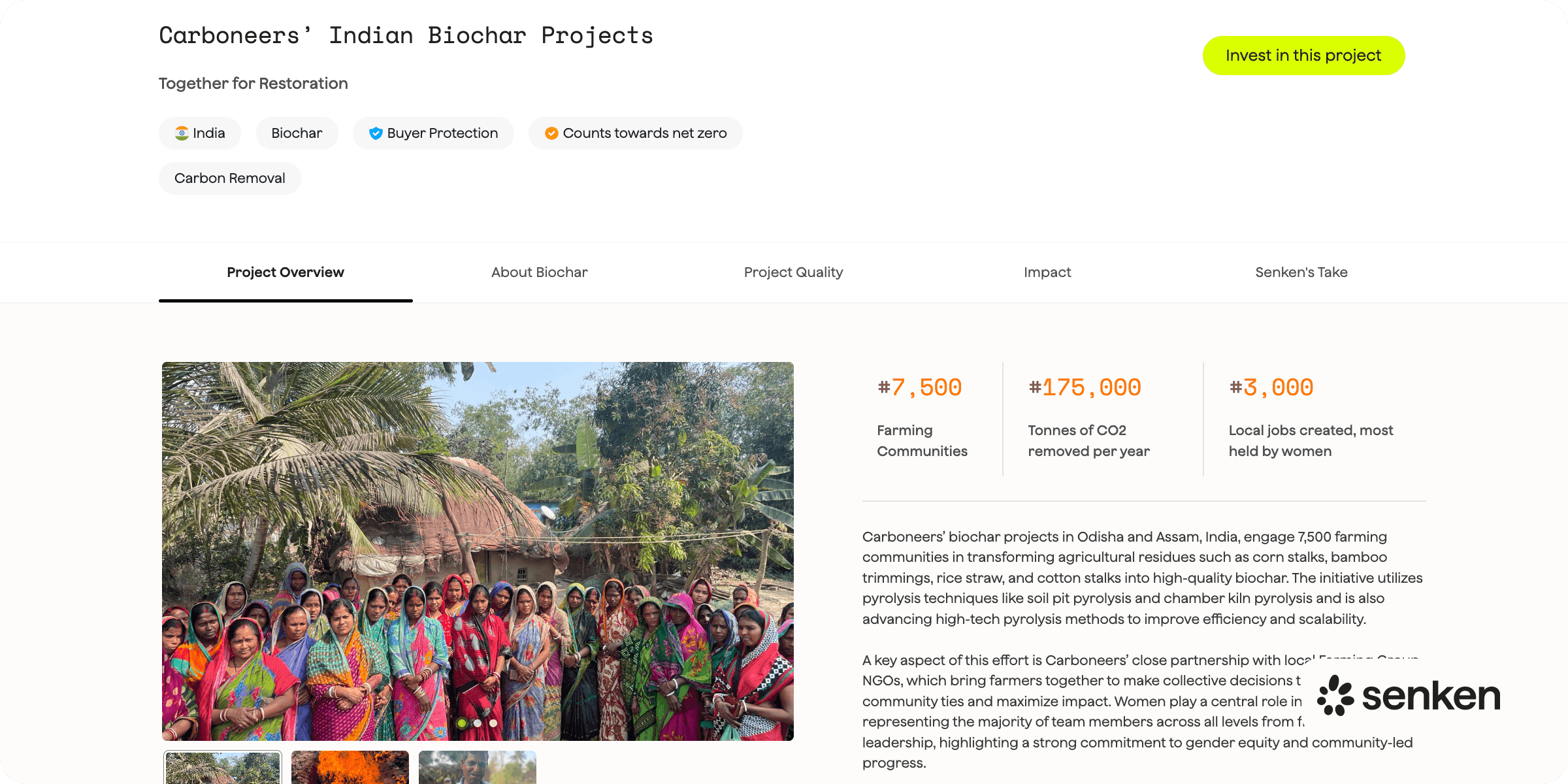
What They Do: Rather than large centralized facilities, Carboneers takes a decentralized approach—empowering thousands of smallholder farmers across the Global South to produce biochar from agricultural waste. They provide training, low-emission kilns, and investment to rural communities, turning what would be burned crop residues into carbon credits and soil amendments.
Why Buyers Trust Them:
- Digital MRV with Blockchain: Partnered with Planboo to deploy IoT sensors on kilns and blockchain-based tracking, ensuring each batch is measured and logged
- Carbon Standard International Certification: Tailored for distributed biochar projects in developing regions
- Proven Impact: 119,000 tonnes removed to date, engaging over 27,000 farmers
The Appeal: Carboneers represents climate justice in action. Farmers have reportedly doubled their income through biochar credit revenue, with women heavily involved (61% of the Ghana field team). It's proof that carbon removal can create economic opportunity in the communities that need it most.
5. Planboo (Global Tropical Regions)
Building a Biochar Project Network
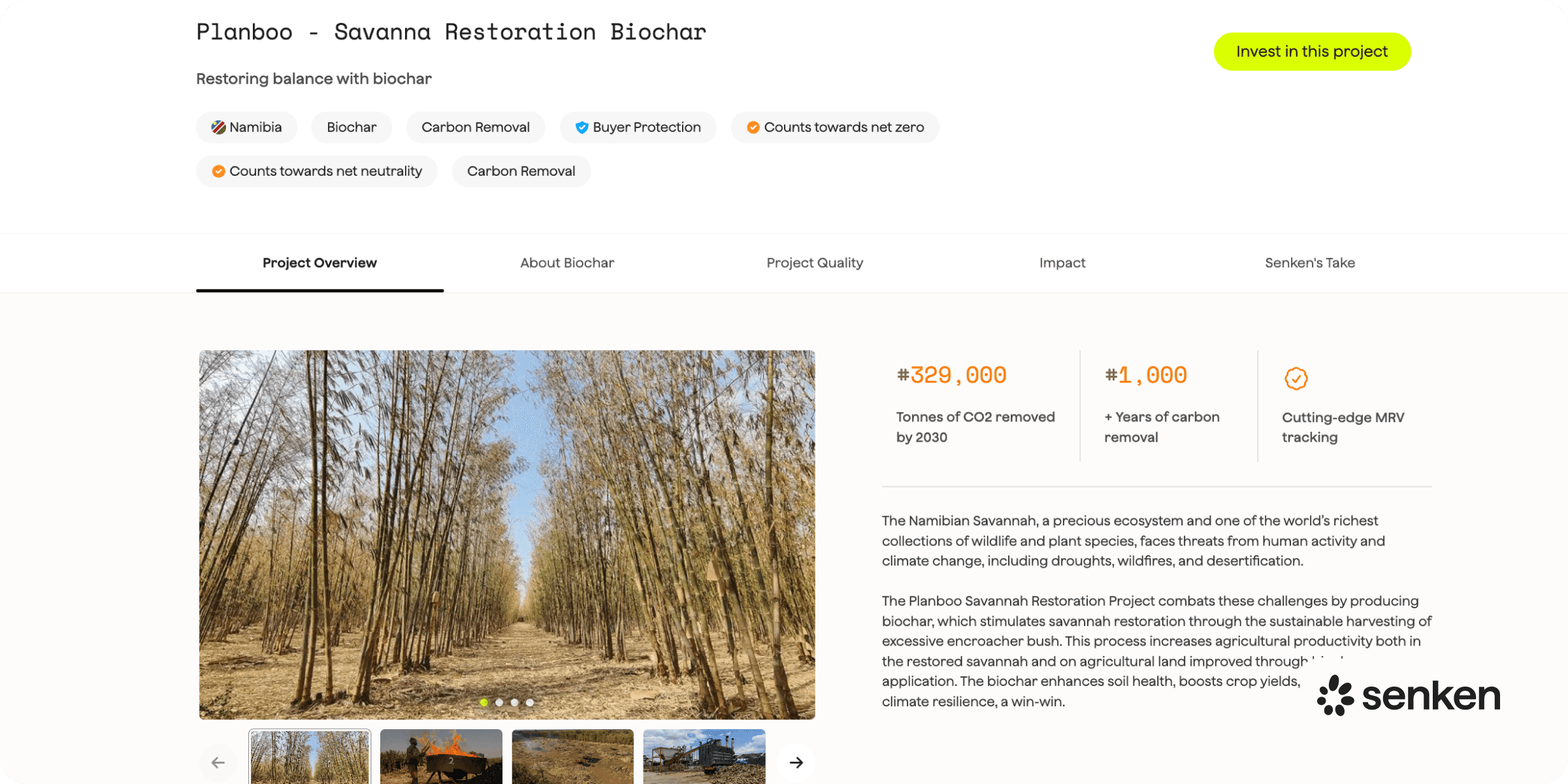
What They Do: Planboo doesn't operate a single facility—instead, they've built a technology platform and network that enables local partners (farm co-ops, NGOs, companies) to launch biochar projects across the tropics. From coffee farms in Colombia to cotton farms in India to bamboo in Southeast Asia, Planboo's MRVin™ system provides the digital infrastructure these distributed projects need to generate trusted credits.
Why Buyers Trust Them:
- Advanced IoT Monitoring: The "Greenbox" sensors on kilns monitor pyrolysis in real time, automatically calculating CO2 removal
- CSI Certification: Projects certified under Carbon Standard International
- Quality Example: Their Coffee Biochar project in Colombia received an estimated AA-BBB rating from Sylvera
Notable Partnerships:
- Better Cotton Initiative: Piloting biochar on Indian cotton farms starting 2026, testing effects on soil and yield across BCI's network
- Google: Named as a partner in Google's biochar procurement announcement
- Milkywire: Backed the Ghana project in collaboration with Carboneers
The Appeal: Planboo's model is about aggregation—turning many small projects into big climate impact. Their project network had a collective potential of ~8.1 million tonnes CO2 removal by 2030. By providing the tech stack and methodology, they're making it possible for communities worldwide to participate in carbon markets.
Why These Projects Stand Out
What makes these five projects particularly attractive to corporate buyers?
| Project | Location | Feedstock | Certification and ratings | Scale | Notable buyers and partners |
|---|---|---|---|---|---|
| Exomad Green | Bolivia | Sawmill wood residues | Puro.earth certified, AA from Sylvera and BeZero, Carbonfuture MRV+ tracking | About 260,000 t CO2 per year, over 1.2 million t removed to date | Microsoft, NextGen CDR |
| Varaha | Gujarat, India | Invasive Prosopis juliflora | Puro.earth certified, A rating, digital MRV with remote sensing | 10,000 t biochar from 40,000 t biomass in the first year | Google, Louis Dreyfus Company |
| Novocarbo | Grevesmühlen, Germany | Local plant residues | Puro.earth certified, BeZero A for the Rhine facility | Target of 1 million t CO2 removed by 2030, waste heat for about 1,800 households | Not published |
| Carboneers | Ghana and India | Smallholder agricultural waste | Carbon Standard International, IoT and blockchain tracking with Planboo | 119,000 t removed with over 27,000 farmers | Milkywire-backed Ghana project |
| Planboo | Global tropical regions | Coffee, cotton and bamboo residues via local partners | Carbon Standard International, Sylvera AA-BBB estimate for the Colombia project | Network potential of about 8.1 million t by 2030 | Better Cotton Initiative, Google, Milkywire |
1. Rigorous Verification: All are certified under recognized standards (Puro.earth, CSI) with independent ratings from Sylvera, BeZero, or both. This isn't self-reported data—it's third-party verified.
2. Real Permanence: Biochar from these projects typically stores carbon for 100 to 1,600+ years. That's durability that rivals direct air capture at a fraction of the cost.
3. Co-Benefits That Matter: Beyond carbon, these projects improve soil health, prevent air pollution, generate renewable energy, and create economic opportunities for marginalized communities.
4. De-Risked by Major Buyers: When Microsoft, Google, and other sophisticated buyers conduct extensive due diligence and commit multi-year contracts, they're essentially validating the quality. Smaller buyers can follow this lead with confidence.
5. Transparent Tracking: Digital MRV systems mean every tonne is traceable. You're not buying a promise—you're buying documented, verified carbon removal.
Partner with Senken for High-Quality Biochar Credits
Senken partners with all five of these leading biochar projects, giving you access to the most trusted names in durable carbon removal. Whether you're looking for industrial-scale credits from Exomad Green, community-impact projects from Carboneers, or the innovative energy-positive model from Novocarbo, we can help you build a biochar portfolio that meets your climate goals and values.
Securing high-quality biochar credits is becoming increasingly competitive as demand outpaces supply. With major buyers like Microsoft and Google locking in multi-year agreements, the best projects are filling their pipelines quickly.
Ready to explore biochar for your carbon removal strategy? Contact Senken today to discuss how these projects can help you achieve credible, durable climate impact while supporting communities and ecosystems around the world.
The biochar carbon removal market is moving fast, from record-breaking deals to proven community impact. These five projects represent the gold standard in quality, verification, and co-benefits. Don't get left behind as the market scales.