
Mitigation Hierarchy
What is the mitigation hierarchy
The mitigation hierarchy is a decision framework built on a simple, strict sequence: avoid impacts first, minimise what you cannot avoid, restore or rehabilitate damage, and only then offset what truly remains. Originally developed for biodiversity and ecosystem management, it underpins IFC Performance Standard 6 and the Business and Biodiversity Offsets Programme (BBOP), guiding infrastructure and extractive projects toward No Net Loss or Net Gain of biodiversity.
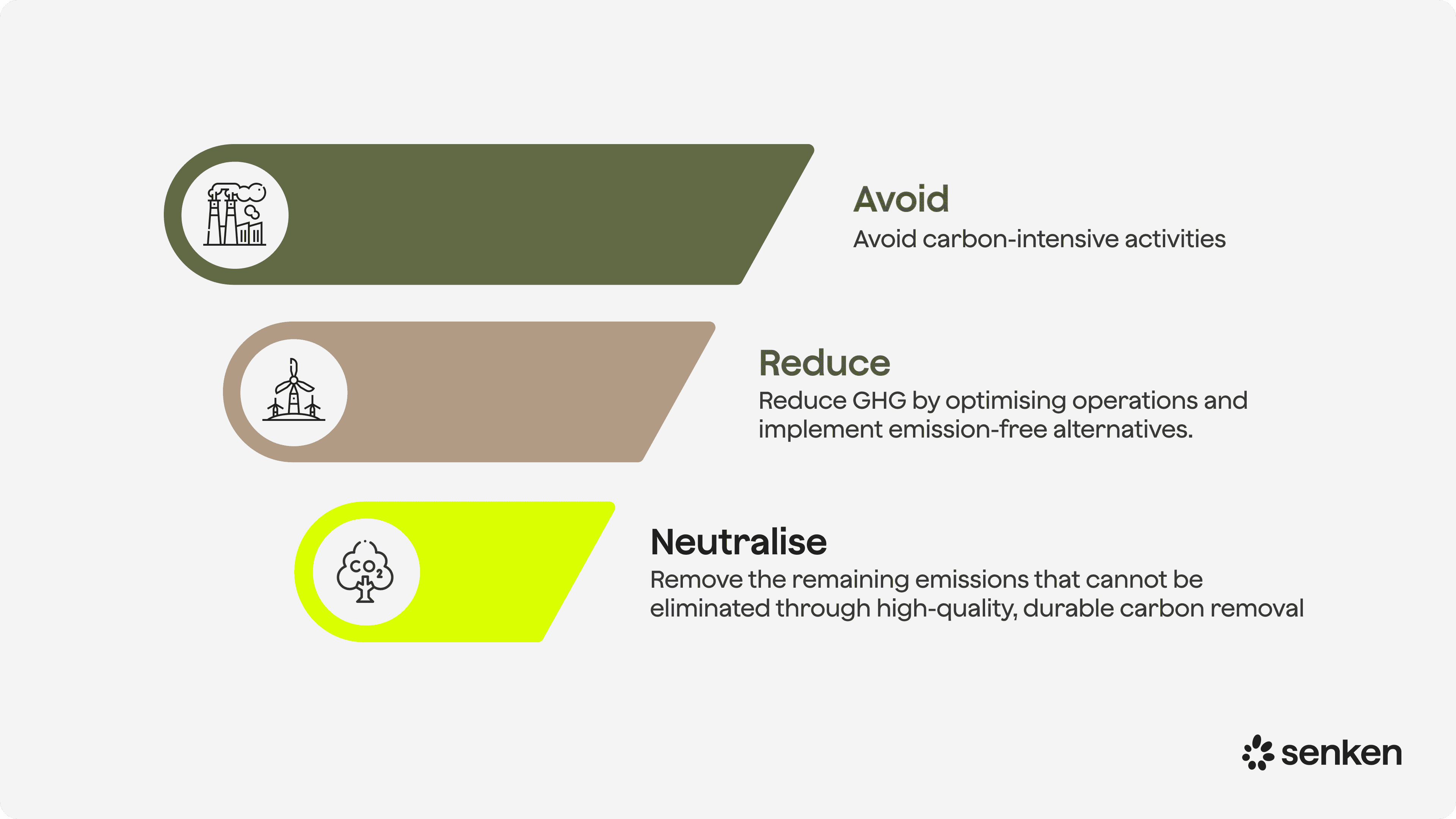
The logic is straightforward. Before you compensate for harm, you exhaust every option to prevent or reduce it. Biodiversity offsets, as IFC defines them, are "measurable conservation outcomes resulting from actions designed to compensate for significant residual adverse biodiversity impacts" after appropriate prevention and mitigation. The same discipline now applies to corporate greenhouse gas strategies.
For large EU companies, this framework has moved from niche conservation policy to the backbone of credible climate and nature claims. CSRD requires transparent disclosure of transition plans, targets, and action hierarchies under ESRS E1 for climate and ESRS E4 for biodiversity . The EU Taxonomy's Do No Significant Harm criteria expect companies to demonstrate that environmental damage was first avoided and minimised, not simply offset. SBTi's Corporate Net Zero Standard mandates deep reductions across value chains before any neutralisation of residuals. Meanwhile, 90% of DAX 40, ATX and SMI companies already have climate strategies in place , but absolute emissions reductions slowed to 3% in 2023 from 5% in 2022 , and companies without robust strategies saw emissions rise 8%.
The mitigation hierarchy closes this ambition-action gap. It gives boards, auditors, and investors a clear test: did you genuinely exhaust avoidance and reduction before buying carbon credits? Without it, offsets look like shortcuts, not science.
From biodiversity tool to Net Zero engine: applying the mitigation hierarchy to climate change
The mitigation hierarchy translates cleanly into GHG management. Think of it as avoid–reduce–remove–neutralise for corporate emissions.
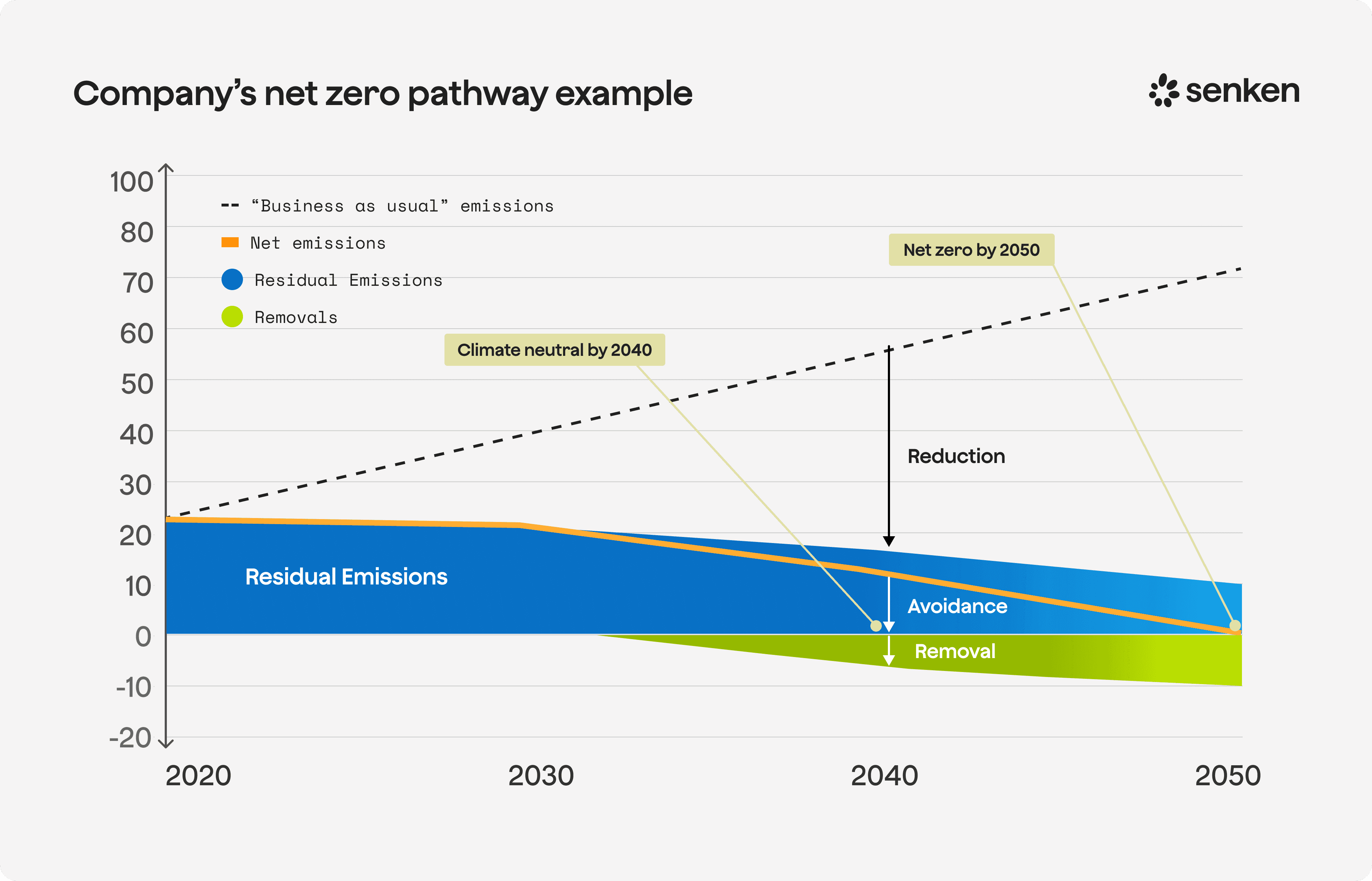
Avoid means designing emissions out of your business model and operations before they occur. This is business model innovation, site selection, and product design. A German telecom operator choosing renewable energy contracts over fossil PPAs is avoiding emissions. A logistics company rerouting to shorten distances or a manufacturer siting a plant near rail instead of road access is avoiding transport emissions before the first delivery. These decisions happen at strategy and investment stage, not in annual reporting.
Minimise or reduce means cutting the intensity and scale of emissions you cannot avoid. Energy efficiency retrofits, supplier engagement programs under Scope 3, electrification of fleets, process optimisation, and switching to lower-carbon materials all sit here. SBTi defines Net Zero for corporates as eliminating emissions in all scopes to zero or to a residual level consistent with a 1.5°C pathway, then neutralising all residual emissions at the net-zero target year and thereafter . The critical word is "eliminate." Reduction is not optional; it is the core of any Net Zero pathway.
Restore or remove means actively taking CO2 out of the atmosphere, typically through nature-based solutions like afforestation and peatland restoration, or through technology-based removals like biochar, enhanced weathering, or direct air capture. These are not offsets for ongoing operational emissions. They address residual emissions you have already reduced to the maximum technically and economically feasible extent.
Offset or neutralise is the final step, reserved for the narrow slice of emissions that remain after exhaustive avoidance, reduction, and removal efforts. Under the mitigation hierarchy, this is where high-quality carbon credits enter, but only if tied to a clearly defined and documented residual. VCMI's Claims Code prohibits using carbon credits to offset in-value-chain emissions or make 'carbon neutral' claims; instead, companies may make 'beyond value chain mitigation' claims for credits purchased in addition to, not instead of, reducing their own emissions .
The difference between this and traditional "buy credits to go neutral" is profound. You are not using credits to replace reductions. You are using them, transparently, for residual emissions after reduction is maxed out.
What counts as 'unavoidable' emissions – and where high-quality carbon credits fit
Defining residual or unavoidable emissions is where many companies stumble. Too narrow a definition and you artificially inflate your offset bill; too loose and you greenwash. The right threshold is what remains after all technically feasible and economically reasonable avoidance and reduction measures have been implemented and documented, not what is left after this year's budget negotiation.
Academic work on corporate carbon neutrality pathways suggests using cost-abatement curves, technology readiness assessments, and scenario analysis to set these thresholds.
For example, a manufacturer might define residual emissions as those from processes where alternative technologies are not yet commercially available at scale, or where abatement costs exceed an agreed internal carbon price. The key is transparency: document the options you evaluated, the feasibility analysis, the cost comparison, and the governance approval. This evidence trail satisfies auditors, defends board decisions, and protects against accusations of premature offsetting.
Once residuals are defined, the quality of any biodiversity offset or carbon credit matters enormously. Recent research is unforgiving. A Max Planck Institute study finds that emission reductions from many carbon credit projects are substantially overestimated , and a Nature Communications meta-analysis of 89 multinationals shows no significant relationship between voluntary offsetting and improved corporate emission reductions or target ambition . Translation: low-quality credits do not drive decarbonisation and expose you to reputational risk.
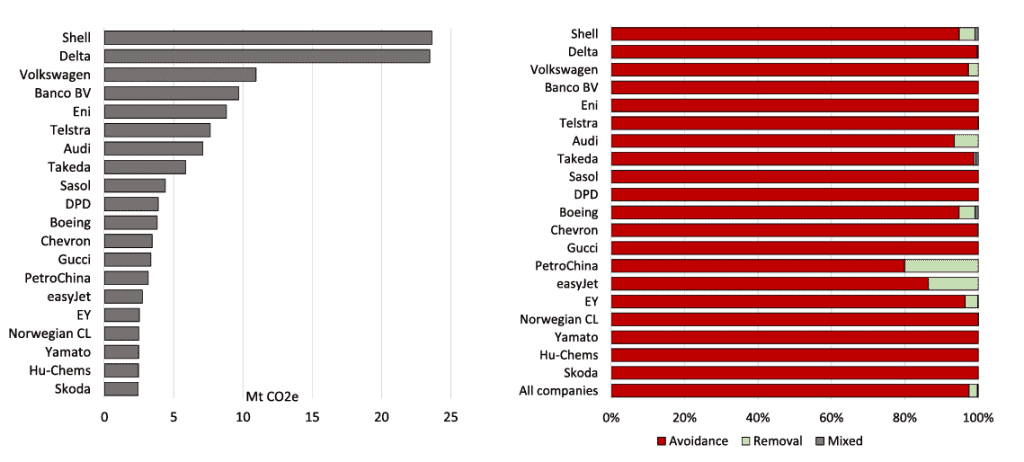
High-quality credits meet strict integrity criteria: additionality (the project would not have happened without carbon finance), permanence (storage is durable, with robust risk buffers), accurate measurement, reporting, and verification (MRV), no double counting, and alignment with frameworks like the ICVCM Core Carbon Principles. VCMI requires that carbon credits used for Claims meet the ICVCM Core Carbon Principles for high quality, and that tier thresholds be third-party verified .
Senken's approach operationalises this. The Sustainability Integrity Index evaluates projects across more than 600 data points, covering additionality, leakage and permanence analysis, beyond-carbon co-benefits, transparent reporting processes, and compliance with ICVCM and CSRD expectations. Only around 5% of assessed projects pass. That rigour is exactly what the mitigation hierarchy demands at the offset step: you may neutralise residuals, but only with credits that meet the same scientific standard you applied to avoidance and reduction.