
Published:June 30, 2026Last updated:June 30, 2026
Climate Benefit Equation
What is the Climate Benefit Equation in Project Assessment?
The climate benefit equation is used to determine the net climate benefit of a project, ensuring that claims of environmental impact are both accurate and credible. It is a crucial step in Senken’s due diligence process when selecting carbon credit projects.
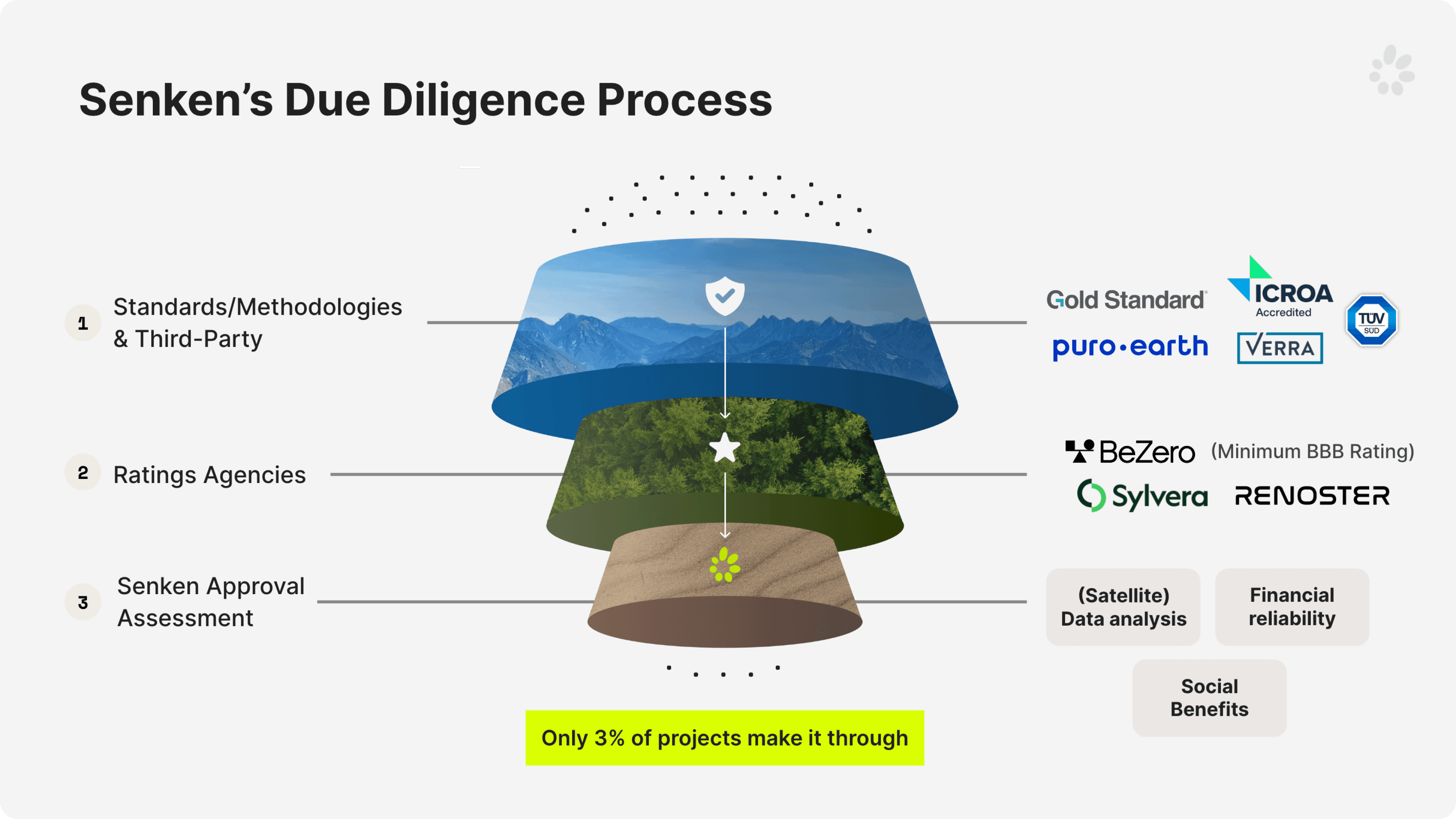
Components of the Climate Benefit Equation:
- Baseline Emissions: This is an estimate of the greenhouse gas (GHG) emissions or carbon that would have been sequestered in the absence of the project. It serves as a reference point against which the project's impact is measured.
- Project Emissions: This refers to the emissions directly produced by the project itself. This includes any GHGs emitted during the implementation or operation of the project.
- Leakage Emissions: Leakage refers to any unintended negative outcomes that lead to increased emissions outside the project boundary. For example, a forest conservation project might result in deforestation elsewhere.
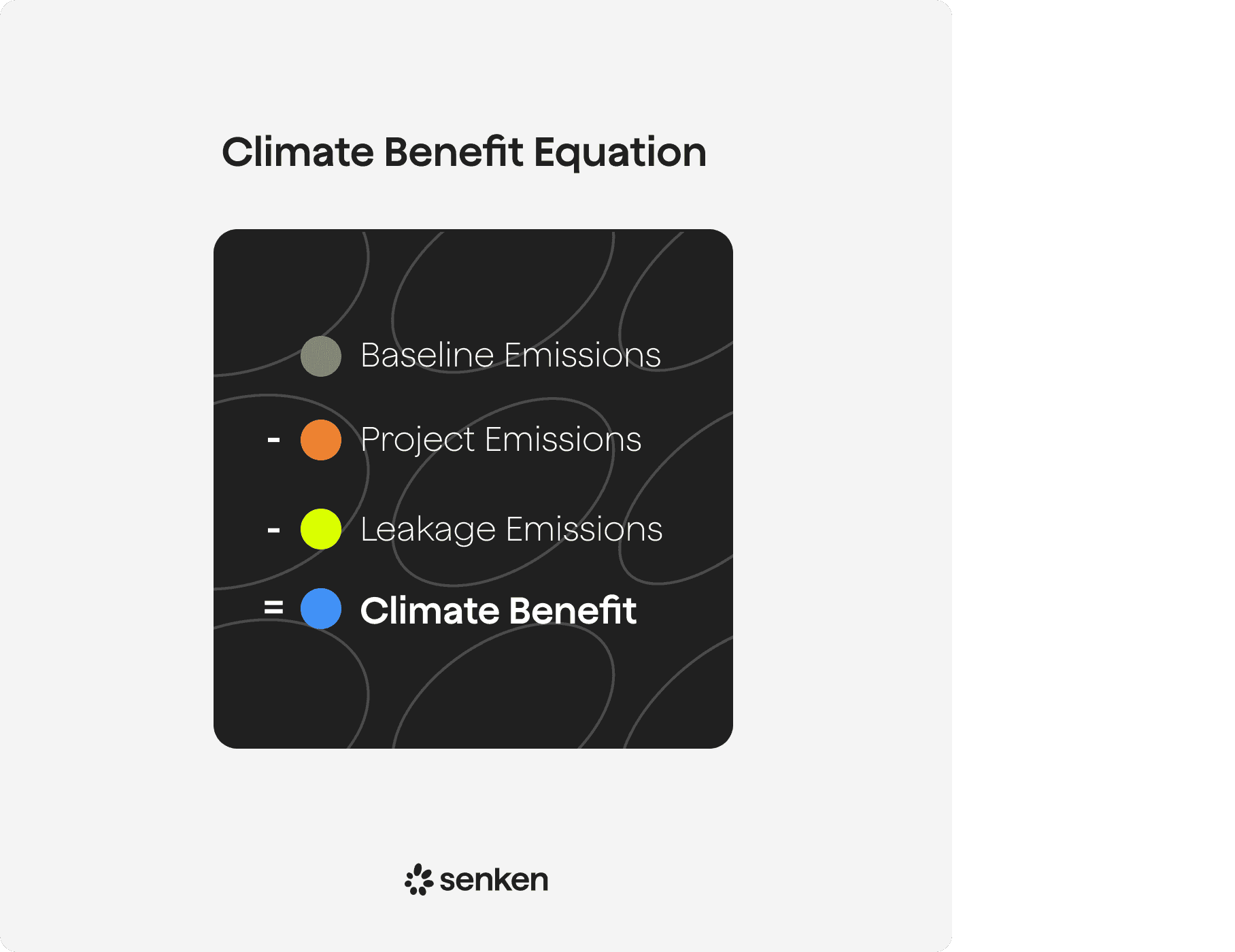
Net Climate Benefit Calculation:
The net climate benefit of a project can be calculated by subtracting the project emissions and the leakage emissions from the avoided/removed emissions as per the baseline scenario. This helps provide a more accurate image of the project’s true impact on the environment.