
EU Adopts First 3 CRCF Certification Methodologies

Author
Adrian WonsHere is a quick, easy-to-digest update on the EU Carbon Removal Certification Framework (CRCF):
What is the EU CRCF?
The CRCF is the EU’s new, voluntary framework for certifying carbon removals. It covers:
At its core, the CRCF sets a single EU rulebook for how one tonne of CO2 removal is measured, verified, audited, and recorded.The aim is to create a single source of truth, so units can stand up to scrutiny from regulators, auditors, and investors across Europe.
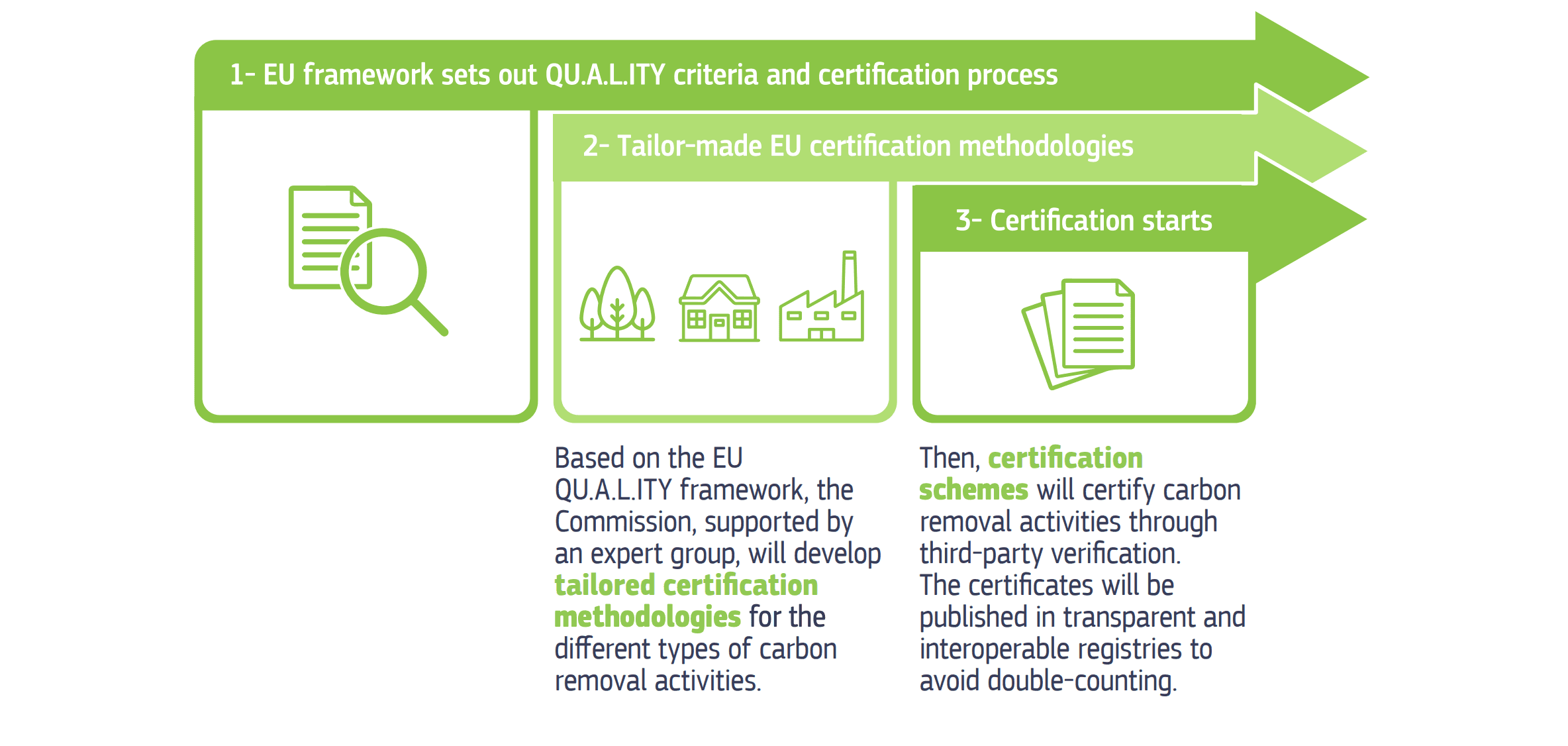
Source: European Commission - Factsheet: Certification of carbon removals
What’s new in the EU CRCF?
The European Commission has adopted the first three certification methodologies under the CRCF. All three focus on permanent removals:
- Direct Air Carbon Capture and Storage (DACCS)
- BioCCS (biogenic CO2 capture with storage)
- Biochar
This marks an important milestone, as the EU now has its first EU-wide standard for permanent carbon removals. It is also the world’s first voluntary certification standard of its kind for permanent removals.
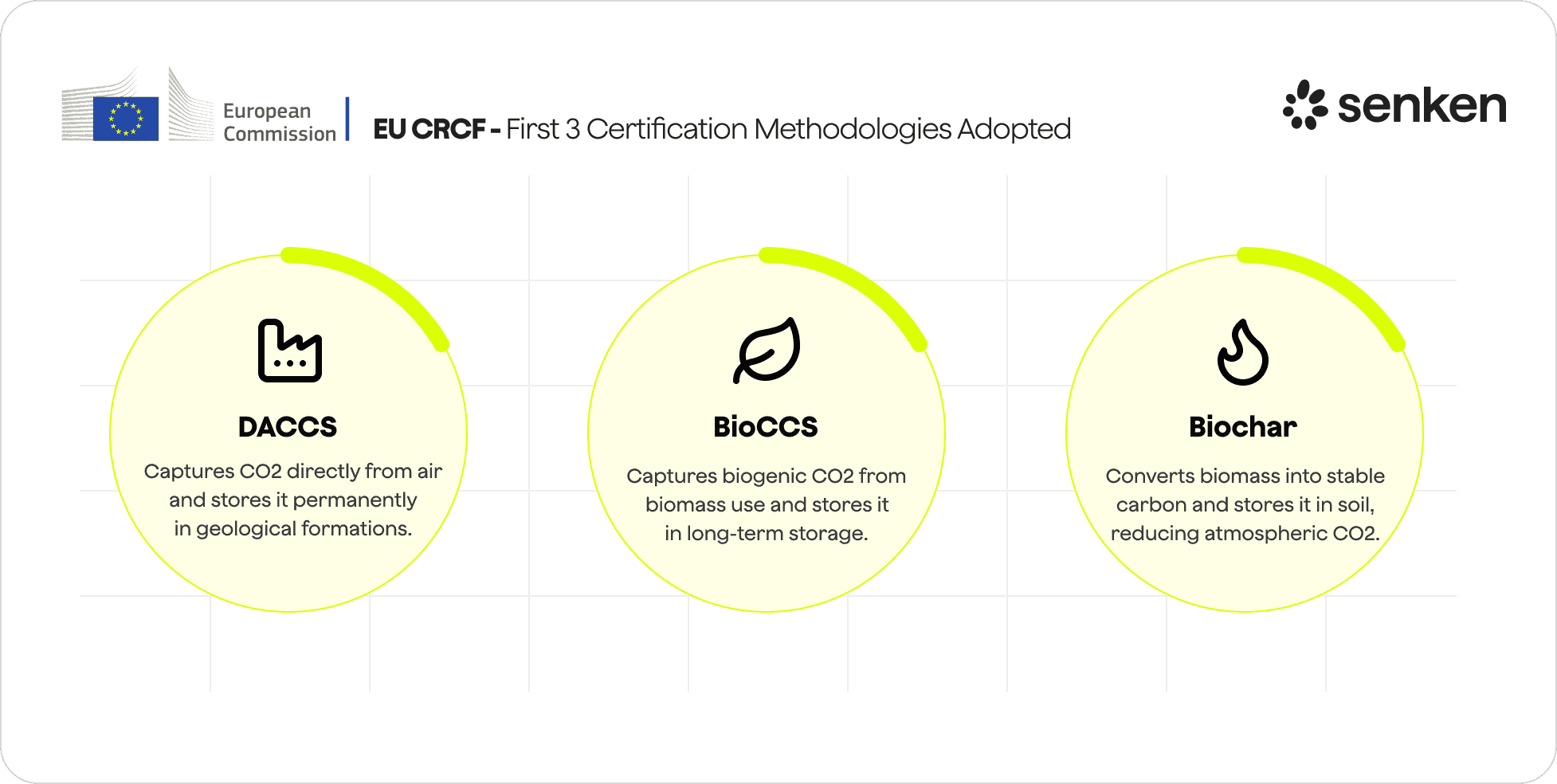
The methodologies now move to the European Parliament and Council for a short scrutiny period. If there are no objections, they will enter into force shortly after publication.
Once that happens:
The Commission has already defined how schemes and auditors will be assessed.
Why this matters for sustainability leaders
- It creates a government-backed quality benchmark you can reference in internal policies, supplier requirements, and audit documentation. That matters as climate claims face closer scrutiny.
- It introduces a single operating model for developers, buyers, and auditors. Over time, CRCF units will sit in a public EU registry with full traceability (due by 2028). Until that registry is live, recognised schemes will operate registries under EU supervision.
- CRCF is designed to fit into the broader EU policy landscape. It aligns with CSRD disclosures, is built with upcoming green-claims rules in mind, and supports the EU’s wider work on industrial carbon management and 2040 climate targets.
Timeline at a glance
Here is how this is likely to unfold in practice:
What comes next:
It's important to note that the first three CRCF methodologies apply to EU-based activities only.
EU CRCF credit vs a top-tier biochar credit from Bolivia
1. When an EU CRCF credit can make more sense
- Regulatory alignment in Europe.
You get an EU method, EU-recognised scheme, EU audit rules, and (soon) an EU registry entry. That is powerful in assurance and for claims that will be read by EU regulators, investors, and auditors. - Clear permanence and liability rules.
The methodologies spell out permanence tests, monitoring, leakage handling, and who is liable on reversal. That reduces interpretation risk. - Policy tailwinds.
The EU is evaluating how permanent removals might connect to other EU tools in the next few years. Buying CRCF units builds experience on that path.
2. When a non-EU, high-quality biochar credit can still be right:
- Impact and value today.
A well-run Bolivia project under a strong VCM standard may deliver real climate benefit and often at a lower €/t while EU CRCF supply ramps. - Portfolio diversity.
You may want a mix: early climate impact and community benefits now, plus an EU CRCF tranche for compliance-grade assurance and future flexibility.
The trade-off is clear:
EU CRCF credits offer EU-grade governance and auditability, but they will be scarce and likely more expensive at the start.
Top-tier non-EU biochar can be available sooner and still meet strong MRV, additionality, and permanence criteria, but it will not carry the EU CRCF label or appear in the EU registry.
The bottom line
If you operate in Europe, a two-track approach makes sense for 2026 to 2028.
Continue buying high-integrity units where they deliver impact today. At the same time, start planning and reserving EU CRCF supply for assurance, policy fit, and future flexibility.
Treat the first EU CRCF units as scarce, high-signal tonnes.
Small note for later: the CRCF is one of the inputs for the EU’s review on how permanent removals could be treated in the EU ETS. The Commission is due to assess this option. That is not a done deal, but it is on the table.
Thanks for reading,
Adrian
Sources
- Commission news: adoption of first three methodologies; scrutiny timing; next steps.
- Carbon Gap tracker: how CRCF works, QU.A.L.ITY criteria, registry plan for 2028, policy linkages, and ETS assessment timeline.
Information only. This is not legal or investment advice.
P.S... Interested in working with Senken? Book a discovery call and let’s see if we’re a good fit.